Classical Diary: The Last Glory of Roman Orthodoxy — Giovanni Pierluigi da Palestrina (Part 7)
Classical Diary Series
[Expand / Collapse]
-
How to Appreciate Classical Music — Written at the Very Beginning (Part 1)
Follow the BLOG owner’s footsteps and explore the thousand-year story of classical music.
-
The Pope’s Dove and the Millennial Chant — Gregory I (Part 2)
Listen to the development of church chant and grasp the character of religious music.
-
Budding Music, Hidden Epic — Guillaume Dufay (Part 3)
Hear the story of the founding figure in whom technique and sensibility fused in the early Renaissance.
-
Moonlight Knight and Court Poet — Gilles Binchois (Part 4)
Listen to the refined lyricism of the Burgundian School, resonating across a thousand years.
-
A Beacon on the Eve of Change — Johannes Ockeghem (Part 5)
The last master of the Burgundian School, and the founder of the Franco-Flemish School.
-
The King of French Music — Josquin des Prez (Part 6)
The mid-Renaissance turns its most glorious page in both sacred and secular music.
-
The Last Glory of Roman Orthodoxy — Giovanni Pierluigi da Palestrina (Part 7)
Together we open the storm-tossed, blood-soaked gate of the late Renaissance.
-
Orlando di Lasso of Europe, Orlando di Lasso of the World (Part 8)
The Renaissance welcomes its last master of music.
-
Echoes of an Island — William Byrd (Part 9)
England rends apart the Renaissance era’s final master of music.
Prologue: Schism and Resonance
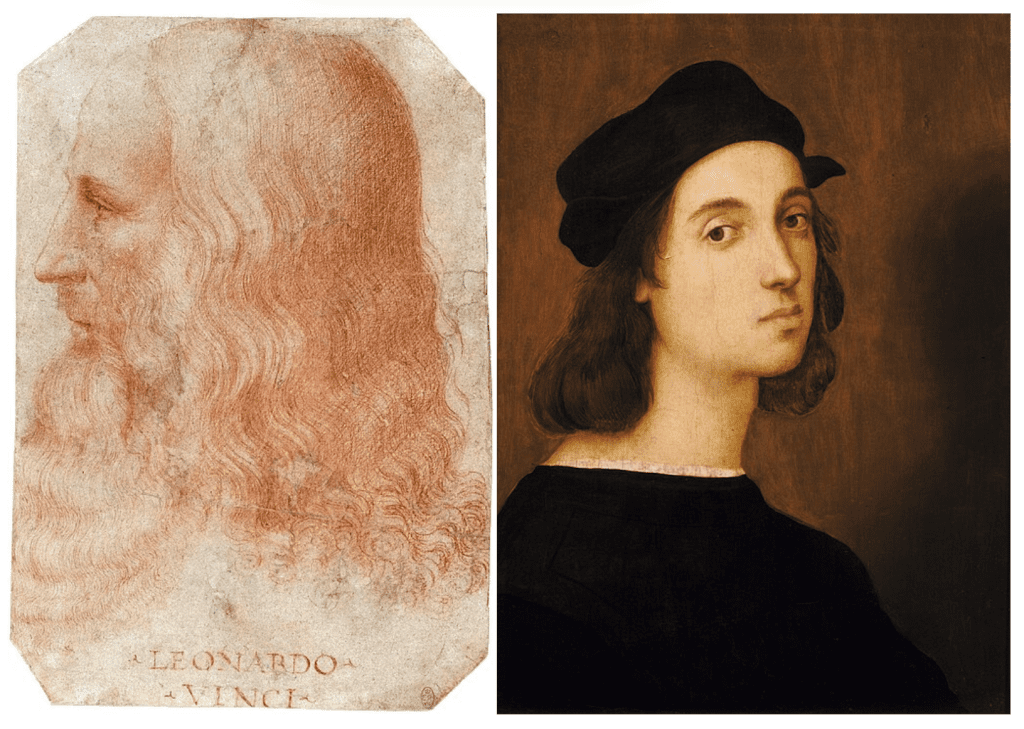
When Leonardo da Vinci closed his eyes in 1519, and when Raphael Sanzio da Urbino died young in 1520, the Renaissance “Golden Age”—centered on Italy, brimming with classical ideals and harmonious beauty—slowly drew to a close. Then a new chapter, more complex, turbulent, and bloody, yet charged with tension, was about to begin—what we call the “late Renaissance.” This was an age that rapidly widened and just as rapidly split apart; an age of faith and reason, unity and individuality, old order and new discovery colliding violently.
The Hundred Years’ War (1337–1453), which had long plagued England and France, finally came to an end in the previous century; the dynastic territorial disputes of several centuries had reached their conclusion, laying the foundation for the formation of a unified French nation-state. Yet, as the 16th century began, a new pattern of conflict was quietly taking shape, fundamentally different in nature and scale from the Hundred Years’ War. It covered a broader front, affected a wider scope, and burned with greater intensity.

1. Religious Conflict
The most conspicuous feature of the 16th century, and the most fundamental rift in Europe, its effects persist to this day and will likely extend far into the future. It began when Martin Luther posted the Ninety-Five Theses on the door of the Wittenberg Church. He himself never realized that the academic debate he had launched would eventually toll the death knell of the second great schism in the thousand-year-old Christian Church.
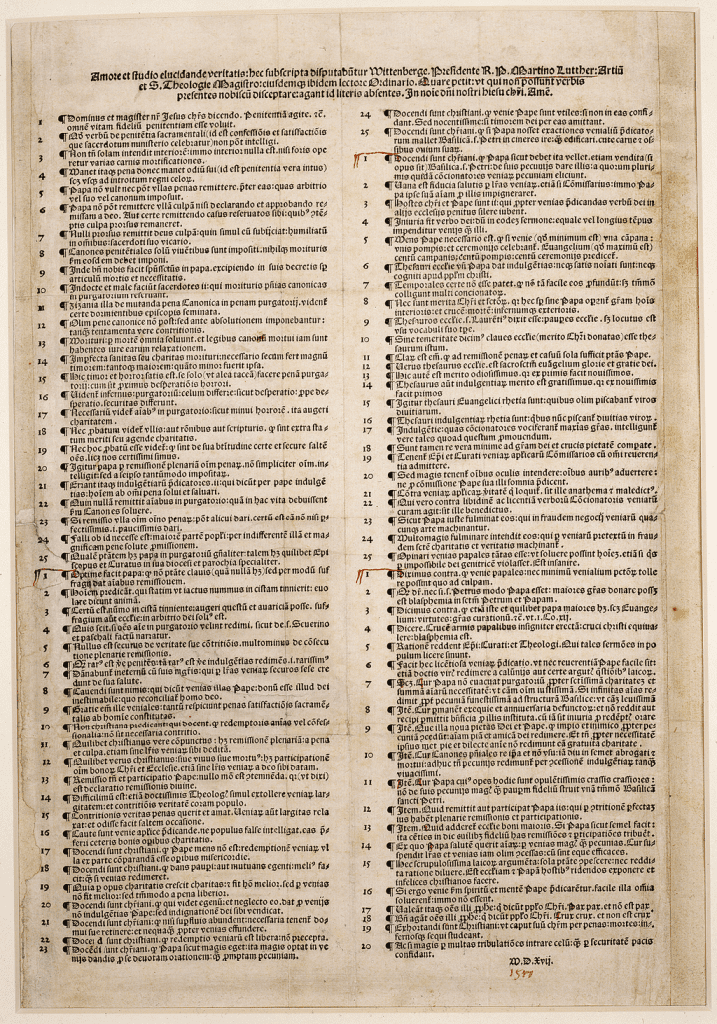
As the Ninety-Five Theses spread rapidly, the Reformation sweeping the European continent divided the Catholic faith; religious opposition swiftly turned into opposition between political camps, culminating in the Peace of Augsburg in 1555. Catholicism split once more, and Protestantism was born.
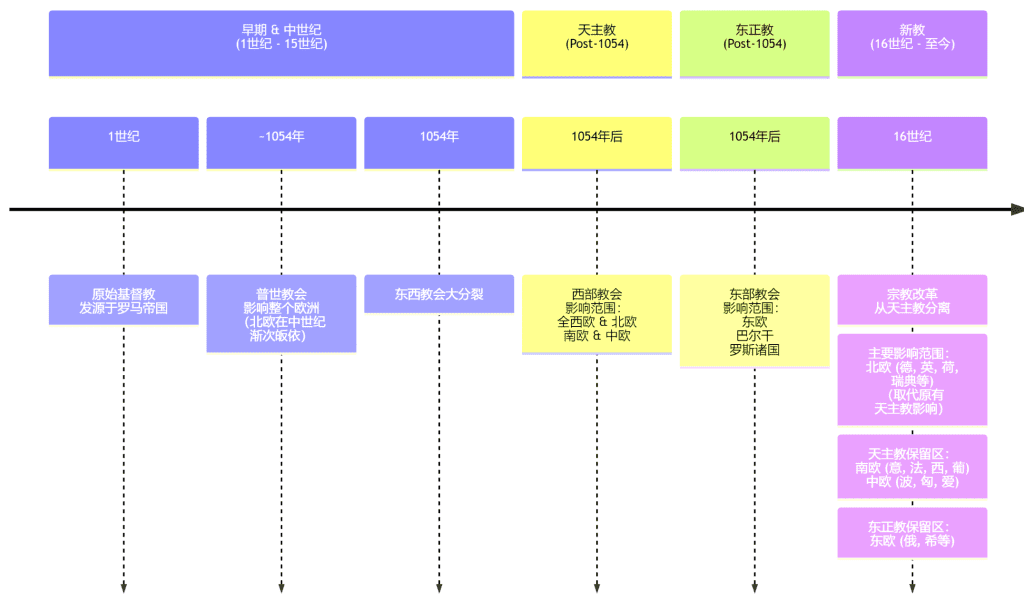
Knowledge Point: The Reformation and the Ninety-Five Theses
[Expand / Collapse]
-
The Ninety-Five Theses (official title: Disputation on the Power and Efficacy of Indulgences)
1. The Core Event and Its Purpose
- Time and Place: On October 31, 1517, Martin Luther (then a professor of theology at the University of Wittenberg) wrote it in Latin and, according to tradition,posted it on the door of the Castle Church in Wittenberg。
- Form: This was not a revolutionary manifesto but aset of academic theses for debate. The church door served as the university bulletin board, and Luther was inviting scholars and clergy to conduct a formal academic debate on indulgences and related questions.
- Direct Cause: It was directed against Pope Leo X’s large-scale sale of indulgences to raise money for rebuilding St. Peter’s Basilica, and especially against theextreme and misleading sales tacticsused by the Dominican friar Johann Tetzel while peddling them in German lands. Tetzel’s slogan—”As soon as the coin in the coffer rings, the soul from purgatory springs”—enraged Luther.
2. Core Content and Arguments
The Ninety-Five Theses did not seek to repudiate the Catholic Church as a whole, but sharply criticized the theology and practice of indulgences at the time. Its core arguments can be summarized as follows:
Criticizing Misunderstandings of Indulgences:
- Thesis 1opens with the declaration: “When our Lord Jesus Christ said ‘Repent,’ He willed the entire life of believers to be one of repentance.” Luther emphasized thattrue, inward repentancematters more than any outward religious act.
- He questioned the idea that indulgences could directly remit guilt and punishment, arguing that they could only bring remission of the external penalties imposed by the Church—not of God’s final judgment.
Denying the Pope’s Authority over Purgatory:
- Luther disputed the claim that the pope has direct jurisdiction over purgatory (Theses 22–29). He argued that the pope can at most grant remission for the church penalties imposed in this life that fall under his authority, but cannot intervene on behalf of the souls in purgatory after death.
- He observed with biting irony: “The clinking of coins in the treasury chest can increase the Church’s profit, but intercession (that is, prayer for the souls in purgatory) rests with God alone.” (Thesis 28, a paraphrase)
Exposing the Economic Motives and Moral Dangers of Indulgences:
- He accused the sale of indulgences of being formoney, not for the salvation of souls (Theses 66–68)。
- He argued that indulgences areharmfulto the moral life of Christians, because they give people a false sense of security, leading them to believe that salvation can be bought with money and thereby neglecting true repentance, humility, and dependence on Christ (Theses 40–45)。
Pointing the Finger at the Pope Himself:
- Luther argued that if the pope truly had the power to release souls from purgatory, why did he not free them all out of “the most holy love” and free of charge, rather than doing so for “the most miserable money”? (Thesis 82) This was an extremely provocative question.
Emphasizing the True Christian Life:
- True treasure is the grace of God and the Gospel (Thesis 62)。
- True Christians should follow Christ, enduring suffering and the cross, rather than seeking the false peace that indulgences bring (Theses 92–95)。
3. Historical Impact and Significance
- “The Spark That Lit the Powder Keg”: Luther’s intention was an academic debate, but thanks to the invention ofprinting, the Ninety-Five Theses were quickly translated into German and widely circulated, spreading across Germany and Europe within weeks. It precisely expressed the widespread grievances of all German classes against the Roman Curia’s long-standing political oppression, economic exploitation, and religious corruption.
- From Academic Debate to Religious Revolution: The Church was forced to respond, but its counterattack pushed Luther toward more radical positions. The focus of the debate gradually rose from indulgences tothe authority of the pope and of church councils, and ultimately to the core doctrine of “justification by faith alone”. An academic debate thus escalated into an irreversible religious revolution.
- Symbolic Significance: October 31 (the eve of All Saints’ Day) has therefore been commemorated by Protestants (especially Lutherans) as “Reformation Day” , symbolizing light overcoming darkness and the true Word of God being restored from error.
-
1. The Background and Causes of the Reformation (Why Did It Happen?)
- The Church’s Deep Corruption: The secularization and luxurious lifestyle of popes and high-ranking clergy, simony (the buying and selling of church offices), and the large-scale sale ofindulgencesto raise money (such as for rebuilding St. Peter’s Basilica) stirred widespread discontent across all classes.
- The Awakening of Theology and Faith: By re-reading the Bible, reformers such as Martin Luther advanced revolutionary new doctrines:
- “Justification by Faith Alone” : The salvation of the soul depends not on the Church’s sacraments or one’s “good works,” but solely onfaithin God’s grace. This denied the Church its privileged position as the “mediator of salvation.”
- “Sola Scriptura” (Scripture Alone) : The sole supreme authority for faith is Scripture itself, not the decrees of popes or ecumenical councils. This encouraged people to return to the classics and challenged the Church’s monopoly on interpretation.
- “The Priesthood of All Believers” : All sincere believers are equal before God and can communicate with God directly through faith. This dismantled the Catholic Church’s rigid hierarchical system.
- The Contest for Political Power: The monarchs of the emergingnation-states(such as the German princes, England, and Sweden) longed to throw off the Roman Curia’s political, judicial, and economic interference and to seize church property and power for themselves.
- The Technological and Social Foundation:printingThe popularization of [printing] enabled new ideas to spread explosively, beyond any possibility of suppression. Thehumanistspirit encouraged individual reason and critical thinking, preparing the intellectual soil for reform.
2. The Main Threads and Factions of the Reformation (How Did It Develop?)
The Reformation was not a unified movement but a convergence of multiple parallel threads.
- Martin Luther and German Lutheranism: In 1517, Luther published the Ninety-Five Theses, igniting the Reformation. His ideas spread rapidly across Germany, winning the support of princes and townspeople resentful of Rome’s exploitation. Finally, the Peace of Augsburg of 1555 established the “cuius regio, eius religio” principle, recognizing the legal status of Lutheranism.
- Calvin and the Reformed Tradition: John Calvin established a more radical theocratic republic in Geneva. Its core doctrine was “predestination” (that God has preordained who will be saved), emphasizing that hard work and frugal living are marks of God’s elect. This tradition (including the later Puritans) exerted a profound influence on the Netherlands, Scotland, France (the Huguenots), and the North American colonies, and its ethic is regarded as having fostered the spirit of capitalism.
- The Church of England (Anglicanism): KingHenry VIIIbroke with the pope over his divorce, and in 1534 passed the Act of Supremacy, making himself the supreme head of the Church of England. This reform was initially driven more bypolitical reasons, aimed at cutting off Rome’s interference in English affairs and seizing the Church’s vast wealth for the Crown.
3. Far-Reaching Historical Impact (What Did It Bring?)
- Religiously: The unified Latin Christendom collapsed completely, and Europe came to be divided among Catholicism, Protestantism, and Eastern Orthodoxy, triggering more than a century of religious wars.
- Politically:“cuius regio, eius religio” principle greatly strengthened the power of secular rulers and accelerated the formation ofmodern nation-states. Protestantism’s emphasis on individual conscience also planted the seeds for later ideas of liberty and democracy.
- Economically and Culturally: Protestantism—especially Calvinism—regarded secular occupations as a “calling,” encouraging diligence, frugality, and the capitalist spirit of enterprise. The need to promote the reading of the Bible greatly advancedpopular education and literacyamong the common people.
2. Dynastic Rivalry
The settling of the Hundred Years’ War between England and France did not bring lasting peace to France; the focus of rivalry now shifted to the Habsburg and Valois–Bourbon families. The Habsburg dynasty, which had built a “sun-never-sets” empire through adroit marriages, stretched its vast territories from Spain and Italy to the Netherlands and Germany, strategically encircling France. To break the Habsburg encirclement and contend for hegemony in Europe—above all in Italy—France waged the Italian Wars for decades.
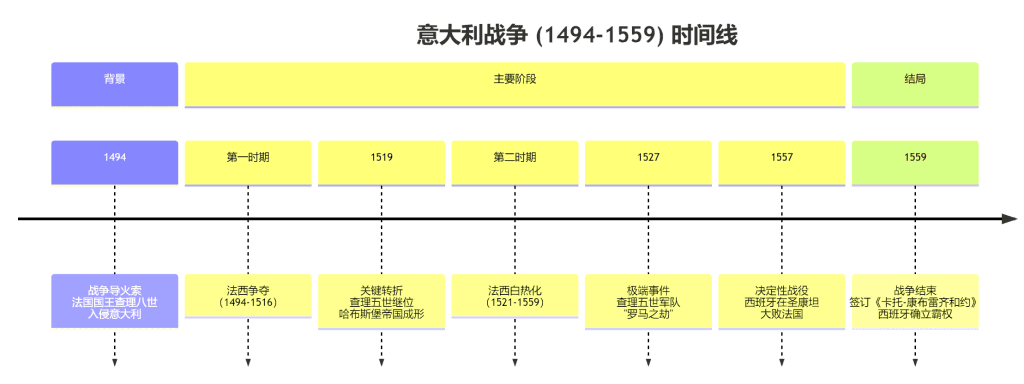
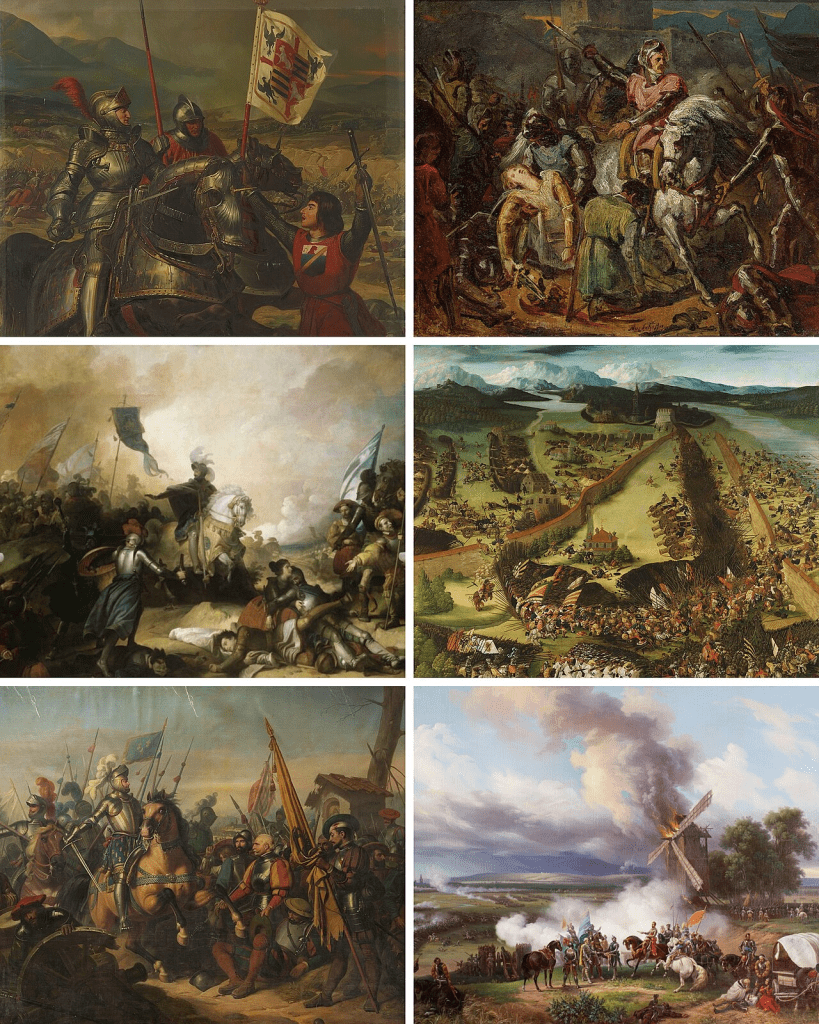
Knowledge Point: The Italian Wars
[Expand / Collapse]
-
1. The Habsburg Dynasty — “God’s Firstborn”
Territories Represented: The Habsburg dynasty was not a single country but acomposite empire ruled by one family. Its core consisted of two main branches:
- The Spanish Habsburgs: rulingSpainproper, the Italian territories ofthe Kingdom of Naples, Sicily, and Sardinia, as well as the vastAmerican colonies。
- The Austrian Habsburgs: the head of the family was usually electedHoly Roman Emperor, ruling Austria, Bohemia, and parts of Hungary and, as Emperor, nominally presiding over the hundreds of German states.
Geography and the Encirclement:
- To the south: Spain occupied the Iberian Peninsula, bordering France.
- To the east: the Holy Roman Empire (the German states) encircled France from the east.
- To the north: the wealthyNetherlands(roughly today’s Netherlands and Belgium) was a Spanish possession, pointing like a dagger at France’s northern border.
- In between: Spanish power on the Italian peninsula, such as the Duchy of Milan, cut off France’s route of expansion to the southeast.
This was the famous “Habsburg encirclement” , which left France almost completely ringed by enemy territory.
2. The Kingdom of France — “The Trapped Lily”
- Ruling Family: For most of the 16th century, France was ruled bythe House of Valois. At the end of the 16th century, when the Valois line died out, the throne passed to the cadet branch of theHouse of Bourbon(whose founding monarch was Henry IV).
- The State Represented:the Kingdom of France, an emergingcentralized nation-state. This stood in sharp contrast to the Habsburgs’ sprawling, multi-ethnic empire.
- Geography and Strategic Predicament:
- France lay in western Europe, with a relatively concentrated and coherent territory.
- Yet its geopolitical position was extremely unfavorable, trapped deep within the Habsburg encirclement. France’s core strategic goal was tobreak this encirclement, especially by seeking influence in the wealthy and culturally flourishing Italian peninsula, and thereby contending for hegemony in Europe.
-
England (ruled at this time by the Tudors) played a vital role in this power struggle as abalancer (or “counterweight”) . The core of its policy was the “balance of power on the continent”—preventing any single continental power (whether Habsburg or French) from growing so strong as to threaten England’s security.
- The Hereditary Rivalry with France: Although the Hundred Years’ War between England and France had ended, hostility and territorial disputes remained (England held only the port of Calais). The two nations were historic enemies.
- The Complicated Relationship with the Habsburgs:
- Allies and In-Laws: The Habsburg emperorCharles Vwas once betrothed to Queen Mary I of England; his sonPhilip IIeven married Mary I and for a time became co-monarch. During Mary’s reign, England and Spain were close allies.
- Rivals and Enemies: By the age of Elizabeth I, as England turned Protestant and English privateers attacked Spain’s American shipping lanes, Anglo-Spanish relations deteriorated sharply, eventually erupting intothe Spanish Armada(1588).
Summarizing England’s Position:
- When France grew too powerful, England would ally with the Habsburgs (Spain) against France.
- When the Habsburg (Spanish) hegemonic ambitions became too blatant (as in the era of Elizabeth I), England would support French resistance, even going to war with Spain directly.
-
To break the Habsburg encirclement, France adopted a strategy that shocked the entire Christian world at the time: allying with the IslamicOttoman Empire.
- Background: Under Suleiman the Magnificent, the Ottoman Empire was fiercely attacking the Habsburgs’ Holy Roman Empire from the east.
- The Alliance Takes Shape: After being captured and humiliated by Charles V, King Francis I of France resolutely formed a formal Franco-Ottoman military alliance with Suleiman the Magnificent (1536).
- Impact: This was a landmark event, showing thatreason of state (raison d’état) was beginning to supersede the medieval primacy ofreligious faithas the foremost principle of European international relations. The two powers coordinated militarily, and the French navy even joined operations with the Ottoman fleet, leaving the Habsburgs caught between two fronts.
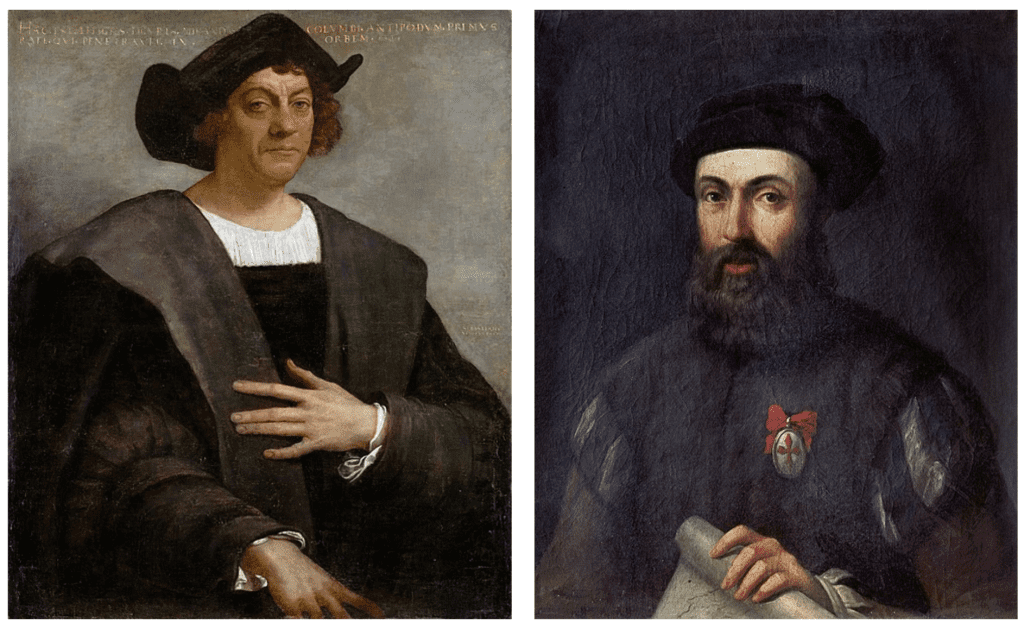
The stage of this rivalry was no longer confined to Europe itself. As the ships of Christopher Columbus and Ferdinand Magellan sailed into the unknown, Spain and Portugal—and later England and the Netherlands—opened up new arenas of competition on the world’s oceans and in the New World, extending the contest of crowns across the globe and intensifying its ferocity accordingly.
3. Internal Turmoil
Within each kingdom and duchy, too, an undercurrent of turmoil was stirring. The rising, powerful monarchies strove to suppress the traditional autonomy of the feudal nobility in order to build a centralized modern state apparatus—a process rife with intrigue, rebellion, and repression. Within a few short decades, England’s monarchs swung back and forth between Catholicism and Protestantism, deeply tearing the loyalties and faith of society; Spain’s monarchs, for all their apparent strength, had to contend with the complicated ethnic and religious legacies within their own domains.
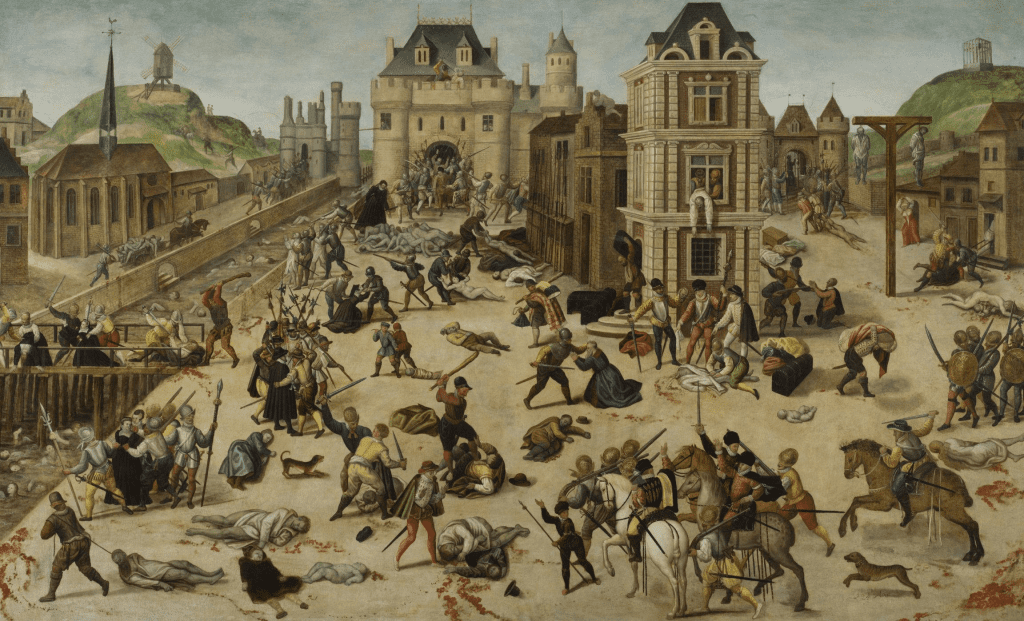
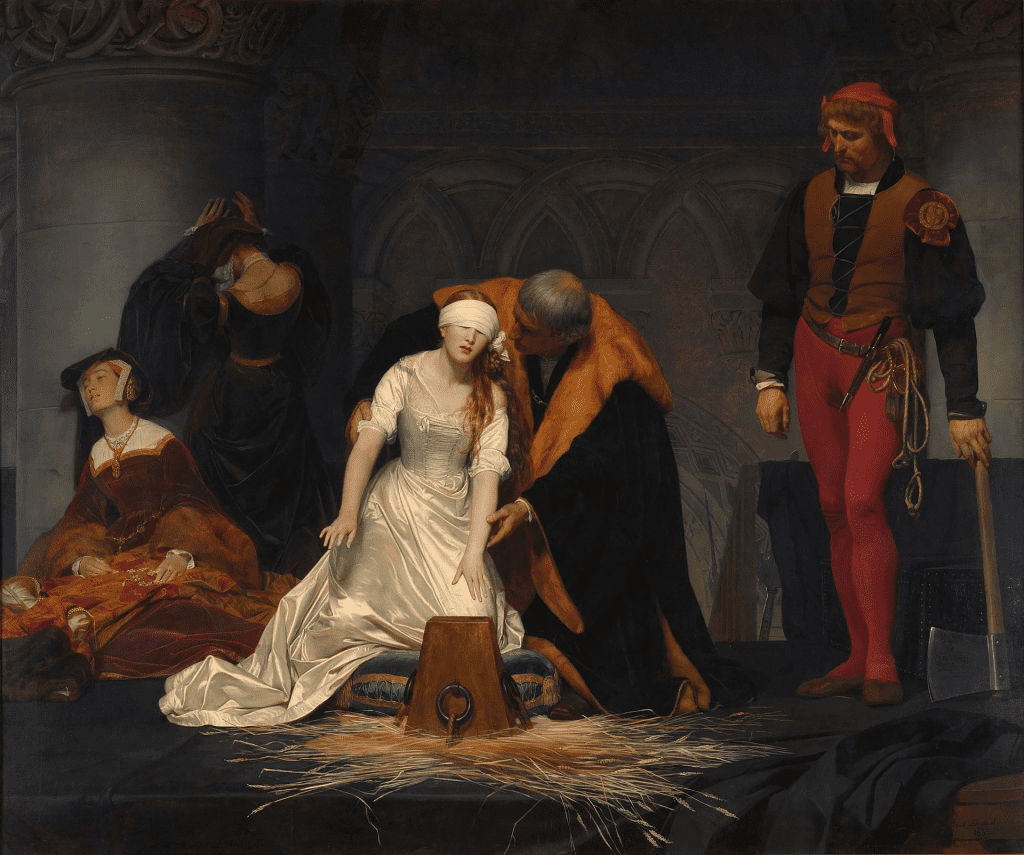
This was an age undergoing violent deconstruction and reconstruction on both the spiritual and the secular plane. Old loyalties were dissolving, while new identities still stirred in the womb. It was precisely on this soil, charged with intellectual tension and social contradiction, that the music of the late Renaissance burst into its unique radiance.
As the unified system of ecclesiastical authority gradually collapsed and reorganized, the realm of music—long dominated by sacred narrative—welcomed a vigorous eruption of secular spirit. When the Church’s watchful eye was no longer omnipresent, the technique of word painting, like an unlocked key, was applied by composers widely and boldly to secular subjects. Individual joys and sorrows, loves and sighs—these lived, breathing experiences—began to flow through the music with unprecedented clarity and expressiveness, their brilliance even overshadowing for a time the solemnity and sanctity the Church championed.
This profound turn not only defined the distinctive character of late-Renaissance music but also quietly paved the way to the Baroque era. A great musical age that would exalt emotion and personal expression as its supreme principle was already glimmering on a blood-stained horizon.
Knowledge Point: Word Painting
[Expand / Collapse]
-
Word painting (madrigalism) refers to the composer’s use of specific musical devices to depict, vividly and directly, the concrete images or emotions in the lyrics, in a kind of musical illustration.
1. Depicting Concrete Images:
- Rising and Falling: When the text speaks of “heaven,” “flight,” or “ascent,” the melodic line will typicallymove upward; conversely, when encountering “hell,” “falling,” or “the abyss,” the melody willleap downward or descend stepwise。
- For example: in Palestrina’s motets, when the words “descendit de coelis” (he from heavencame down) are sung, the music is very likely to contain a descending melodic passage.
- Running and Chasing: When the text says “run,” “chase,” or “gallop,” the composer will usefast, dense notes(usually rapid syllabic motion) to imitate the act of running.
- Pain and Sighing: When encountering “pain,” “sorrow,” or “sighing,” the composer will usedissonant intervals(such as the diminished fifth) orchromaticismto create a tense, anguished aural effect. Sometimes a rest is even used outright to represent the pause of a “sigh.”
2. Depicting Abstract Concepts and Emotions:
- Life and Death: “Life,” “light,” and “joy” are usually paired withmajor-mode coloring (though the modal system differed then, the principle was similar), brisk rhythms, and luminous harmony; while “death,” “darkness,” and “sorrow” employlow-lying sonorities, slow rhythms, and dissonant harmony。
- Bondage and Freedom: If the text speaks of “chains” or “imprisonment,” the voices may interweave very tightly to create a sense of constraint; when singing of “liberation” or “freedom,” the voices may suddenly open up, the melodic lines becoming broad and expansive.
3. Extreme Sound Effects:
- In Thomas Weelkes’s madrigal “As Vesta Was Descending”, the playful “fa la la” passages are light and sprightly; but when the text sings of “running… in pain,” the voices enter rapidly in imitation, creating an aural picture of “chasing one another.”
- In the madrigals of Carlo Gesualdo, in order to express extreme anguish and contradictory emotions, he would employ very bold, even jarringchromatic harmony, which was a strikingly avant-garde idiom in its day.
In summary:
The significance of “word painting” lies in its marking of theawakening of the humanist spiritamong Renaissance composers. They no longer regarded the lyrics merely as a text to be set to solemn music, but as a script full of imagery and emotion. Like a painter with a brush, they began to use melody, harmony, and rhythm—these “musical pigments”—to sketch, render, and magnify every detail and every emotion in the words.
This moved music from pure formal beauty toward a new realm of greater expressiveness and drama, directly paving the way for the birth of Baroque opera. In your diary, you could depict a musician racking his brains over a line of verse, searching for the most fitting “musical picture”—that would make a vivid scene.
- Rising and Falling: When the text speaks of “heaven,” “flight,” or “ascent,” the melodic line will typicallymove upward; conversely, when encountering “hell,” “falling,” or “the abyss,” the melody willleap downward or descend stepwise。
First Movement: A Generation in Turmoil
While the flames of the Reformation swept across Germany, and while the armies of Spain and France fought bitterly over the Apennine Peninsula (the Italian Wars), in 1525, in an unremarkable town southeast of Rome—Palestrina—a baby was born amid the chaos of the age. He was named Giovanni Pierluigi, and later the name of that little town became his eternal surname, symbolizing his rock-solid place in the history of music. His childhood was steeped in the very center of every storm: the Papal States.
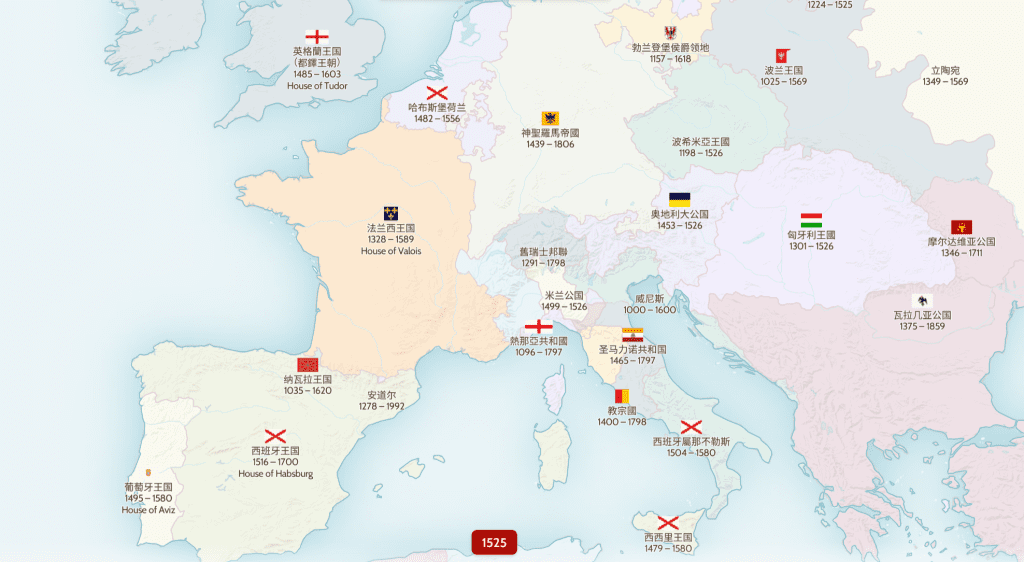
Knowledge Point: The Glory of Place and Name
[Expand / Collapse]
-
In Renaissance Italy, people often referred to a person by “da + birthplace” (meaning “from…”), especially after he had become famous. This is similar to how we say “da Vinci,” meaning “from the town of Vinci.”
- From “Giovanni Pierluigi” to “Giovanni Pierluigi da Palestrina”: This process meant he was no longer merely an ordinary man named Giovanni, with the surname Pierluigi. Thegeographical coordinates of his birth (the town of Palestrina) became the core of his identity. This was in itself a form of recognition and crowning by society. The town was honored through him, and he became famous through the town.
Knowledge Point: The Papal States
[Expand / Collapse]
-
The Papal States were not an ordinary European kingdom; they were a uniqueunion of church and state—a territorial entity whose sovereign, the pope, was both thespiritual leaderof Catholics worldwide and thesecular rulerof a swath of land in central Italy. This dual identity determined its central position and complicated predicament in all the major events of 16th-century Europe.
I. Historical Standing and Core Value
A Sacred Foundation:
- “the Patrimony of Saint Peter”: The Papal States were regarded as the temporal patrimony that Saint Peter—the foremost apostle of Jesus—left to successive popes, a material guarantee that their spiritual authority would not be constrained by secular rulers. Its legitimacy derived from the “Donation of Constantine” (though later proven to be a forgery).
- The Capital of Catholic Christendom: Rome was the center of Christendom. The pope’s decrees and power of excommunication influenced the legitimacy of every monarch’s rule from Portugal to Poland.
Secular Assets:
- A Strategic Stronghold: The Papal States stretched across central Italy, bordering powerful duchies such as Milan to the north and the Kingdom of Naples to the south, commanding the key routes connecting north and south.
- An Economic and Cultural Engine: As a pilgrimage center, Rome amassed enormous wealth. The popes were also Europe’s most generous patrons of the arts, making Rome a cultural heart of the Renaissance on a par with Florence and Venice. The masterpieces of Michelangelo, Raphael, and other giants were all born from papal commissions.
II. Its Role and Predicament in the Age
In the 16th century, the Papal States played a contradictory and difficult role:
Role One: The “Balancer” of Italy
- The core strategy of the Papal States was toprevent any single power (especially France or Spain) from completely dominating the Italian peninsula. A divided Italy best served the secular interests of the Papal States.
- Strategy: to swing between France and Spain—allying with France against Spain at one moment and with Spain against France at another—playing the pivotal third party to preserve its own independence.
Role Two: The “Patron” of the Renaissance
- To manifest the glory of God and the Church, successive popes (such as Julius II and Leo X) spared no expense in building St. Peter’s Basilica and adorning the Sistine Chapel. This was both an act of faith and a display of power and wealth.
Predicament: Surviving Between Giants
- The Papal States faced the “plight of a small state“: despite its lofty religious standing, its military strength and financial resources were far inferior to those of the unified nation-states (France and Spain). Its survival depended enormously on exquisite diplomatic maneuvering and on the mutual checks among its rivals.
III. Its Relationship with the Italian Wars (1494–1559)
The Italian Wars were the most direct embodiment of the Papal States’ predicament: they were both a participant and a victim.
Catalyst and Battlefield of the Wars:
- The internal strife of the Papal States (such as Alexander VI’s expansion of territories for his son Cesare Borgia) often provided a pretext for foreign intervention.
- Its territories became the main battlefield where French and Spanish armies repeatedly clashed, marched, and fought, severely devastating the local economy and the people’s livelihoods.
The Sack of Rome (1527)—The Height of the Predicament:
- This was the catastrophic event that best illustrates the predicament of the Papal States. Pope Clement VII had allied with France against the emperorCharles V (King of Spain)。
- . As a result, an army under Charles V, made up mainly of German mercenaries who followedLutheranism, mutinied over unpaid wages, stormed into Rome, and carried out weeks of frenzied looting, destruction, and slaughter.
- Symbolic Significance: This episode showed thatthe pope could not even guarantee the safety of his own capital. It was dealt a double blow fromwithout (the Spanish Empire) 和within (the ideas of the Reformation) , and its sacred aura was shattered completely. This event is widely regarded as marking the end of the High Renaissance.
IV. Its Relationship with the Reformation (from 1517)
The Reformation was a movement that directly shook the foundations of the Papal States on the spiritual plane.
The Spark of the Reformation:
- To raise the enormous funds for rebuilding St. Peter’s Basilica, Pope Leo X sold “indulgences” on a massive scale in German lands. This commercialization of divine grace becameMartin Lutherthe direct trigger for the publication of the Ninety-Five Theses.
The Core Under Challenge:
- The reformers denied the pope’s supreme authority and upheld “justification by faith,” directly undermining the theological foundation of papal rule.
- They attacked the pope’s temporal power and luxurious lifestyle, holding that these betrayed Christ’s ideal of poverty.
Response and Countermeasure—The Counter-Reformation:
- In response, the Papal States became the center of theCounter-Reformation (or Catholic Reformation) .
- In 1545, the pope convened theCouncil of Trentin Trent, reaffirming Catholic doctrine, reforming church discipline, and eliminating internal abuses.
- In Art and Music: The Counter-Reformation stressed the didactic function of art, demanding that sacred music beclear and solemn, with the lyrics easily intelligible, and that the words must not be obscured by complex polyphony. This aesthetic demand directly gave rise to and definedPalestrina’smusical style—one that preserved the beauty of polyphony yet remained pure and solemn, celebrated as the perfect model that “saved church music.”
Palestrina’s musical career began with a stroke of characteristic good fortune. Around 1533–1537, his clear, moving treble voice was discovered by the chapel master of Rome’s Santa Maria Maggiore, and he was taken into that great papal basilica as a boy soprano. This was no mere choir post; it was an entrance into a first-rate “school of musical art.” There he studied under Giacomo Coppola—a musician of sparse record who was one of the key guides of Palestrina’s early artistic life—and he may also have learned from Firmin Lebel, a French composer equally sparsely documented. His studies went far beyond singing, systematically covering Gregorian chant, the intricate craft of polyphony, counterpoint, composition, and organ playing. This rigorous training laid an unshakable foundation for the vast, finely wrought polyphonic edifice he would later build.
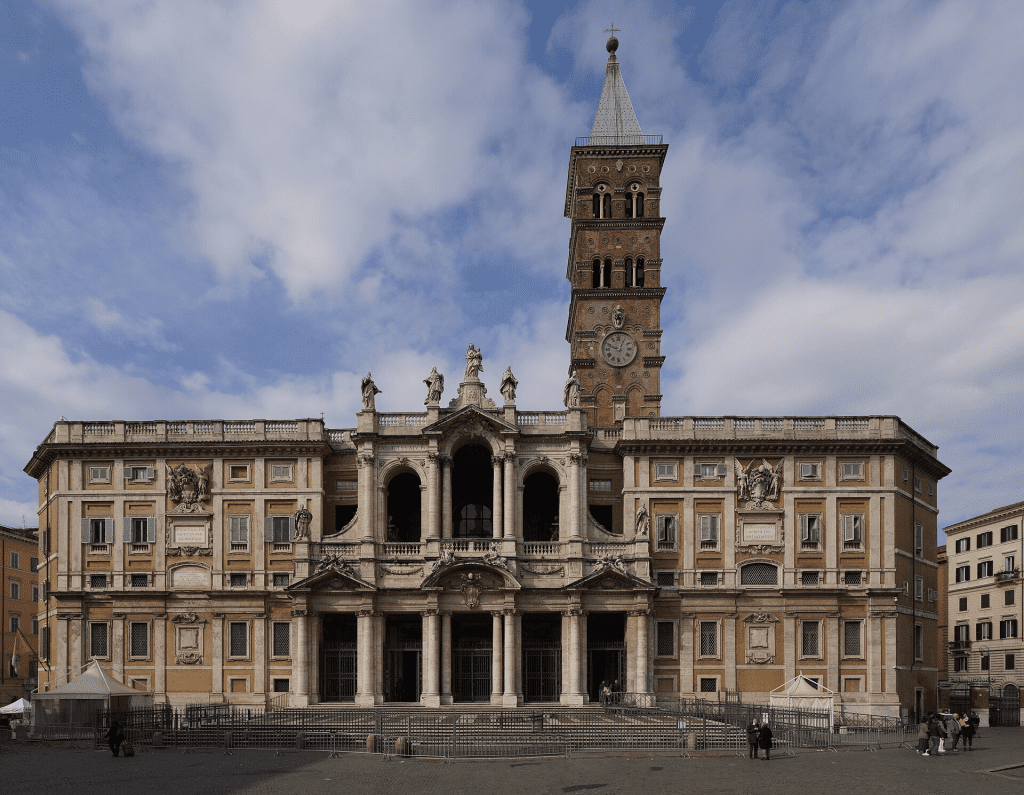
Living daily in Rome, the “Eternal City,” and bathed in the artistic sanctum created by masters such as Raphael and Michelangelo, the young Palestrina absorbed a classical aesthetic that prized harmony, balance, and sublimity. This subtly differed from the Northern Renaissance’s greater attention to detail and individuality, and it foreshadowed the Roman dignity and purity that would mark his future music.

Knowledge Point: What Is “Polyphony”?
[Expand / Collapse]
-
Imagine the simplest music: one person singing “Twinkle, Twinkle, Little Star” alone. This is calledmonophonic music—a single melodic line, very simple.
Now let’s play something a little more complex:You sing “Twinkle, Twinkle, Little Star.”I sing “Two Tigers” at the same time.A third person hums a completely different melody at the same time.If we all just sang at random, it would certainly be noise, unbearable to listen to.
But if a gifted composer had carefully designed these three melodies so that, althougheach is independent and completely different, when combined, their pitches and rhythms fit together perfectly, sounding extraordinarily rich, splendid, and harmonious.That is what is called “polyphonic music.”
Knowledge Point: What Are “Counterpoint” and “Counterpoint Technique”?
[Expand / Collapse]
-
Once we understand what “polyphony” is, we can understand what “counterpoint technique” means—in short, the specialized technique for realizing polyphonic music.
“Counterpoint” is like a highly precise “martial-arts manual” or “instruction booklet”: it prescribes how the different melodic lines should interact:
1.How to avoid “fighting”:It lays down which notes sound good together (consonant) and which grate (dissonant), and how to use dissonance deftly and then resolve it to consonance.
2.Imitation:It is like when you have just said something, and I repeat the gist of your words in a different tone. In music, one voice sings a melody and another voice imitates it a moment later.
3. Call and response: one voice sings high, and another answers low.
4.Complementary, staggered motion:One voice’s melody moves upward while another moves downward, forming a beautiful crossing. One voice is rhythmically quick while another slows down, creating contrast.
So counterpoint is the “art of composition”—the entire body of methods and wisdom that ensures that a multi-person conversation does not turn into a quarrel, but becomes a brilliant debate or a recitation of poetry.
In 1544, the adult Palestrina returned to his hometown of Palestrina in Italy and was appointed organist and choir director of the Cathedral of Sant’Agapito. This was the starting point of his career and the proving ground where he put his learning into practice.
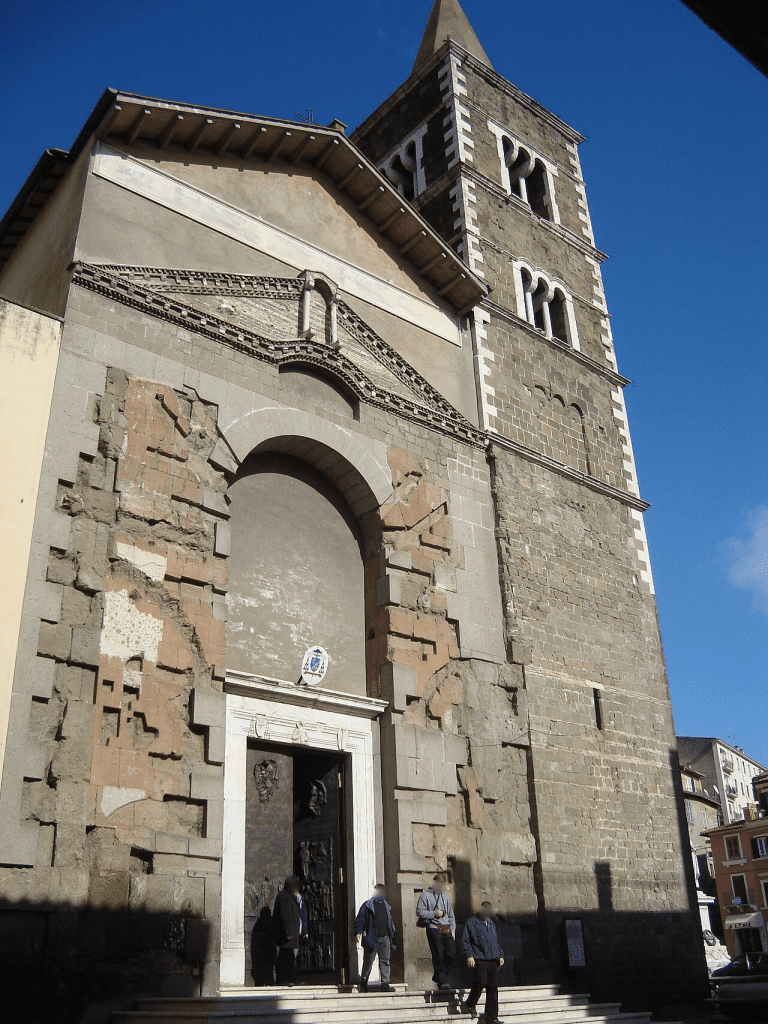
Knowledge Point: Italy and the Papal States
[Expand / Collapse]
-
1. “Italy” Is a Cultural-Geographical Concept; “the Papal States” Is a Political Entity
In the 16th century in which Palestrina lived,“Italy” was not a unified country(like today’s Italian Republic). It was more like ageographical and cultural peninsuladotted with many independent or semi-independent political entities.
These entities mainly included:
- Kingdoms: such as the Kingdom of Naples and the Kingdom of Sicily in the south.
- Duchies: such as the Duchy of Milan.
- Republics: such as the Republic of Venice and the Republic of Genoa.
- The Papal States: a territorial state ruled by the pope.
So when, in a cultural or artistic sense, we call Palestrina an “Italian composer,” we mean that:he came from the Italian peninsula, his art was rooted in Italian cultural soil, and he spoke the musical language of Italy. This is just as we call Leonardo da Vinci an “Italian painter,” even though the Duchy of Milan he served was also an independent political entity.
2. “The Papal States” Is Part of “Italy”
The territory of the Papal States lay incentral Italy, with Rome at its heart. Therefore, geographically and culturally,the Papal States are part of Italy. Palestrina was born in the town of Palestrina in the Papal States and worked in Rome in the Papal States; he was, of course, both a subject of the Papal States and an Italian.
To show this relationship more vividly, please refer to the diagram below:

-
Italy and Italy
1. Historical Continuity: From Cultural Concept to Political Entity
- In Palestrina’s era (the 16th century): “Italy” was primarily ageographical and cultural concept, referred to as the “Italian Peninsula” or the “Italian states”—like a “great cultural family” made up of independent kingdoms (such as Naples), duchies (such as Milan), republics (such as Venice), and the Papal States.
- Today: “Italy” is aunified modern nation-state—the Italian Republic.
Thisunified nation was built precisely upon the territory of the “great cultural family” to which Palestrina belonged. Therefore, in terms ofgeographical territory and the inheritance of history and culture, Palestrina is unquestionably one of the forebears of today’s Italy and one of the makers of its cultural heritage.
To understand this inheritance more intuitively, please refer to the timeline diagram below:

2. A Vivid Analogy
This is like the relationship between “Chinese civilization,” the “ancient feudal states,” and “modern China”。
- Confuciuswas a man of the Spring and Autumn period, from the state ofLu, yet today we would never say Confucius was a man of Lu (a long-vanished political entity); rather, we respectfully call hima great thinker and educator of ancient China. His thought and cultural legacy belong to the entire Chinese nation.
- Likewise,Palestrina’swas, during the Renaissance, a subject of thePapal States, yet today we respectfully call hima great Italian composer. His music isa cultural treasure of the entire Italian nation。
3. The Concrete Connection: The Fate of the Papal States
The most crucial point is thatthe Papal States as a political entity no longer exist; their territory has become part of modern Italy.
Nearly three hundred years after Palestrina’s death, during the 19th-century movement for Italian unification (the Risorgimento), the territory of the Papal States was gradually absorbed into the newly formed Kingdom of Italy in 1870. From then on, Rome became the capital of Italy, the pope’s temporal power was greatly curtailed, and his dominion was limited to Vatican City.Conclusion:
So when today we say “Palestrina is an Italian composer,” this statement carries two layers of meaning:
- Historical and Cultural Belonging: the art he created belongs to the Italian cultural tradition that originated on the Apennine Peninsula.
- Political and Territorial Inheritance: the land where he was born and lived today lies within the borders of the Italian Republic.
Therefore, Palestrina’s relationship withmodern Italy is one of direct lineal inheritance. He was a genius who grew up on that soil, and today’s unified Italy is the lawful—and well-deserving—heir and guardian of that legacy.
In 1547 he married Lucrezia Gorri, a local woman. The marriage contract shows that Palestrina was then of modest means, working hard to build a stable life. This worldly security stood in sharp contrast to the turmoil the outside world was experiencing through the Italian Wars and the Reformation. More importantly, during this period his talent won the appreciation of Giovanni Maria Ciocchi del Monte, the then Bishop of Palestrina—the very man who would later change his destiny as Pope Julius III.
Knowledge Point: The Dowry from Lucrezia Gorri
[Expand / Collapse]
-
1. The Cash Component: 100 Gold Florins
- Value: In mid-16th-century Italy, 100 florins was aconsiderable start-up sum, but by no means a fortune. It was roughly equivalent totwo to three years’ salary。
- Uses: This cash was likely used forbuying household goods, covering wedding expenses, and serving as the emergency reserve of a young family. It provided important liquidity.
2. The Real Estate and Business Component (The Core Value)
This part was the true cornerstone of the dowry, revealing the solid foundation of Lucrezia’s family.- A Small Tannery: This was abusiness that could generate steady income. Leatherworking was an important craft at the time, meaning the Giovanni household would have a stable source of commercial income, rather than relying solely on his uncertain salary as a musician.
- Two Unencumbered, Tax-Exempt Plots of Land, a Meadow, and a Vineyard: These were the most critical assets.
- “Unencumbered and tax-exempt” is the masterstroke, meaning these lands wereentirely owned, debt-free, unalloyed assets, with all their produce being pure profit.
- Produce: These lands could providefood (grapes, grain), pasture (possibly for raising livestock), and wine. This greatly reduced the family’s cost of living and provided basic security.
- Symbolic Significance: Owning land was a symbol of social status at the time, marking their departure from the propertyless commoner class.
In the early stage of his life, Palestrina’s chief duty as a church musician was to compose for the liturgy. Though the vast majority of his early manuscripts have been lost, we can still infer the focus of his work from the arc of his career. His output at this time was very likely concentrated in the traditional church genres of masses and motets. He had to supply music for all the feasts and daily liturgies of the Cathedral of Sant’Agapito, which forced him to master the polyphonic tradition of the Franco-Flemish School (such as Josquin) and to begin searching for his own voice.
Second Movement: Turmoil and Maturity
In 1551, the great opportunity of history arrived. His patron del Monte had become Pope Julius III. This pope, who loved the arts and remembered old friends, summoned Palestrina to Rome with a single appointment, naming him chapel master of the choir of St. Peter’s Basilica–Cappella Giulia. It was one of the most important musical posts in Rome, marking the moment this musician from a small town officially stepped into the innermost halls of European musical power.
Yet the Rome he entered was no longer Raphael’s harmonious, rational “School of Athens.” At this very moment, the Council of Trent (1545–1563) was in full swing, aimed at responding to the Protestant onslaught and reforming the Catholic Church itself. At the council, church music itself came under the most severe scrutiny. Many conservative theologians charged that elaborate polyphonic masses drowned the sacred text, making it impossible for the faithful to hear the words and thereby profaning the essence of the liturgy. Some even demanded that polyphonic music be banned outright, returning to the monophonic Gregorian chant. From the very beginning, Palestrina’s career was placed at the storm center of this debate over the music of the Mass.

Julius III’s patronage was short-lived. In 1555 the pope who had favored him died; his successor, Marcellus II, reigned barely twenty days before passing away, and was followed by the stern reforming pope Paul IV. The new pope was bent on purging the morals of the Curia; he strictly enforced clerical discipline and, on the grounds that “married laymen were unfit to serve the papal chapel,” expelled Palestrina and two other singers from the papal choir in July 1555.
Knowledge Point: The Council of Trent (1545–1563)
[Expand / Collapse]
-
The Council of Trent was the nineteenth ecumenical council of the Catholic Church and is widely regarded asthe pivotal event of the Counter-Reformation (or Catholic Reformation). It was not a single continuous assembly but a series of twenty-five sessions, interrupted by war, plague, and political strife, spanning eighteen years and five popes. The council’s chief aims were to respond to the challenge of Protestantism, clarify Catholic doctrine, and launch a comprehensive internal reform.
I. Historical Background: Why Was the Council Convened?
The convening of the council was the inevitable result of multiple converging crises:
- The Direct Impact of the Reformation: The Reformation launched by Martin Luther in 1517 swept across Europe with astonishing speed, fundamentally challenging the Catholic Church’s core doctrines—papal authority, the sacramental system, and the theology of salvation. The Church faced its gravest schism since the fall of the Western Roman Empire.
- Internal Corruption and Abuses: At the time, the Church was rife with abuses, includingsimony, clergy holding multiple benefices, bishops absent from their dioceses, and clerical ignorance and moral decay. Calls for reform had existed long before the Reformation, but the Protestant onslaught made them desperately urgent.
- Political Pressure: Charles V, Holy Roman Emperor, wanted the Church to reform in order to ease the religious tensions within his empire; he also hoped the council might reach some doctrinal compromise with the Protestants to preserve imperial unity. The pope, for his part, feared the council would weaken his authority.
II. The Course of the Council: Three Phases and Five Popes
The council site was chosen inTrent, in northern Italy within the territory of the Holy Roman Empire—a location meant to signal a universality that transcended factions. The council proceeded in three main phases:
Phase One (1545–1549): Pope Paul III
- The council opened on December 13, 1545, with a modest number of attendees.
- This phase established the principle of “doctrine and reform in parallel” —defining orthodox doctrine on the one hand while implementing disciplinary reform on the other.
- Due to plague and conflicts with the emperor, the council was suspended in 1549.
Phase Two (1551–1552): Pope Julius III
- The council reconvened and, for the first time, invited Protestant representatives to attend.
- But because the Protestant princes had gained the upper hand militarily, no consensus could be reached, and the council was adjourned indefinitely in 1552.
Phase Three (1559–1563): Pope Pius IV
- After the repressive reign of Pope Paul IV, Pius IV reopened the council in 1562—the most important and decisive phase of all.
- Attendance reached its peak, and final decrees were issued on the most crucial doctrinal and reform questions.
- The council concluded triumphantly on December 4, 1563.
III. Core Content and Decrees: Doctrinal Definition and Internal Renewal
The decisions of the Council of Trent fall clearly into two broad categories:Doctrinal definition和Disciplinary reform。
A. Doctrinal Definition: Answering the Protestant Challenge and Affirming Catholic Orthodoxy
Against the central claims of Protestantism, the council clarified the Catholic position:
- Scripture and Tradition: Rejecting “Scripture alone,” it affirmed thatScripture (with the Vulgate as the authoritative version) and the unwritten traditions handed downpossess equal authority, with the right of interpretation vested in the Church.
- Original Sin and Justification: This was the council’s central theological issue. Rejecting “justification by faith alone,” it defined justification by works , emphasizing that faith is the beginning of salvation but must be completed throughthe cooperation of works of charity, the grace of the sacraments, and the free will of the individual.
- The Seven Sacraments: The council affirmed that the sacraments are not mere symbols but effective vehicles of grace, and it firmly upheldall seven sacramentsas valid and necessary, rejecting the Protestant practice of retaining only baptism and the Eucharist.
- The Eucharist (the Mass): The council explicitly defined transubstantiation as dogma—that after consecration the bread and wine are substantially changed into the body and blood of Christ. It affirmed that the Mass is atrue re-presentationof Christ’s sacrifice on the Cross, offered as an expiatory sacrifice for the living and the dead.
- Purgatory, Indulgences, and the Veneration of Saints: The council affirmed the existence of purgatory, the pope’s power to grant remission of punishment for sin, and the legitimacy of seeking the intercession of the Virgin Mary and the saints.
B. Disciplinary Reform: Purifying the Church and Restoring Its Credibility
To root out the soil in which corruption thrived, the council enacted stringent reform decrees:
- Clerical Discipline: It required thatbishops must reside in their dioceses, and forbade the holding of multiple benefices. It mandated the establishment ofseminariesfor the systematic training and vetting of clergy.
- Against Simony: The buying and selling of church offices in any form was severely prohibited.
- Pastoral Duties: Bishops were required to visit their dioceses regularly, preach the Gospel, and care for the spiritual life of the faithful.
- Cultural Control: The later phase of the council gave rise to the Index of Prohibited Books , which reviewed and prohibited books deemed harmful to the faith.
IV. The Impact on Music: Clarifying the Legend and Shaping a Style
The Council of Trent’s impact on music was profound, but one famous legend needs to be clarified:
- The Legend That “Palestrina Saved Polyphonic Music”: Legend has it that the council considered banning polyphony from the liturgy because it was too complex and obscured the sacred text. Palestrina’s Missa Papae Marcelli , with its clear and solemn style, proved that polyphony could equally respect the text, thereby persuading the council fathers.
- Historical Fact: Modern research confirms that the councilnever formally discussed banning polyphonic music. Some participants did criticize certain musical abuses (such as the use of secular melodies or excessively ornate technique), but the final decree merely asked in general terms that “all things in the Mass should avoid obscenity… and be devoted to piety.” Yet the legend reflects the concerns of the age, and the style of Palestrina, Victoria, and other Roman School composers happened to fit perfectly theclarity, solemnity, and devotionthat the council advocated, and so came to be enshrined as the model of Catholic church music—the “Palestrina style”。
V. Historical Significance and Legacy
- Drawing Clear Boundaries: The council ended the medieval Church’s doctrinal ambiguity, drawing clear lines between Catholicism and Protestantism andestablishing the fundamental shape of Catholicism for nearly four centuries, until the Second Vatican Council (1962–1965)。
- Internal Revitalization: Through forceful disciplinary reform, corruption was effectively curbed, the quality of the clergy improved, and the Church’s moral credibility and cohesion were restored.
- Launching the Counter-Reformation: It injected new vitality into the Catholic Church, enabling it—through new religious orders (such as the Jesuits), the Inquisition, and clearly defined doctrine—to effectively resist the spread of Protestantism across Europe and beyond, and to win back lost ground.
- Unification and Standardization: The council produced standard texts such as the Catechism of the Council of Trent, the Roman Breviary, and the Roman Missal, achieving an unprecedented uniformity in Catholic liturgy and teaching.
This sudden dismissal was a heavy blow to the thirty-year-old Palestrina—not only the loss of an exalted position, but also a sharp cut in income. Yet this setback in fact became the catalyst for his artistic maturity. After being cast out of the Curia’s inner circle, he moved successively through Rome’s two other great patriarchal basilicas: the Archbasilica of Saint John Lateran (1555–1560) and Santa Maria Maggiore (1561–1566) as chapel master. Away from the constraints of the papal chapel, he gained more room for artistic exploration. It was during these years that his personal style began to take clear shape, and he reached the first great peak of his creative life.
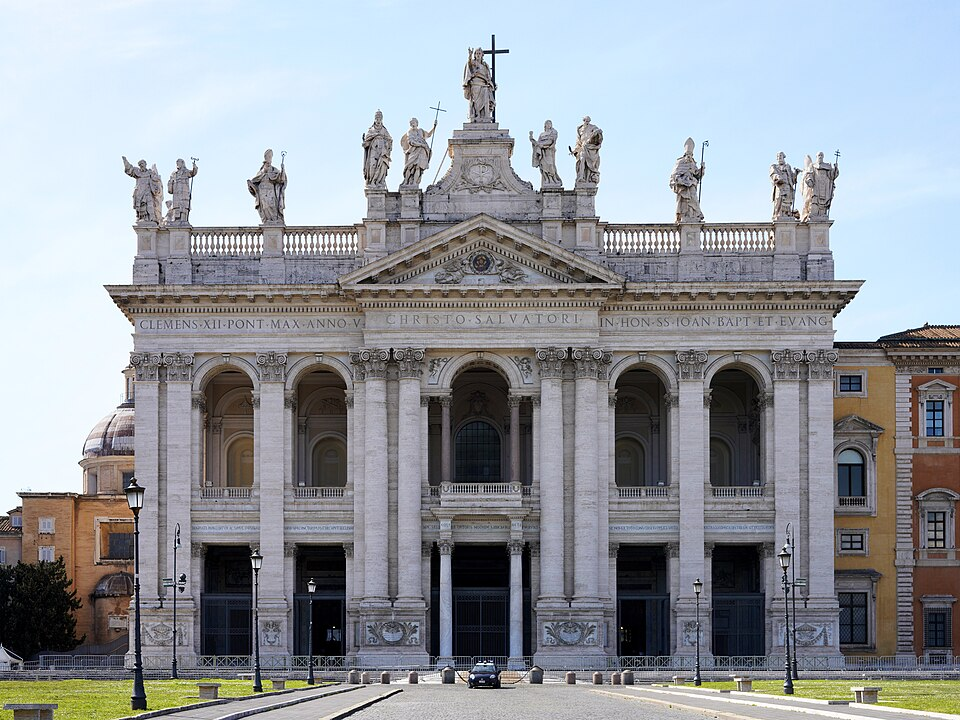
In 1562 a decisive moment arrived. The Council of Trent was nearing its end, and the final verdict on music was about to be pronounced. Legend has it that the council commissioned Palestrina to compose a Mass to prove that polyphonic music could be solemn and clear without compromising the intelligibility of the text. And so he offered the masterpiece that gathered all his craft and wisdom—the Missa Papae Marcelli.
This Mass, cast for seven voices, does not win by complex virtuosity; on the contrary, it embodies Palestrina’s ultimate answer to the challenges of his age:
- Clear word setting: the musical rhythm follows closely the prosody and accentuation of the Latin text, so that the words can be clearly heard and understood.
- Pure harmony: it avoids some of the “dissonant” intervals of the day and makes abundant use of consonant thirds and sixths, creating a sonority that is solemn, majestic, and yet not lacking in humanity.
- Balanced voices: each voice part is smooth and well balanced, and no single voice ever rises above the whole for the sake of display—a perfect embodiment of the Renaissance ideal of “harmony.”
Although later scholarship has confirmed that the Missa Papae Marcelli may have been composed before the council’s final discussions, and that the story of its single-handedly “saving polyphonic music” is largely a romantic legend, it unquestionably became the model and benchmark of Catholic musical reform. It proved to the world that the most refined polyphonic craft could coexist with the most devout emotion and the clearest textual expression. The work not only won him the reputation of “father of church music,” but in substance defined what the “Palestrina style” is.
In 1571, after sixteen years of wandering and tempering, Palestrina was at last recalled to St. Peter’s Basilica to take charge of the Cappella Giulia once more. By this return, he was already one of the most celebrated musicians in Europe, no longer a minor figure who could be dismissed at any moment.
Third Movement: Grief and the Summit
The return of his career seemed to herald a settled life, yet the cruel trials of fate had only just begun. Shortly after his return to the place of glory, successive plagues swept through his family like a shadow. In 1572 his brother was taken; in 1575 the plague struck again and he lost two beloved sons; the heaviest blow fell in 1580, when Lucrezia, his wife of thirty-three years, was carried off by the plague as well.
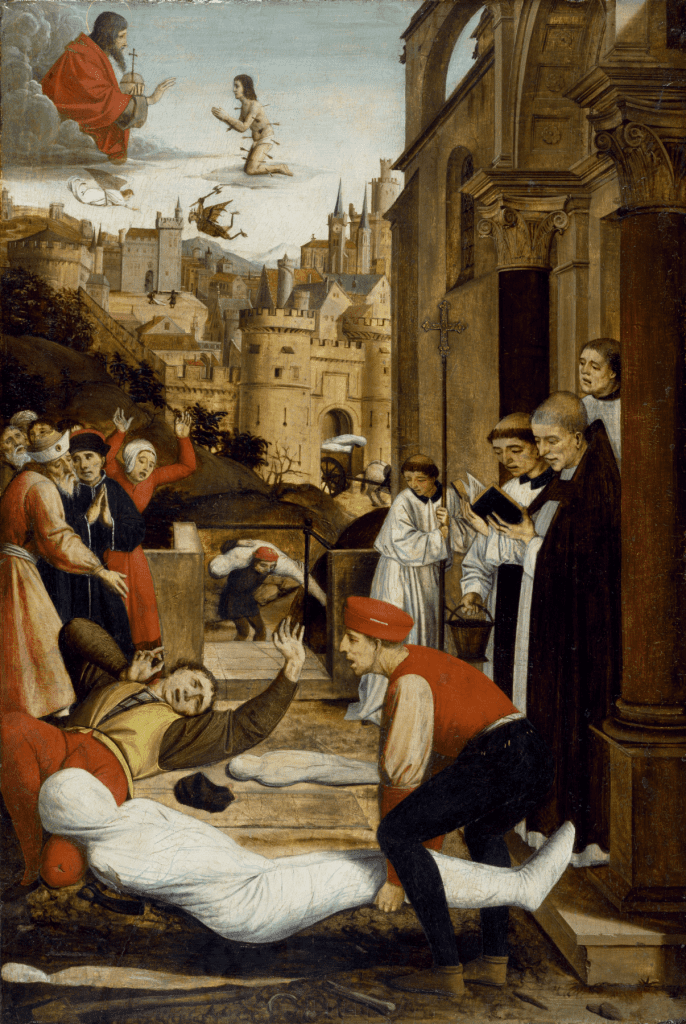
Within a mere eight years, his closest kin withered one after another. This heart-wrenching grief left him, for a time, disheartened enough to consider abandoning secular life and becoming a priest. In the end, persuaded by friends, he gave up the idea. Driven by a complex mix of practical and emotional considerations, the impoverished Palestrina remarried in 1581, wedding Virginia Dormoli, the wealthy widow of a leather merchant. This marriage at last freed him from his long economic distress and brought him unprecedented stability.
Knowledge Point: Why So Poor?
[Expand / Collapse]
-
1. Institutionally Low Income: A Meager Fixed Salary
The salary of a chapel master (maestro di cappella) was itself modest, enough only for basic subsistence and far from sufficient for accumulating wealth.
Under the church system of the time, a musician was more like a technical official drawing a fixed stipend, whose income bore little direct relation to his artistic achievement and reputation. No matter how great the works Palestrina composed, his monthly salary remained almost unchanged.
2. A Heavy Family Burden: Four Sons to Raise
In the 16th century,raising four sonswas a huge expense. These costs included:
- Education costs: His eldest son, Rodolpho, was also in the choir, showing that he was committed to educating his children, which required considerable resources.
- Marriages and establishing careers: Providing the means for his sons’ future marriages and livelihoods was an important paternal duty at the time.
- Daily expenses: As a musician of some social standing, maintaining a respectable household was no small daily cost.
This heavy family burden made an already modest salary even more stretched.
3. Professional Instability and Extra Expenses
- Forced Dismissal: Dismissed from the papal choir by Pope Paul IV in 1555, he did receive a small pension (6 écus per month), but his income was unquestionably slashed, and he entered a “wandering” period of nearly two decades (serving at San Giovanni in Laterano and Santa Maria Maggiore).
- Extra Duties and Expenses: As chapel master, he may also have had to bear certain hidden costs tied to his duties—buying some scores at his own expense, or even subsidizing the ensemble.
4. The Fundamental Turn Brought by Remarriage
This marriage was a crucial turning point because:
- Capital Injection: He directly acquired his wife’s wealth, including the leather business left by her late husband.
- Business Model: After the marriage, Palestrina even actively took part in the business, becoming a “shrewd and tireless merchant” dealing in “grain, livestock, leather, and various kinds of lending.”
And so a life of extraordinary tension unfolded: a composer at the summit of his career, at the heart of the temple of art, tasting the deepest joys and sorrows of human existence. This singular experience, at once glorious and painful, laid the groundwork for the great creative outburst of his late years; his music was about to find its final balance between pure faith and profound humanity.
In the period that followed, until his death, Palestrina’s creativity poured forth with astonishing abundance and remarkable breadth of genre, displaying the composure and profundity of a master who had completely commanded his craft. He continued to refine his Mass composition; the late works are grander in structure and flawless in contrapuntal technique. The Missa Sine nomine in particular, with its pure and balanced polyphonic texture, was later greatly admired by Bach and carefully studied by him. These Masses were no longer merely liturgical objects; they had become monuments of the art of counterpoint itself.
Compared with the grand, more strictly liturgical Masses, the personal tragedy of Palestrina’s life is reflected more directly in his more intimate and flexible motet compositions. The Song of Songs motet collection, published in 1584 under the composer’s own supervision, is precisely such a work. This masterpiece, originally titled Book IV of the Motets, is a complete cycle of 29 motets (click to listen) set to the entire text of the biblical Song of Songs (the Song of Solomon). As one of the largest and most coherently conceived of Palestrina’s sacred motet collections, it ultimately won the composer the lofty reputation of “the Saint Luke of music.”
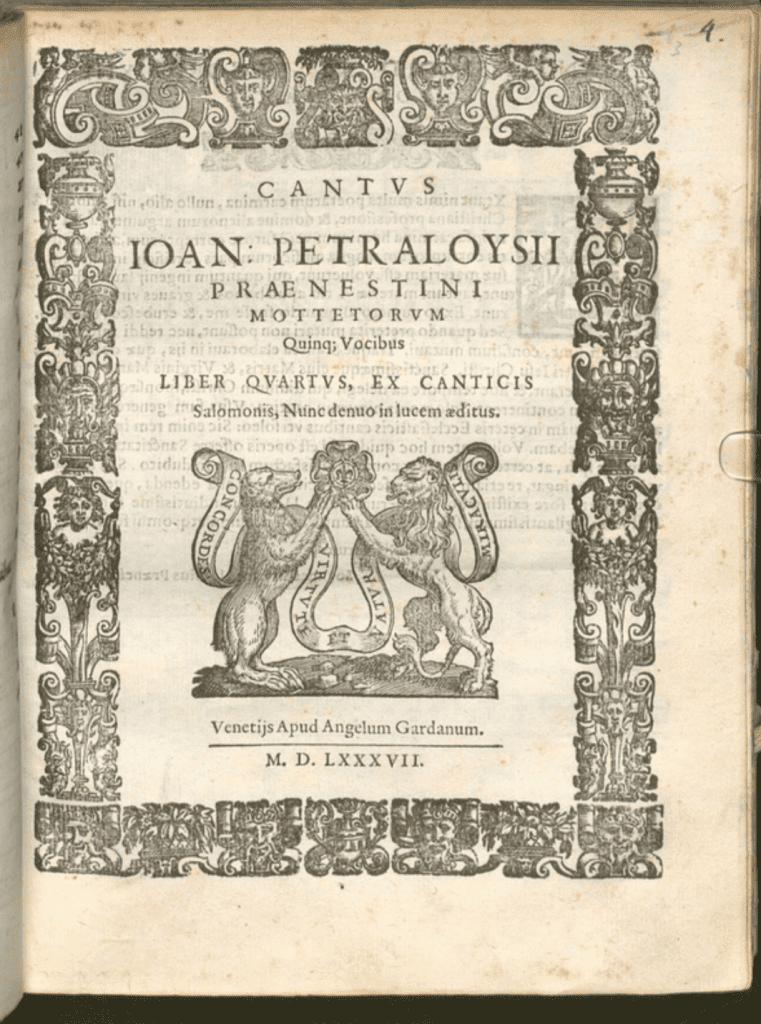
The Song of Songs itself was originally a series of ancient Hebrew love poems filled with sensual imagery and fervent emotion, interpreted within the Christian tradition as an allegory of the sacred love between Christ and the Church. Yet in the climate after the Council of Trent, which stressed the purity and solemnity of music, choosing to set such a text—full of worldly beauty and candid feeling—was in itself an extremely bold artistic venture. In this act, Palestrina displayed not only his profound theological understanding but also his extraordinary capacity to transfigure the most human emotions into sacred expression.
Knowledge Point: Interpreting the Song of Songs
[Expand / Collapse]
-
Track List of Palestrina’s Song of Songs Motet Collection (1584)
No. Latin Title English Translation Corresponding Song of Songs Passage Mode Voice Scoring 1 Osculetur me (osculo oris sui) Let him kiss me with the kisses of his mouth 1:1-2 G Dorian SATTB 2 Trahe me post te Draw me after thee 1:3 G Dorian SATTB 3 Nigra sum sed formosa I am black, but comely 1:4-5 G Dorian SATTB 4 Vineam meam non custodivi But my own vineyard have I not kept 1:6-7 G Dorian SATTB 5 Si ignotas te If thou know not 1:8-9 G Dorian SATTB 6 Pulchrae sunt genae tuae Thy cheeks are comely with rows of jewels 1:10 G Dorian SATTB 7 Fasciculus myrrhae (dilectus meus mihi) A bundle of myrrh (is my well-beloved unto me) 1:13-15 G Dorian SATTB 8 Ecce tu pulcher es Behold, thou art fair 1:16 – 2:1 G Dorian SATTB 9 Tota pulchra es Thou art all fair 4:7-8 G Dorian SATTB 10 Vulnerasti cor meum Thou hast ravished my heart 4:9-10 G Dorian SATTB 11 Sicut lilium inter spinas As the lily among thorns 2:2-3 G Mixolydian SATTB 12 Introduxit me rex (in cellam vinariam) The king hath brought me (into his banqueting house) 2:4-5 G Mixolydian SATTB 13 Laeva eius (sub capite meo) His left hand (is under my head) 2:6-7 G Mixolydian SATTB 14 Vox dilecti mei The voice of my beloved 2:8-10 G Mixolydian SATTB 15 Surge, propera amica mea Rise up, my love, my fair one, and come away 2:10-13 G Mixolydian SATTB 16 Surge, amica mea (speciosa mea et veni) Rise up, my love (my fair one, and come away) 2:13-14 G Mixolydian SATTB 17 Dilectus meus mihi, (et ego illi) My beloved is mine, (and I am his) 2:16-17 G Mixolydian SATTB 18 Surgam et circuibo civitatem I will rise now, and go about the city 3:2 G Mixolydian SATTB 19 Adiuro vos (filiae Jerusalem) I charge you, (O daughters of Jerusalem) 5:8-10 A Hypoaolian SAATB 20 Caput eius (aurum optimum) His head (is as the most fine gold) 5:11-12 E Phrygian SAATB 21 Dilectus meus descendit (in hortum suum) My beloved is gone down (into his garden) 6:2-3 E Phrygian SAATB 22 Pulchra es, amica mea Thou art beautiful, O my love 6:4-5 E Phrygian SAATB 23 Quae est ista (quae progreditur quasi) Who is she (that looketh forth as the morning) 6:9 E Phrygian SSATB 24 Descendi in hortum nucum I went down into the garden of nuts 6:10 E Phrygian SSATB 25 Quam pulchri sunt (gressus tui in calceamentis) How beautiful are (thy feet with shoes) 7:1-2 F Ionian SSATB 26 Duo ubera tua (sicut duo hinnuli) Thy two breasts (are like two young roes) 7:3-5 F Ionian SSATB 27 Quam pulchra es et quam decora How fair and how pleasant art thou 7:6-8 F Ionian SAATB 28 Guttur tuum sicut (vinum optimum) Thy throat (is like the most fine wine) 7:9-10 F Ionian SAATB 29 Veni, veni dilecte mi, (egrediamur in agrum) Come, my beloved, (let us go forth into the field) 7:11-12 F Ionian SATTB 1. Mode Grouping: Giving the Music Different Emotional Colors
In the Renaissance, modes functioned somewhat like today’s keys (major/minor) but were more complex and subtle. Each mode had its specific intervallic structure and an attributed “ethos” thought to evoke different emotional resonances.
Palestrina’s modal layout in the Song of Songs is as follows:
Group One (Nos. 1–10): G Dorian
- Color and Emotion: The Dorian mode is generally consideredsolemn, serious, tinged with melancholy yet not without hope. Opening this monumental Song of Songs cycle with it establishes a tone that is devout, introspective, and full of deep longing—perfectly suited to the nature of the Song of Songs as a sacred allegory.
Group Two (Nos. 11–18): G Mixolydian
- Color and Emotion: The Mixolydian mode soundsbrighter and more expansive, even carrying a touch of pastoral sweetness and warmth. This shift is very deft: the music moves from the initial deep longing to praise of the beloved, the joy of encounter, and the depiction of pastoral scenery—the change of mode perfectly matching the rising emotional register of the text.
Group Three (No. 19): A Hypoaolian
- Color and Emotion: This is a turning point. The Aeolian mode is the closest to our modern minor, and emotionally itinclines toward sorrow, plaintiveness, or profound tenderness. Only one piece is placed here, “I Charge You,” serving like an interlude or bridge before the next intensely emotional section, its tonality foreshadowing what is to come.
Group Four (Nos. 20–24): E Phrygian
- Color and Emotion: The Phrygian mode is the mostdistinctive, the most tense, the most passionate, and even tinged with painof all the modes. It begins on a semitone, creating a strong propulsive drive and a sharp emotional tension. Palestrina uses it to match the most sensually charged and intensely yearning passages of the Song of Songs (such as the detailed praise of the body), pushing the text’s fervent emotion to its climax.
Group Five (Nos. 25–29): F Ionian
- Color and Emotion: The Ionian mode is the ancestor of today’smajor scale, and it soundsclear, harmonious, complete, and stable. The composer reserves it for the closing section of the cycle, symbolizing union, fulfillment, and final peace in love. The music ends in an atmosphere of radiance, triumph, and contentment, drawing a perfect full stop to the entire spiritual journey.
Summary: The changes of mode form the cycle’s “emotional curve”: fromsolemn longing (Dorian) –> bright joy (Mixolydian) –> a tender turn (Hypoaolian) –> ardent passion (Phrygian) –> consummate peace (Ionian).
2. Voice Grouping: Building the Music’s Grandeur and Complexity
The increase in the number of voices is another structural design, building the music’s weight and complexity step by step, much like orchestration in a symphony.
Basic Scoring (Nos. 1–18): SATTB (5 voices)
- This was the standard scoring for late-Renaissance masses and motets, providing a full and balanced sonic foundation. Most of the cycle unfolds within this framework.
First Expansion (Nos. 19–22): SAATB (5 voices, but with a different internal distribution)
- Still five voices, but by adding an alto (A) in place of a tenor (T),the mid-range becomes thicker and fuller, and the sonic color grows warmer and richer.
Reaching the Summit (Nos. 23–26): SSATB (5 voices)
- This is a striking change in sonority. By adding a second soprano (S),the music’s upper register becomes incomparably brilliant and luminous, the range is stretched wide, producing a radiant “halo”-like effect often used to depict supreme beauty or divine glory.
Return and Consolidation (Nos. 27–29): SAATB / SATTB
- After reaching the summit of SSATB, the scoring first returns to the fuller SAATB, finally closing with the standard SATTB. This arrangement avoids aural fatigue and, after all the splendor, brings a sense of return, satisfaction, and closure.
Summary: The changes of scoring build the cycle’s “sonic architecture”: froma solid foundation -> restrained fullness -> a glorious summit -> a consummate close。
Summary: A Grand “Musical Architecture”
Taken together, Palestrina’s design is nothing short of genius:
- Emotionally, through the modes, he moves from restraint toward brightness, then through a tender turn leaps to the summit of passion, finally settling into consummation.
- In sonority, through the voices, he moves from balance toward fullness, then climbs to a resplendent peak, before ending with composure.
These two threads are not independent of each other; rather, theyinterweave and advance together. For example, in the most passionate Phrygian-mode section (Nos. 20–24), he happens to use the most resplendent SSATB scoring,matching the most complex sonority to the most intense emotion, reaching the dramatic climax of the entire cycle.
Unlike the Song of Songs, which projects personal emotion onto a sacred allegory, the Stabat Mater, written near the end of Palestrina’s life, is a masterpiece that gazes directly upon grief and death—among the most weighty and profound in emotion of his late works.
This work is the composer’s polyphonic setting of the Stabat Mater sequence used in the Catholic liturgy. With extraordinarily vivid and human strokes, the text depicts the grief of the Virgin Mary at the foot of Christ’s Cross, and since the Middle Ages it has been one of the core texts of compassion and devotion in Western music. Palestrina’s setting takes up this tradition perfectly.
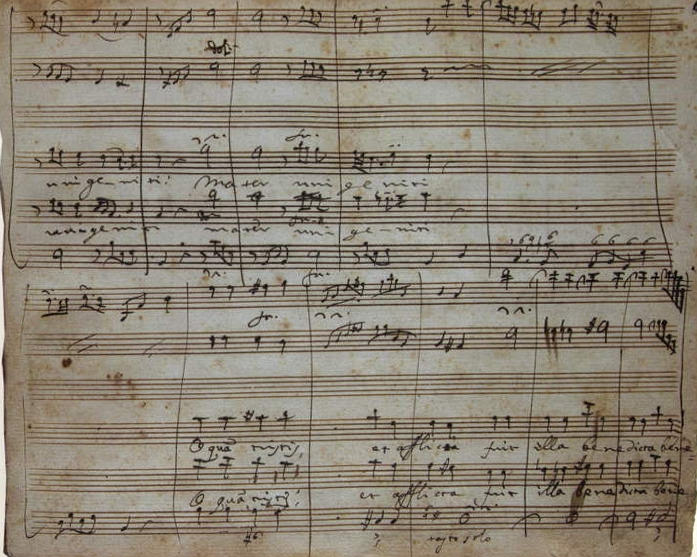
In its musical treatment, he did not adopt the dramatic chromaticism or strong contrasts of the later Baroque; instead, drawing on his supreme contrapuntal craft, he creates a collective, solemn, and majestic atmosphere of mourning. The voices interweave and advance like a silent procession; long, plaintive melodic lines build a vast and introspective space of grief. The emotional power of the music comes not from outward outburst, but from the somber weight of the harmonic progressions themselves and the inexhaustible sorrow in the melodies.
The emotional depth of this Stabat Mater is unquestionably a portrait of the composer’s own life, resonating profoundly with his searing experience of losing, one after another, his brother, his sons, and his beloved wife. As he traced on the page the eternal sorrow of the Mother losing her Son, he must have woven into it his own endless remembrance of his flesh and blood. The work thus transcends its purely liturgical function to become a musical requiem-poem for universal suffering, embodying Palestrina’s supreme attainment in turning the deepest experience of life into the most exalted sacred art.
Finale: Legacy and Resonance
On February 2, 1594, Palestrina died of pleurisy in Rome. According to the records, his funeral was held in St. Peter’s Basilica; the plain coffin was covered with a lead plate inscribed “Johannes Petrus Aloysius Praenestinus, King of Music.” At the funeral, his own five-voice Libera me, Domine was sung . He was buried beneath the very basilica he had served for much of his life, though the precise grave can no longer be found.
His death marked the end of an era. Palestrina’s music—above all the “pure style” he established—was systematically codified by later theorists, enshrined as the golden standard of “strict counterpoint,” and became the foundation of music education for centuries to come. From Bach to Mozart, from Mendelssohn to the revivalists of the 20th century, countless composers drew nourishment from his music.
From a rising star favored by popes to a disappointed man cast out without mercy; from a tempering sojourn through Rome’s three great basilicas to a master of his generation restored at last to glory—Palestrina’s personal fate was always colliding violently with the great currents of his age. Standing at the storm’s eye of the Reformation and at the center of the Counter-Reformation’s purification, he carved out a singular artistic path: to bear the most profound faith and the truest humanity through the purest vocal lines, the most balanced structures, and the clearest textual expression.
One of the core techniques of the “Palestrina style” he established lies in the strict control of dissonance: it is usually placed on the weak beat of the bar and properly resolved. This handling makes the polyphonic texture both rich and smooth, producing a solemn and harmonious sonority. As the leading figure of European music after Josquin des Prez (d. 1521), the contrapuntal language he perfected was thereafter honored as the model of late-Renaissance music.
His music never pursued the intense dramatic tension and emotional contrast of the Northern composers; instead, with a Roman grandeur of design and an inner serenity, it built an imperishable sonic refuge for the human soul amid a turbulent and troubled world. When the smoke of war and the strife of confessions tore Europe apart, Palestrina’s polyphonic edifice still stood unshaken, proving to the world: even in the most divided of ages, the human spirit can still create the most harmonious of sounds.
Afterword: The BLOG Owner’s Own Thoughts
The late Renaissance has officially begun, and writing this piece was itself a learning process for the BLOG owner—a chance to reacquaint myself with the complex history of Renaissance Europe and with the rugged road that the development of music has traveled. While writing this article, the BLOG owner found myself wondering more than once: compared with the flourishing music of Europe, what was Chinese music like at the time? The maturation of Peking opera and Kunqu, and the zenith of the seven-stringed qin, must all have come at very much the same time as the Renaissance. Perhaps, given the chance, the BLOG owner would like to share something about all this with everyone—but that would likely require an even longer period of preparation.
Once again, thank you to all who have read this far. This series is destined to have a modest readership, but the BLOG owner is deeply motivated to keep writing. Some things need to be recorded, and some things need to be spread; music knows no borders. I hope you can all discover, through the Classical Diary series, the joy of listening to a thousand years of music. (Full text: 22,272 characters)
References
Digital Image Archive of Medieval Music (primary reference database)
Digital Bodleian (primary reference database)
ChoralWiki (primary reference database)
Wikipedia (consulted a large number of entries in Chinese, English, Italian, French, etc.; cited in the original text)
World History Atlas (map screenshots used in this article)
QQ Music (some audio quoted in this article)
Tudor Printed Music at NYPL | The New York Public Library
International Music Score Library Project


You May Also Like

HIFI Diary: A Detailed Science Guide on HIFI Cables – The Materials Edition

HIFI Diary: In-Depth Review of Edifier N300 Multimedia Speakers