Classical Diary: Orlando di Lasso of Europe, Orlando di Lasso of the World (Part 8)
Classical Diary Series
[Expand / Collapse]
-
How to Appreciate Classical Music — Written at the Very Beginning (Part 1)
Follow the BLOG owner’s footsteps and explore the thousand-year story of classical music.
-
The Pope’s Dove and the Millennial Chant — Gregory I (Part 2)
Listen to the development of church chant and grasp the character of religious music.
-
Budding Music, Hidden Epic — Guillaume Dufay (Part 3)
Hear the story of the founding figure in whom technique and sensibility fused in the early Renaissance.
-
Moonlight Knight and Court Poet — Gilles Binchois (Part 4)
Listen to the refined lyricism of the Burgundian School, resonating across a thousand years.
-
A Beacon on the Eve of Change — Johannes Ockeghem (Part 5)
The last master of the Burgundian School, and the founder of the Franco-Flemish School.
-
The King of French Music — Josquin des Prez (Part 6)
The mid-Renaissance turns its most glorious page in both sacred and secular music.
-
The Last Glory of Roman Orthodoxy — Giovanni Pierluigi da Palestrina (Part 7)
Together we open the storm-tossed, blood-soaked gate of the late Renaissance.
-
Orlando di Lasso of Europe, Orlando di Lasso of the World (Part 8)
The Renaissance welcomes its last master of music.
-
Echoes of an Island — William Byrd (Part 9)
England rends apart the Renaissance era’s final master of music.
Prologue: Circulation and Fusion — the Transformation of Europe’s Musical Ecosystem in the Sixteenth Century
As the wheels of history rolled into the mid-to-late sixteenth century, Europe’s spiritual and political landscape was increasingly shattered by the impact of the Reformation. Yet on this land riddled with cracks, a force just as powerful but far more constructive was quietly reshaping the face of culture: driven jointly by a technological revolution, the deployment of talent, and language and culture, it was a music-ecological transformation of unprecedented vitality.
1. The maturation and commercialization of music printing
More than a century had passed since Gutenberg invented printing, and the first published polyphonic collection, the Music Handbook, provided an important vehicle for the spread of music across the European continent. With innovations in printing technique, elements such as staff lines, notes, and lyrics could be produced by mechanical printing (in early printing, the text was machine-printed while the music was still drawn by hand), so the product gradually matured and became commercialized. The earlier woodblock printing was gradually replaced by the more precise and efficient movable metal type. This technological leap gave birth to a group of professional music-printing centers: Venice (e.g., Petrucci), Antwerp (e.g., Susato), Paris (e.g., Le Roy and Ballard), and Nuremberg.

Knowledge point: the first polyphonic music collection published in the world — the *Music Handbook*
[Expand / Collapse]
-
“Music Handbook”, whose Latin original is *Harmonice Musices Odhecaton* , the complete literal meaning of which is:“A Hundred Odes of Musical Harmony”, usually abbreviated as *Odhecaton*, that is, *A Hundred Odes*。
Exact publication date: It was published inMay 1501in Venice. This precise date makes it a clear milestone in music history.
Content: It is not a music theory manual, buta collection of polyphonic works, containing 96 secular chansons by the most outstanding Franco-Flemish composers of the time.
Main composers included:
- Josquin des Prez
- Heinrich Isaac
- Antoine Busnois
- Alexander Agricola
The significance of the printing technology: It perfectly showcased Petrucci’striple-impression printing method, with a clear and handsome finished product, greatly promoting the spread and standardization of polyphonic music across Europe.
From rare treasure to commodity: the Reformation and its subsequent principle of “cuius regio, eius religio” not only dismantled the unified authority of the Roman Curia politically, but also set off a silent revolution in the cultural sphere. When the right to choose and interpret faith was devolved to the secular rulers, the Church met its true competitor — the merchant. The Church’s former status as the sole patron and arbiter of musical art was thereby shaken. Wealth means power, and this shift in the Church’s power structure paved the way for the score to turn from a sacred symbol treasured by the Church into a cultural commodity circulating freely in the market.
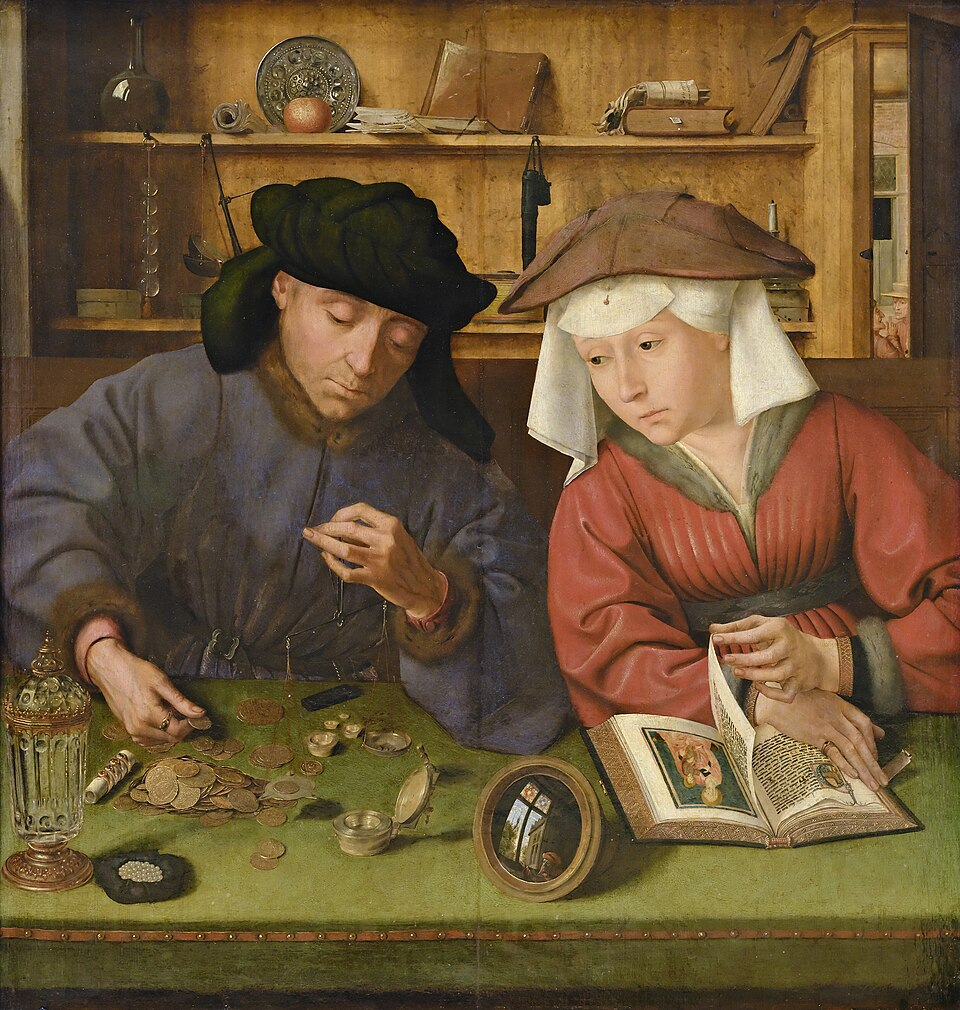
Before this, exquisite hand-copied scores were the treasure of monasteries and cathedrals, their reproduction and circulation strictly confined within the religious network. Yet as the Protestant states and the Catholic princes stood side by side, a unified standard for church music no longer existed. Whether it was the Lutherans needing chorale books for their congregations to sing, the Calvinists needing French psalmody, or the Anglicans (the Church of England) needing English anthems, all of this gave rise to large-scale musical demand aimed at specific groups. At the same time, the Catholic regions, in order to keep their liturgy attractive in the competition, equally needed a great many novel, high-quality Masses and motets.
Knowledge point: the three major Protestant denominations: Lutheranism, Calvinism, and Anglicanism
[Expand / Collapse]
-
The core confrontation: the three major Protestant denominations vs. Catholicism
In the previous Classical Diary, we explained in detail the birth of Protestantism. This time, let us look at the three Protestant denominations and their differences from Catholicism.Dimension Roman Catholicism Lutheranism Calvinism Anglicanism Key founding figure – Martin Luther John Calvin King Henry VIII of England Place and time of origin – Germany (from 1517) Geneva (from the 1530s) England (the 1530s) Core doctrine Justification by faith + good works Justification by faith alone Predestination The middle way How one is saved Faith and good works working together Faith alone, not good works God has eternally predetermined who will be saved Blending Protestant doctrine with Catholic forms View of the sacraments Seven sacraments Retains onlyBaptism与the Eucharist Retains onlyBaptism与the Eucharist Retains seven sacraments, but with adjusted status Meaning of the Eucharist Transubstantiation: the bread and wine are substantially changed into the body and blood of Christ Consubstantiation: Christ is truly present in, with, and under the bread and wine Symbolism: the bread and wine are symbols commemorating Christ Real presence, but the interpretation is close to Lutheranism Church decoration and music Splendid, full of sculpture and frescoes; Latin polyphony Relatively simple, retaining the altar and the crucifix;developed the chorale Extremely austere, removing statues and stained glass; only psalm singing Retains the Catholic church architecture and furnishings;developed the anthem Political and organizational model Papal system, a transnational unified church Cuius regio, eius religio, the prince decides the faith of the territory Presbyterian system, ruled by elders elected by the believers The King/Queen as supreme head Core regions of influence Southern Europe, most of France, the Habsburg territories Northern Germany, Scandinavia Switzerland, the Netherlands, Scotland, parts of France England, Ireland 1. Lutheranism — the beginning of reform
- Core demand: a return to the Bible itself, emphasizing “justification by faith” — that is, a person’s salvation rests entirely on faith in God, not on the “good works” dispensed by the Church (such as buying indulgences). This directly challenged the Pope’s authority.
- Relationship with music: Luther himself loved music, and considered it “a precious gift from God.” Thus Lutheranismdid not abolish complex polyphonic music, but instead vigorously promoted the creation ofthe chorale. This is a congregational hymn sung in German, tuneful in melody and solemn in harmony, designed to let every ordinary believer join in the singing. As a result, music continued to play a central and rich role in Lutheran worship.
2. Calvinism — radical reform
- Core demand: it emphasized God’s absolute sovereignty and “predestination” — that is, every person’s eternal destiny (salvation or damnation) was predetermined by God at the dawn of creation, and human action cannot change it. This gave rise to a rigorous, frugal, and industrious ethic.
- Relationship with music: Calvin took a very cautious and strict attitude toward music in worship. He believed music easily stirs the senses and draws people away from focusing on God. Therefore, Calvinist liturgical music was drastically simplified:
- only the psalms of the Bible might be sung, no lyrics written by any human being.
- Melodies had to be extremely plain and solemn, with no complex ornamental flourishes.
- The use of instrumental accompaniment was strictly forbidden, only unaccompanied singing was allowed.
- Inside the church, they removed all the decoration they considered to belong to “idolatry,” such as sculpture, painting, and stained glass, leaving the interior extremely austere.
3. Anglicanism — England’s “middle way”
- Core demand: its birth arose originally from KingHenry VIII‘s political rupture with the Pope (the divorce case), not from a purely theological dispute. Therefore, in doctrine and liturgy it adopted a “The middle way“, retaining a great deal of Catholic traditional form while at the same time adopting the core doctrines of Protestantism.
- Relationship with music: Anglicanism was the most “inclusive” in music. Itpreserved the magnificent Catholic tradition of polyphony, and many composers who wrote for the Latin Catholic rite (such as Tallis and Byrd) later also wrote English liturgical music for the Church of England. At the same time, it developed theanthem, its own distinctive genre. Church architecture and furnishings also remained largely as they were, far more splendid than the Protestant churches of the European continent.
Printers keenly seized upon the diversified “market gaps” created by this religious schism. The score thus became not merely a vessel of faith, but a profitable business. An exquisite set of Masses or a popular chanson collection was clearly priced, with consumers ranging from Protestant princes seeking to display their refinement, to Catholic nobles pursuing elegance, to professional musicians in need of repertoire, and wealthy burghers eager to take part in cultural life. In this profound transformation, music at last broke free of the bonds of a single religious function, becoming a cultural commodity that crossed the frontiers of faith and was shared by a far broader secular public.
Knowledge point: the collapse of the ecclesiastical economy and the rise of the commercial spirit
[Expand / Collapse]
-
When Martin Luther nailed his Ninety-Five Theses to the door of the church in Wittenberg in 1517, what he aimed at was the theological fallacy behind indulgences. Yet once that heavy hammer fell, what it set off was a great tsunami far beyond a theological debate, sweeping through the entire socioeconomic structure of Europe. At its core lay a profound transfer of power:the all-encompassing feudal ecclesiastical authority began to ebb, while a vibrant commercial spirit rose in its place, together catalyzing Europe’s crucial transition from feudalism toward capitalism.
I. The monopoly of feudal ecclesiastical power
Before the Reformation, the Roman Catholic Church was a “super conglomerate” standing at the summit of Europe’s feudal system. Its vast and stable system of income was the perfect embodiment of the feudal economic structure:
1.The taxation syst系: thetithe (10% of total annual income, the basic tax)levied on all believers formed the broad foundation of the Church’s income; while theannates(newly appointed bishops and other senior clergy had to remit their entire first year’s income to the Holy See), paid by local bishops to the papacy on taking office, were like huge veins steadily channeling wealth from all over Europe into Rome. Besides these, the Church also had first fruits,Peter’s Pence, and a great variety of other taxes, plusMass offerings,fees for privileges and exemptions, and many other kinds of extra revenue.
2.Landholding and enterprise: the Church was Europe’s largest landowner; the manors, woodlands, and industries it held brought it wealth comparable to that of secular princes.
3.Monetizing the monopoly on faith:indulgences — their sale was the most extreme monetization of this monopoly power. It was not an ordinary exchange of goods, but a special “spiritual tax” that the Church, exploiting its monopoly on the right to interpret “salvation,” imposed on believers. This system meant the Church controlled not only people’s spiritual world, but also held a vast economic lifeline firmly in its grip.
II. The collapse of the ecclesiastical economy
1. The principle of “cuius regio, eius religio” and the “diversion” of wealth: as Protestant power became established, the secular monarchs of northern Germany, Scandinavia, England, and elsewhere one after another cut off the river of wealth flowing to Rome.The tithe, the annates, and other dues were localized, and the right to levy and use them shifted from the Pope into the hands of secular rulers.
2. The dissolution of the monasteries and the secularization of their estates: monarchs represented by King Henry VIII of England systematically dissolved the monasteries and confiscated their property. This act was not merely a religious rupture, but anationalization and redistribution of wealthon an unprecedented scale in human history. The Church’s feudal estates were converted at astonishing speed into commercial capital that could enter the market and circulate, enormously strengthening the crown and the rising bourgeoisie.
3. The “demonetization” of faith services: indulgences were abolished, the pilgrimage industry shrank, and the meaning of Mass offerings changed. One by one, the many channels by which the Church had earned income by manipulating faith were severed.
All of this marked thestructural collapse of the feudal ecclesiastical economy. The Church was no longer that undisputed, transnational center for extracting wealth.
III. The seeds of capitalism
The collapse of the old order always opens space for the rise of new forces. It was precisely in the domains from which ecclesiastical power withdrew that the commercial spirit began to take root and sprout with unprecedented vitality.The printing and sale of music scores is an excellent microscopic window through which to observe this transformation.
1. Relations of production: from “patronage” to “market”: in the Middle Ages, composers, like other craftsmen, were attached to the “patronage” system of the Church or the court. Their creation was a service, and the return was a fixed post and rewards. In the 16th century, composers like Orlando di Lasso, though still residing at court, had their fame and wealth depend enormously on their cooperation withprinters. Between composer, publisher, and consumer there took shape a new kind of production relation based onmarket contracts and profit sharing, replacing the oldrelation of personal dependence.。
2.The printingpress: the new “means of production”: the maturity of Gutenberg’s printing technology gave birth to the music-printing industry in Venice, Antwerp, Paris, and elsewhere.The printing press — a means of production owned and operated by private capital — was comparable in status to the factory of the Industrial Revolution. Printers invested in equipment, hired workers, and organized sales; all of their activities wereprofit-oriented. This was entirely the capitalist mode of production.
3.音ic itself: a set of Masses or a chanson collection was clearly priced, becoming a cultural commodity that anyone with the means — from princes to wealthy burghers — could buy. Music, a spiritual product once used chiefly to glorify God and serve the lord, was thoroughly “commodified” , its value determined by the supply and demand of the market.
IV. The great transfer
What the Reformation brought was far more than a schism of faith. It was a profound socioeconomic revolution, at whose core was a transfer of “power”.:
- Ecclesiastical power was ceded to commercial power: the Church’s monopoly over wealth and its control over cultural production were partly ceded to the rising merchant class and the market economy.
- Feudal relations were ceded to capital relations: feudal relations of production based on land and personal patronage began to give way to capitalist relations based on capital, contract, and the market.
Standardization of style and rapid dissemination: printing fixed and accelerated the spread of musical styles. A novel compositional technique arising in Rome could, within a few months, be studied by composers in Munich or Paris through printed scores. Musical evolution changed from a slow local trickle into a rapid, Europe-wide dialogue. The most perceptive composers began to realize that printing and publication was an excellent way to build personal reputation and earn extra income. They therefore cooperated actively with publishers, and some, like Lasso, even obtained imperial “printing privileges” to protect their works from piracy. A composer-centered “music market” had taken shape.

Knowledge point: Lasso and his printing privileges
[Expand / Collapse]
-
A printing privilegerefers towhat is granted by a state ruler (such as an emperor, king, or pope) or a local governmentto an author, composer, or printer: an exclusive license.The holder of such a privilege, within a specified term (usually several years) and a specified territory, enjoyed the right to print, publish, and sell a certain work or category of works — amonopoly right. Any other person who reprinted or sold them without permission during that period was subject to penalties such as confiscation and fines.
1. Its essence: a royal monopoly charter
It was not based on the modern legal idea that “authors naturally own intellectual property,” but arose from the sovereign’sprerogative of granting commercial monopolies. One can understand it as a kind of “officially authorized certificate of authenticity”。
2. Whom did it protect?
The early privileges mainly protectedprinters’/publishers investment, because they bore the enormous costs of printing equipment and materials. Later, celebrated composers like Lasso also began to secure privileges for themselves, marking a rise in the individual value of composers.
3. The contents of a privilege certificate
A privilege certificate usually specified clearly:
- the beneficiary: who received this privilege (e.g., “the composer Orlando di Lasso” or “the printer Adam Berg”).
- the protected subject: which works were protected (e.g., “all of Lasso’s works” or “his new Penitential Psalms”).
- the term of validity: usually 3 to 10 years, or even longer.
- the territorial scope: e.g., “throughout the entire Holy Roman Empire.”
- the penalties: the specific punishments for pirates.
4. Lasso and the printing privileges
Lasso was a pioneer and exemplar in obtaining printing privileges. He received them successively from:
- the Holy Roman Emperor(1568, 1574, 1581, 1582, 1593)
- the King of France(1571)
- the Republic of Venice(1582)
- the Pope(1573, 1579)
, obtaining multiple privileges. This fully attests to his unparalleled fame and market value.
5. A concrete case: Lasso’s imperial privilege (1570)
In the privilege he granted to Lasso, Emperor Maximilian II stipulated clearly:
“No one is permitted, within the next ten years, in any place, to print, sell, or circulate the aforementioned works of Orlando without authorization… Any violator, once discovered, shall have all his pirated books confiscated immediately, and be finedten gold coins, of which half shall go to the imperial treasury and half to the composer himself.”
2. The institutionalized export of the “Franco-Flemish School”
Since the mid-fifteenth century, musicians from the Low Countries — Flanders, Burgundy, and elsewhere — had dominated the European music scene with their incomparable polyphonic skill. By the sixteenth century, this flow of talent had developed from piecemeal hiring into a highly institutionalized “production-export” system. In the Flemish region, the church choir schools of places such as Mons and Antwerp formed Europe’s most elite music-education system. Boys received rigorous training there in singing, music theory, and composition, becoming a “reservoir” of musical talent.
Knowledge point: the central contradiction of Renaissance music — the incomplete feudal revolution and the boys’ singing
[Expand / Collapse]
-
To understand the central contradiction of Renaissance music, an excellent point of entry is this: why were the highest musical achievements of that age — an age hailed as the “discovery of man,” brimming with secular spirit — performed by theboysof the church choirs?
Behind this lies precisely the essence of the Renaissance as “an incomplete feudal revolution” .
1. The “spear” of revolution: humanism’s supreme pursuit of craft
The Renaissance was indeed striking at the medieval framework of theocratic power. In music, this “revolutionary” character was expressed in:
- the liberation of technique: composers developed polyphonic skill to unprecedented heights, pursuing a sonority that was complex, harmonious, and full of rational beauty — in itself a triumph of human intelligence and creativity.
- the awakening of emotion: the rise of “word painting” demanded that music express, depict, and even dramatize the individual emotions of the lyrics. This attention to the inner world is quintessentially humanist.
Yet the weapons and the stage of this revolution still came from the old world.
2. The “shield” of feudalism: the solid structure of the old order
This revolution was “incomplete” in that it failed — and had no intention — to overturn the social foundations of the entire old order:
- economy and power: the Church and the court were still society’s greatest patrons, and musicians’ chief livelihood and creative space still depended on them.
- gender and class: deeply entrenched patriarchy and the guild system systematically excluded women from the public musical profession. Music, as a high craft, had its transmission strictly confined to specific channels dominated by men.
3. The boys’ voices: the meeting point of the contradiction
Thus theboysof the church choir became the most concentrated embodiment of this contradiction:
- theirpure treble voices, theologically symbolizing angelic innocence, were an ancient tradition in service offeudal theocratic power.
- Yet what came forth from their mouths was the era’s mostcomplex, most richly humanistmusic. These works served God, yet also displayed human intelligence, and even concealed secular emotion.
Conclusion:
The boys’ singing thus became a superb metaphor for the Renaissance era. It symbolizeda revolution carried out within an old shell — the tide of new thought and new art, surging and turbulent, yet still bound within the fixed structures of feudal church and society. We hear the stirring prelude heralding the approach of the modern age, but the vehicle that carries this prelude is still the sound-medium bequeathed by the Middle Ages.
A career that went “north and south”: the standard career path of an ambitious Flemish musician was usually: first, lay a foundation in the Low Countries; then head south to Italy for advanced study and to absorb the local new styles; take up a post at an important church (such as the Archbasilica of Saint John Lateran in Rome) or a court to build reputation; and finally be hired at generous terms as Kapellmeister by a powerful prince north of the Alps (such as the Duke of Bavaria).
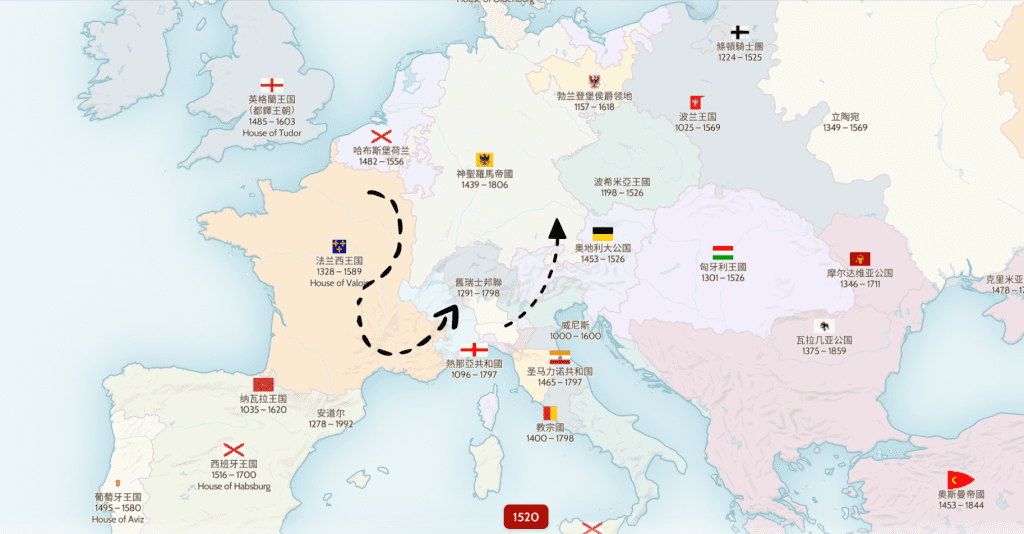
The competition for courtly “cultural capital”: for the monarchs of Europe, having a court ensemble led by top Flemish musicians was an important “cultural capital” displaying their wealth, taste, and degree of civilization. Courts such as Munich, Vienna, Prague, and Dresden all became gathering places for masters of the Franco-Flemish School. This “talent pipeline” was like a precision assembly line, ceaselessly delivering the finest musical craft to the great cultural centers of Europe, and in the process fusing northern and southern styles.
3. The domain of language: the formation and confrontation of a multilingual musical world
Latin’s position as the lingua franca of sacred music remained secure, but with the deepening of the Reformation, the full implementation of the cuius regio, eius religio system, and the vigorous flourishing of sixteenth-century secular music, a multilingual musical world based on vernaculars was born. Each language carried its own cultural temperament and political stance.
Italian and the madrigal
The Italian madrigal is the most direct embodiment in music of Renaissance humanist thought. It was born in the cultural centers of Florence and Mantua, deeply influenced by Petrarchism and Neoplatonic philosophy. Madrigal composers pursued “word painting” — using musical means (melodic contours, rhythmic changes, harmonic colors) to imitate precisely the imagery and emotion of the lyrics: “ascending” set to an ascending scale, “weeping” to broken rhythms, “darkness” to dissonant intervals.
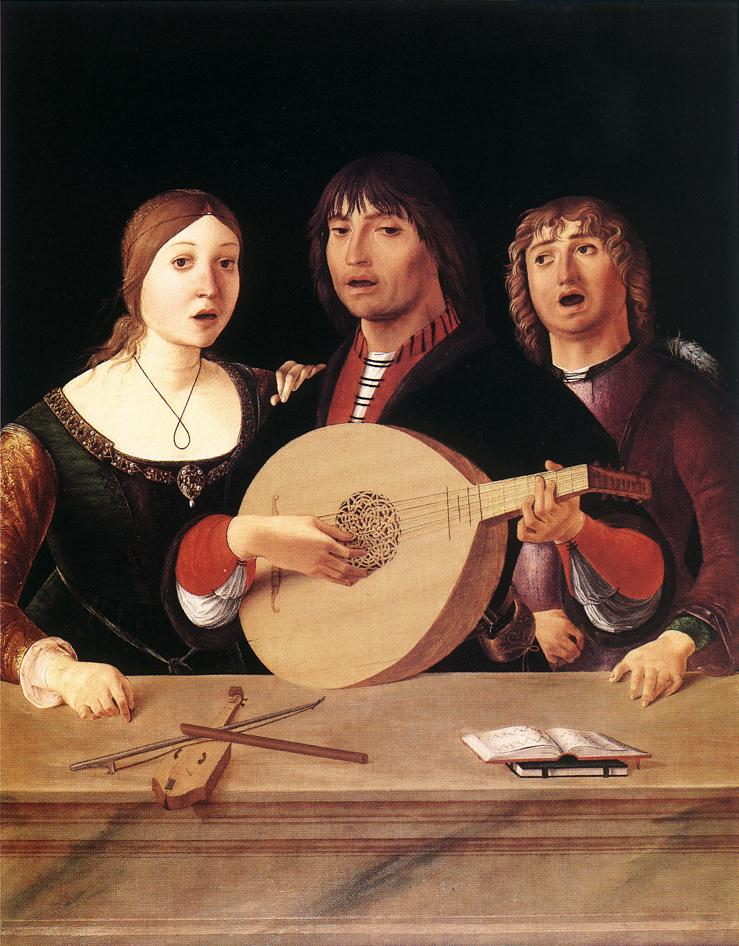
Its style was refined, sensuous, and full of dramatic tension, free in structure, often unaccompanied polyphony for four to six voices. From the graceful lyricism of the early period to the highly individualized expressionism of the late period (such as Marenzio and Gesualdo), the madrigal was always Europe’s most forward-looking experimental platform for music. It was a symbol of Italian aristocratic salon culture, serving the court and the intellectual class, usually avoiding controversial religious topics and emphasizing personal emotion and poetic aesthetics.
French and the chanson — a symphony of royal elegance and everyday charm
The French chanson grew out of the medieval tradition of courtly song, but in the sixteenth century developed into a polyphonic secular form with simple melodies, brisk rhythms, and clear structure. Its core charm lay in “singability” and “performability,” easy to pass around at court banquets or civic gatherings. The chanson valued the prosody and cadence of its text; the music often used repeated phrases and strophic structures, with relatively simple, bright harmony. Its subjects ran the gamut: from courtly love and pastoral scenes to drinking and merrymaking, satire and banter, even bawdy jokes — faithfully reflecting the many facets of life across all strata of sixteenth-century French society.
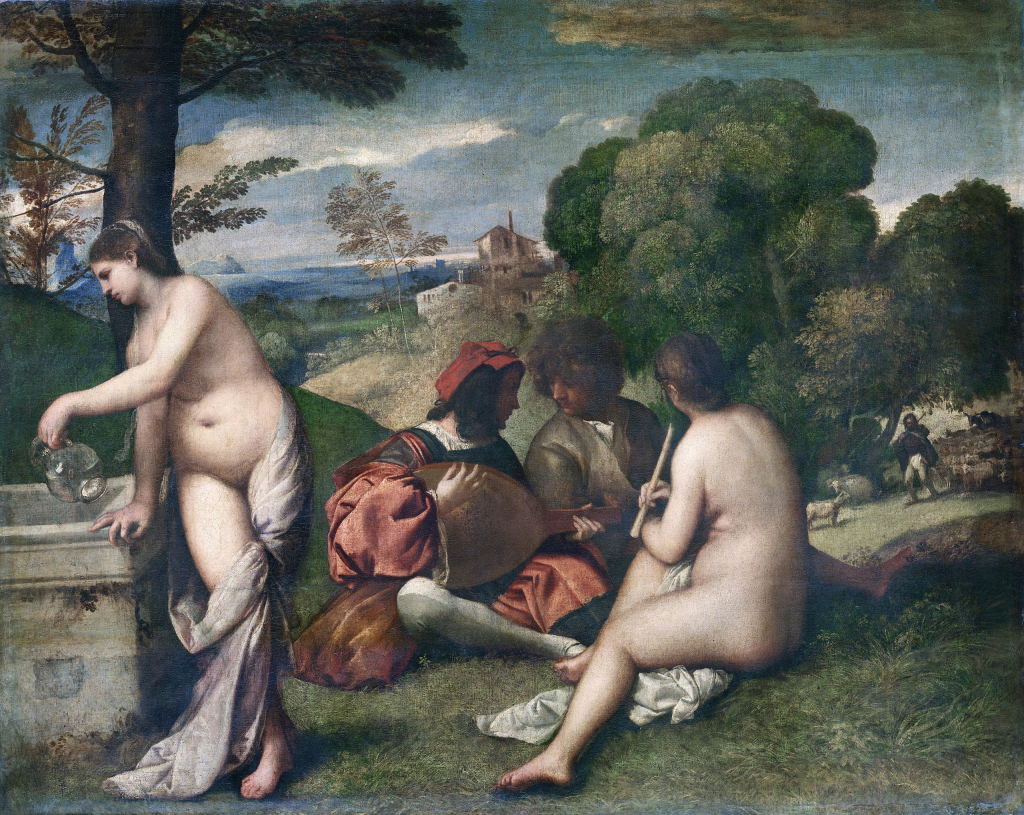
The chanson was an important component of French court culture, especially prized by the Valois dynasty (such as Francis I and Charles IX). Yet during the Wars of Religion, Protestants also adapted chanson lyrics on a large scale, turning them into hymns or weapons for satirizing the Church. Thus, a single chanson might be sung elegantly at a Catholic court, while at a Huguenot gathering it took on an entirely different political meaning.
German and the chorale — the spiritual trumpet of the Reformation
Unlike the Italian madrigal and the French chanson, the greatest breakthrough in German music in the sixteenth century came not from secular aesthetics but from the Reformation. Martin Luther realized that if ordinary believers were truly to take part in worship, God had to be sung in a language they could understand. He therefore translated Latin hymns into German and personally wrote dozens of chorales — melodies simple, squarely structured, and easy for the congregation to sing. The chorale was not an artwork designed for soloists, but a “tool of faith” serving the congregation. Its melodies were usually taken from folk songs or existing chants, with steady rhythm, moderate range, and an emphasis on clearly intelligible lyrics. In Lutheran churches, the congregation raising its voice together in Ein feste Burg ist unser Gott (“A Mighty Fortress Is Our God”) had become a sacred and powerful collective act.
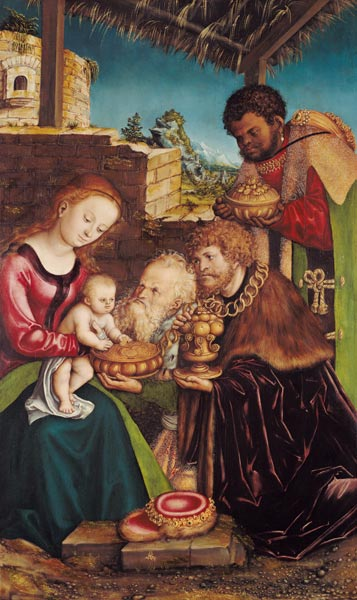
The chorale was the “sonic banner” of the Protestant movement. It was not merely a musical form, but a political declaration — proclaiming the ideas of “freedom of conscience” and “the priesthood of all believers.” In Catholic-ruled regions, singing the chorale could invite persecution; in Protestant principalities, it was the bond that consolidated national identity and the spirit of resistance. Therefore, the political weight carried by a single German chorale far exceeded that of a chanson or madrigal of the same period.
In the mid-sixteenth century, Latin still held the dominant position as the lingua franca of the sacred sphere, while secular music formed its distinct cultural blocs around the three great languages of Italian, French, and German. At the same time, Spanish, with its imperial influence, and English, with its vigorous vitality after the Reformation, also built strong musical traditions in particular regions. Music began to flow among multiple languages; language not only carried different aesthetic pursuits, but also reflected Europe’s increasingly plural political map and cultural identity.
First Movement: The Nightingale of Mons
Orlando di Lasso, the Renaissance master who would one day be hailed as the “Prince of Music,” began the canvas of his life around 1532 in Mons. This city, located in the County of Hainaut in the Habsburg Netherlands (in present-day Belgium), was a brilliant jewel on the map of European musical culture at the time — an important cradle of talent for the Franco-Flemish School.
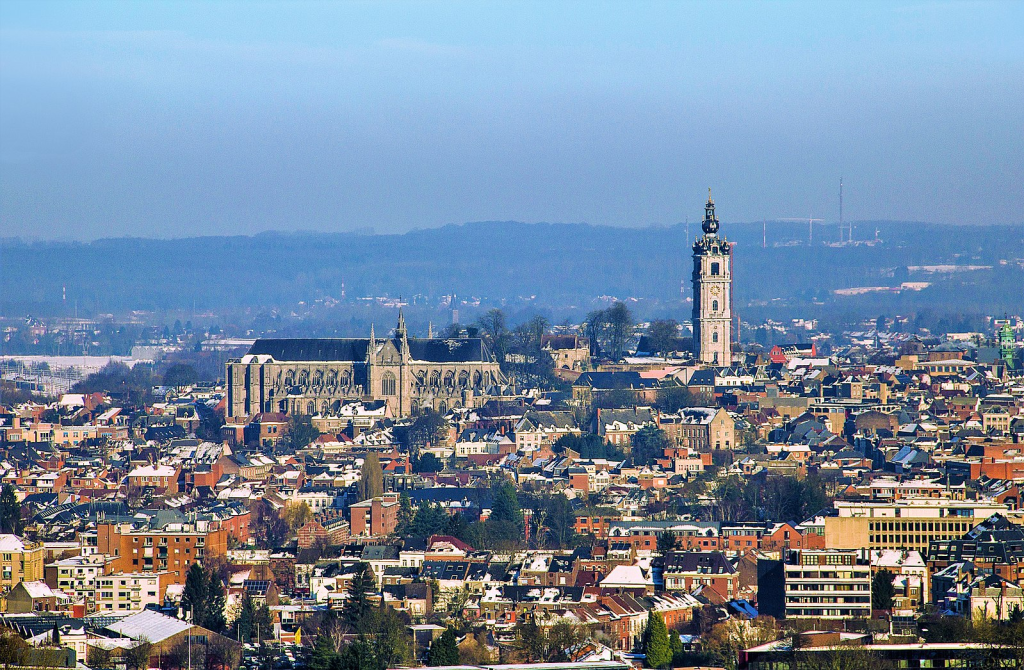
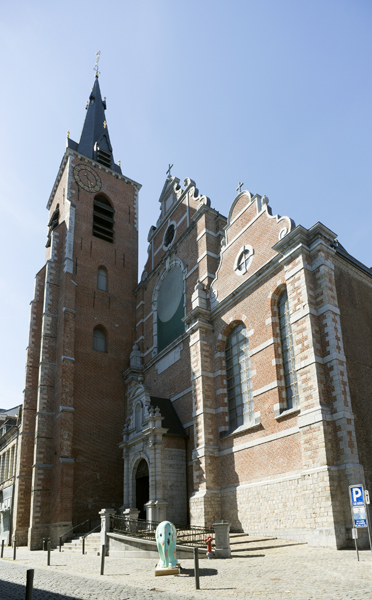
Lasso’s musical talent had already shown its edge in childhood. He is recorded as a “boy singer” in the choir of the Church of St. Nicholas in Mons, which means he entered one of the most elite music-education systems in Europe at a very early age: the church choir school. There he received not only comprehensive training in singing, music theory, and composition, but also a solid foundation in general culture. Of the most legendary accounts of his early years, the one most often savored is that his singing was so beautiful that he was abducted three times. This anecdote, though never fully confirmed, vividly foreshadowed how his talent would one day conquer all of Europe.
The turning point of his fate came when he was twelve. Around 1544, he left the Low Countries and traveled to Italy in the entourage of Ferrante Gonzaga (then Viceroy of Sicily). This journey south opened the “apprenticeship” in which he absorbed a diversity of musical styles. He passed successively through Mantua and Sicily, and stayed in Milan from 1547 to 1549. In Milan he made the acquaintance of the madrigal composer Hoste da Reggio, who had an important influence on Lasso’s early secular style, especially his madrigal composition.
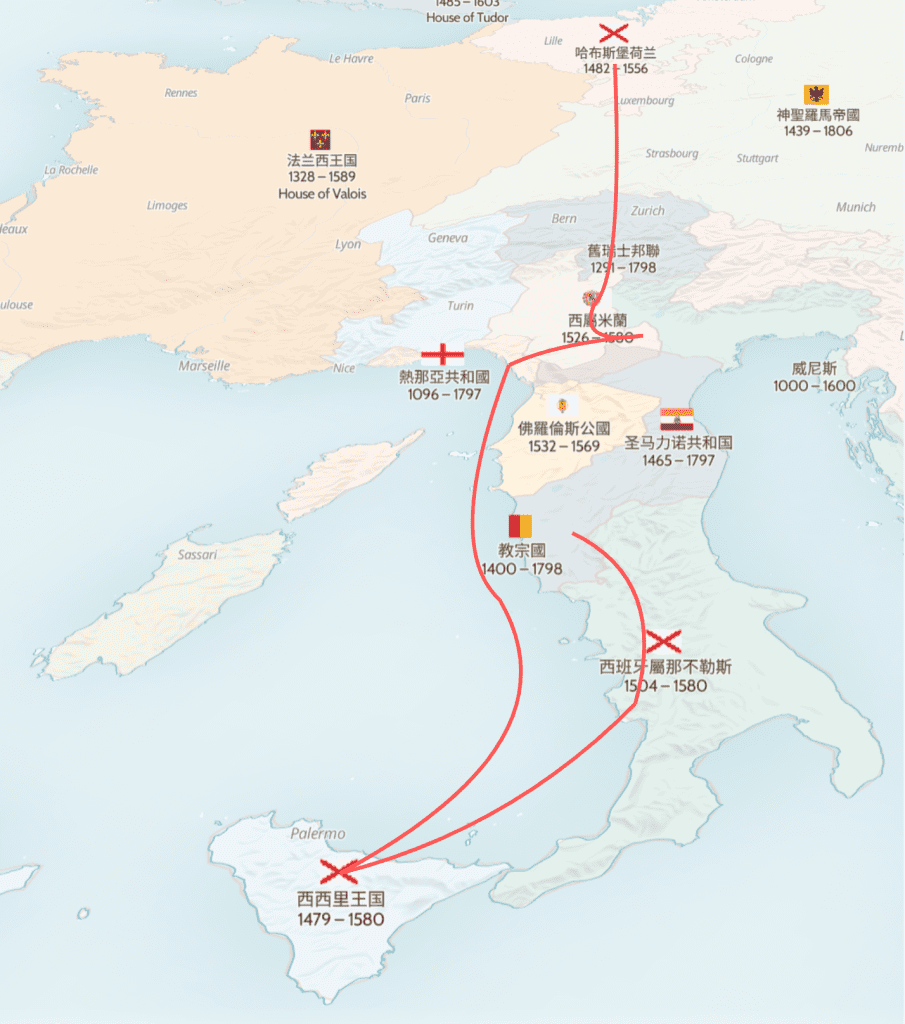
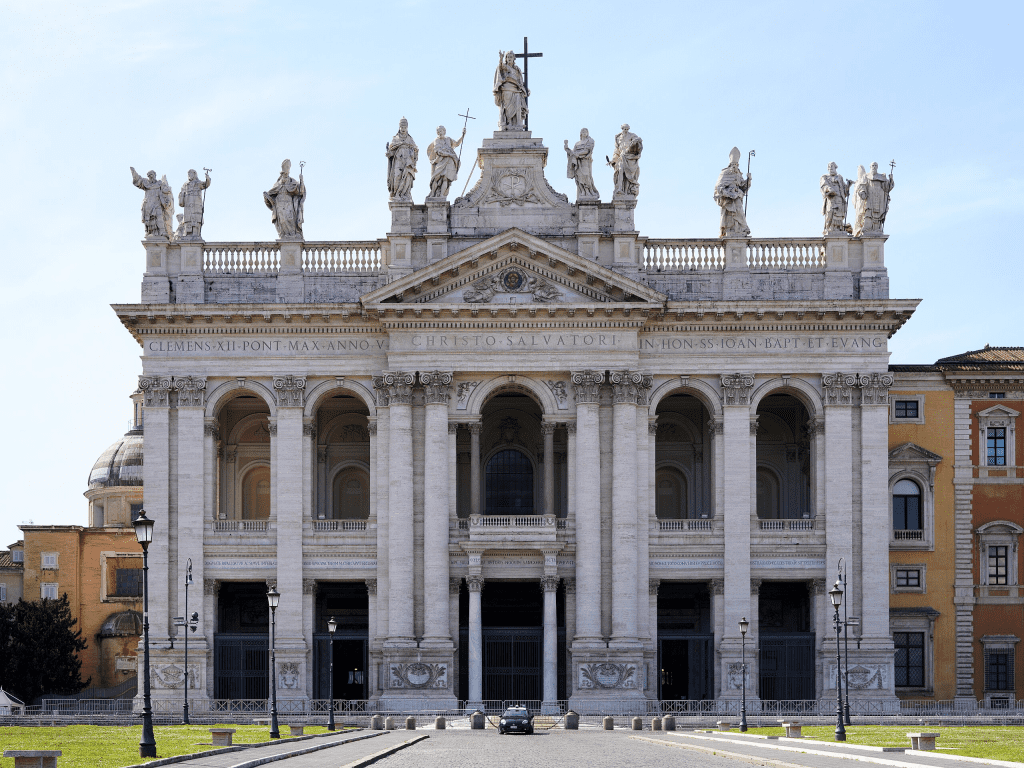
Entering the 1550s, Lasso’s professional career as a musician formally set sail. He first served in Naples as singer and composer for Costantino Castriota (Duke of Gravina). Scholars generally agree that his earliest surviving works date from this period. Then his steps turned toward the Eternal City, Rome. Here he served in turn the Grand Duke of Tuscany — Cosimo I de’ Medici (in his Roman household) — and the Church. His talent received recognition of the highest order: in 1553, at only 21, Lasso was appointed maestro di cappella of the Archbasilica of Saint John Lateran in Rome. This post was one of the top musical positions in the Catholic world at the time; that it was given to so young a musician shows how extraordinary his gifts were. Yet he stayed only a year before leaving (his successor, as it happened, was the protagonist of our previous article, Palestrina, who took over in 1555).
His whereabouts in 1554 became a brief blank in the historical records. Some contemporary accounts suggest he may have traveled through France and England during this time. Wherever he spent that year, this brief “disappearance” was like a gathering of strength, preparing him for the decisive return and journey that followed. In 1555, Lasso returned to Antwerp (in the Habsburg Netherlands) — one of the most important music-publishing centers in Europe at the time.
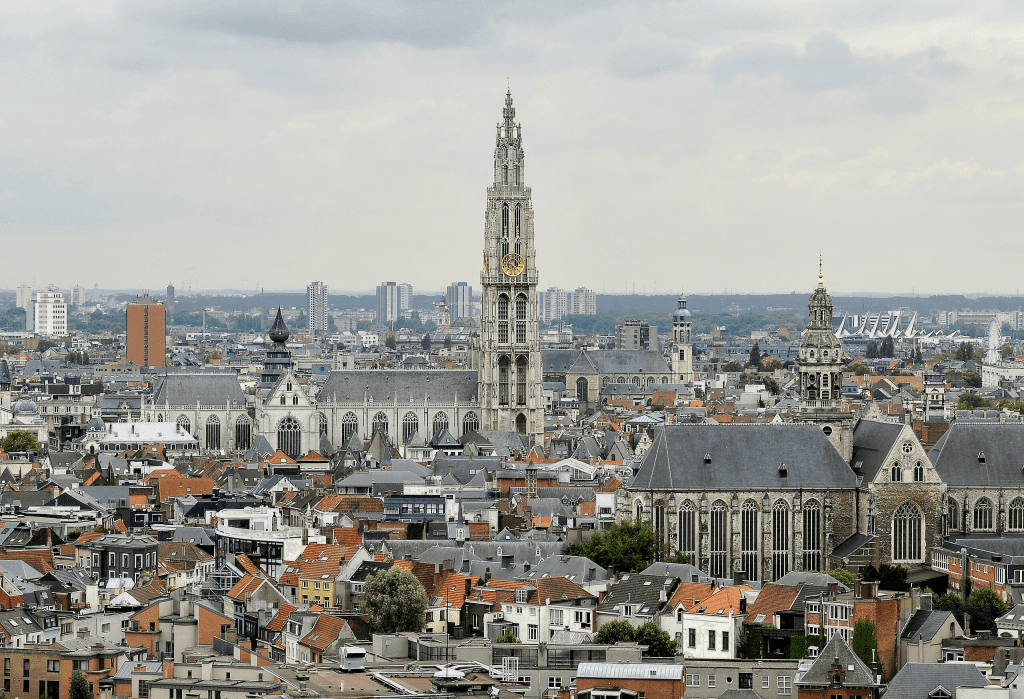
Knowledge point: the capital of music printing — Antwerp
[Expand / Collapse]
-
I. Geography and political status (mid-16th century)
- Geographical location: located in the Low Countries (today’s northern Belgium), on the banks of the Scheldt River, it was a natural port linking the North Sea with the inland hinterland of Europe.
- Ruling polity: the Habsburg Netherlands, ruled by the Spanish crown, one of the wealthiest regions in the world at the time.
- Importance: hailed as the “Venice of the North,” it was the third-largest city in 16th-century Europe, after Paris and London, and the most important international trading center on the continent.
“In the 1550s, Antwerp was the economic capital of the world.” — historian Fernand Braudel
II. Its central role as the “capital of music printing”
That Antwerp became the place where Lasso’s early works were published was no accident. It occupied a unique position in music history:
✅ 1. One of the earliest music-printing centers in Europe
- The pioneer: as early as 1538, specialist music printers appeared in Antwerp, such as Tielman Susato — and it was he who published Lasso’s First Book of Motets in 1556.
- Technical advantage:
- Using movable metal type, it could print staff lines, notes, lyrics, and decorative patterns all at once.
- High printing efficiency and relatively low cost allowed scores to be reproduced and circulated on a large scale.
- Industry scale: by the 1550s, Antwerp had several professional music publishing houses, forming a complete industrial chain (composer → publisher → bookseller → consumer).
✅ 2. A “symbiotic ecosystem” of musicians and publishers
- Many young musicians from the Flemish region (such as Lasso, Jacob Arcadelt, and others), after pursuing advanced study in Italy, would return to Antwerp to publish their first collections.
- Publishers not only provided printing services; they also helped composers promote their works, and even invested in publishing anthologies (such as madrigal and chanson collections), creating a brand effect.
- This model turned music from an “exclusive possession of the church/court” into a “purchasable commodity,” greatly promoting the popularization of musical culture.
Here his first collections were published, including secular genres such as Italian madrigals and French chansons. Most importantly, in 1556 his Orlando Di Lasso: Il Primo Libro de Mottetti (Lasso: The First Book of Motets) was formally published by the printer Tielman Susato. The appearance of this collection of five-voice motets marked not only that this 24-year-old composer had already mastered complex polyphonic technique, fusing Italy’s fresh melody with the Flemish contrapuntal tradition, but also served as his “coming-out work,” announcing to the European music world his formal debut as a mature composer.
To sum up his early career, it was a typical growth trajectory of a “Franco-Flemish School” genius: laying a solid foundation in the Low Countries, then heading south to Italy to steep in the most avant-garde musical fashions, and rapidly accumulating reputation and skill in important religious and court institutions. This journey across regions and cultures laid a deep foreshadowing for his later becoming an “all-around” composer versed in the musical genres of Latin, Italian, French, German, and more.
Second Movement: The Laurel of Munich
In 1556, Orlando di Lasso accepted the invitation of Duke Albrecht V of Bavaria to serve as a singer at the Munich court (within the Holy Roman Empire). This decision marked the end of his wandering years and the beginning of a golden creative period of nearly forty years of stability, high output, and glory. Under Albrecht V and his successor William V, the Munich court was deliberately building a musical establishment that could rival the leading Italian courts, and Lasso’s arrival was the very heart of that grand design.
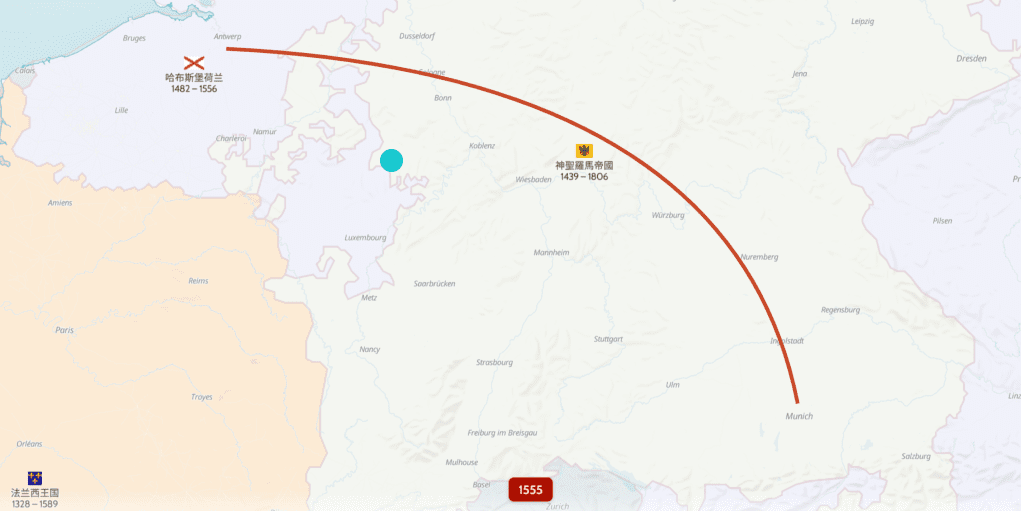
Lasso quickly adapted to life in Munich. In 1558, he married Regina Wäckinger, daughter of a lady-in-waiting to the duchess; this marriage brought him two sons, both of whom later followed their father into composing. The stability of family life and the generous conditions of the court provided a solid guarantee for his creative work. In 1563, Lasso succeeded to the position of Ludwig Daser, formally being promoted to Kapellmeister of the Munich court, with full charge of the court’s musical affairs, including composition, conducting, ensemble management, and music education. He served in this position until the end of his life.
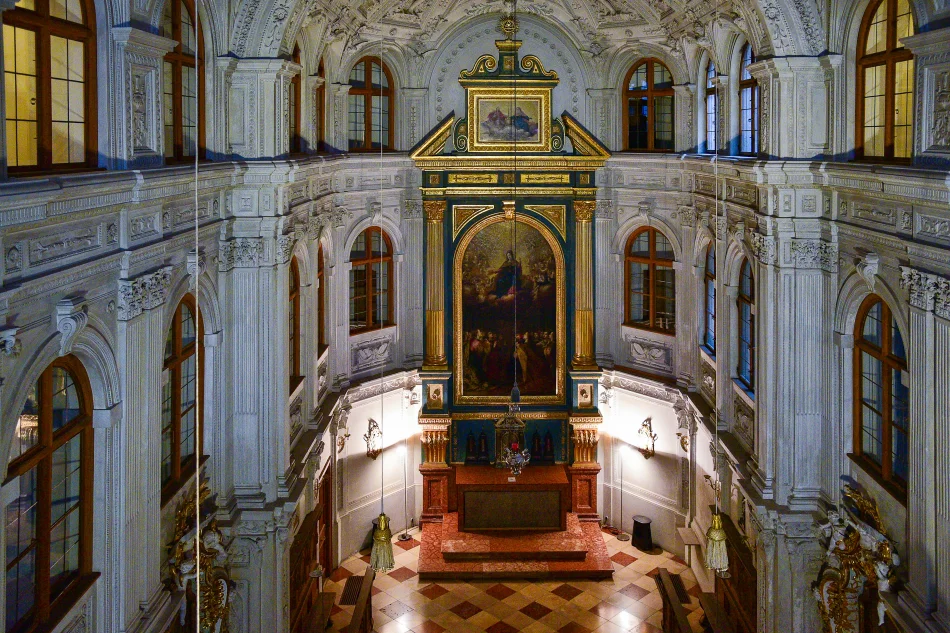
As Kapellmeister, Lasso fused the musical nourishment he had absorbed in Italy, France, and the Low Countries with the German musical tradition. He led an ensemble of top singers and instrumentalists, making it one of the most celebrated musical bodies in all Europe. His reputation drew many young composers to study with him, including Andrea Gabrieli from Venice (who visited Munich in 1562), and Andrea’s nephew Giovanni Gabrieli (also one of the protagonists of the Baroque section of the Classical Diary, by the way) may also have studied with Lasso in the 1570s. This north-south exchange further consolidated Lasso’s position as an authority in the European music world.
Knowledge point: the Venetian School and the Gabrieli, uncle and nephew
[Expand / Collapse]
-
In the starry sky of the late Renaissance, if Orlando·迪·Lasso represented the culmination and completion of traditional polyphonic craft, then from Venice cameAndrea·Gabrieli and his nephewGiovanni·Gabrieli, a pair of guides who lit the torch of the Baroque age. They were not only composers, but “architects of sound” , whose work radically changed the spatiality of music, the status of instruments, and emotional tension, completing the decisive leap from the balanced rationality of the Renaissance to the dramatic tension of the Baroque.
Andrea·Gabrieli: the founding bridge
Andrea’s role was that of a crucialfounder and transmitter。
- A living hub of north-south fusion: the most pivotal event of his career was his1562visit to Munich, where he studied under Orlando di·迪·Lasso. This journey north to study gave him deep mastery of the most refined polyphonic thinking of the northern Franco-Flemish School. He brought this legacy back to Venice and fused it with the city’s distinctivepolychoral tradition. He was therefore not only an outstanding representative of the Venetian School, but a living bridge between the musical cultures north and south of the Alps.
- A pioneer of instrumental independence: while Lasso remained in the realm of pure vocal music, Andrea was vigorously opening up the territory of instrumental music. He composed a large number oforgan canzonas and ricercaresof rigorous structure and rich musical ideas, liberating these genres from their subordination to vocal music and laying the foundation for purely instrumental music.
- “The sower of the”concerto principle: together with his student Giovanni·Gabrieli, at St Mark’s Basilica in Venice——a superb acoustic space with two facing choir galleries—— — he practiced and developed“the art of contrasting sonorities”. The call-and-response between choir and orchestra, and the confrontation of different timbre groups, already took the rudimentary shape of the Baroque “concerto style” .
His historical position: he sowed Lasso’s international polyphonic language in the fertile soil of Venice, and gave rise to an even more revolutionary sprout.
Giovanni·Gabrieli: the apex of revolution
If Andrea was the founder, Giovanni was therevolutionary geniuswho turned the blueprint into an immortal palace. He wasthe most radical breaker of the late Renaissance, and a well-deserved pioneer of the Baroque spirit.。
- Conqueror of space: Giovanni pushed the Venetian polychoral style to an unprecedented scale of grandeur. He composed12、14or even16-voicegiant motets, dividing them into three or four independent choirs. These great pillars of sound interwove, collided, and echoed beneath the dome of St Mark’s, creatinga three-dimensional architecture of sound full of spatial contrast. Music was no longer merely an art of time; it had become an art that conquered space. His representative work *In Ecclesiis* is a monument to that glorious sonority.
- Herald of instrumentalism: Giovanni took an epoch-making step:he became the first composer in Western music history to specify specific performing instruments explicitly on the score. In his Sacred Symphonies, instruments such as cornets, trombones, and violins could no longer be freely substituted; each was assigned its own melody according to its timbre and technical character. This proclaimedthe complete independence of instrumental music. Even more striking, in his *Sonata pian’ e forte* , he wrote dynamic markings for the first time in history, actively pursuing contrast in volume — a direct knock on the door of the Baroque.
- Pioneer of emotional tension: he inherited the chromatic exploration of Lasso’s **Prophetiae Sibyllarum** and went further. To express the intense religious emotion of the motets, he used bolder dissonances and sudden modulations, greatly increasing the music’sdramatic power and emotional impact, which coincided with“the Doctrine of the Affections”aesthetic pursuit of the early Baroque.
His historical position: with Venice as his laboratory, he personally dismantled the homogeneous sonority of Renaissance polyphony and built a new musical paradigm centered on contrast, space, and color. He was not only the summit of the Venetian School, but the most direct precursor of Baroque masters such as Monteverdi.
- A living hub of north-south fusion: the most pivotal event of his career was his1562visit to Munich, where he studied under Orlando di·迪·Lasso. This journey north to study gave him deep mastery of the most refined polyphonic thinking of the northern Franco-Flemish School. He brought this legacy back to Venice and fused it with the city’s distinctivepolychoral tradition. He was therefore not only an outstanding representative of the Venetian School, but a living bridge between the musical cultures north and south of the Alps.
By the 1560s, Lasso was renowned across Europe, his influence reaching far beyond the musical world. His fame brought him countless honors:
- In 1570, the Holy Roman Emperor Maximilian II conferred on him a title of nobility — an extremely rare distinction for a composer.
- In 1571, Pope Gregory XIII knighted him as a “Knight of the Golden Spur.”
- King Charles IX of France invited him to France twice (1571 and 1573), and even intended to put him in charge of the royal chapel.
Knowledge point: the Knight of the Golden Spur
[Expand / Collapse]
-
“The Knight of the Golden Spur”, formally called “the Order of the Golden Spur” 或 “the Golden Equestrian Order”, but better known in history as “the Order of the Golden Spur”。
. Here is a detailed explanation of it:
1. What is it?
It is apapal order of knighthood, conferred by the Pope, one of the highest honors the Catholic world could bestow on a layman (a non-cleric). Those who received this title were called“knights”, and could place before their names“Sir”or a corresponding honorific.
2. The origin and symbolism of the name
“The golden spur” — this name derives from a core symbol in the investiture ceremony. In the ancient ceremony, the Pope would present the recipient with a pair ofgilded spurs。
- Spur: in the Middle Ages and the Renaissance, the spur was the typical mark of knightly status. Only knights were entitled to wear spurs.
- The gold: symbolizing its supreme status and value.
Therefore“The Knight of the Golden Spur”, this title vividly embodies its meaning as“the highest grade of knight created by the Pope”.
3. History and significance
- Origin: its origin can be traced to the early Middle Ages; according to legend it is connected with the4century AD Roman emperor Constantine the Great. But as an institutionalized order, its modern form was chiefly established by the Popes.
- Status: in history, it was once thehighest order of knighthoodthe Pope could bestow, of extremely exalted rank. It was usually given only to monarchs, heads of state, high nobles, and the very few outstanding artists like Lasso who had made extraordinary contributions to the state, the Church, or the Catholic faith.
- The significance of the award to Lasso: Pope Gregory XIII, in1571年将“The Knight of the Golden Spur”title on Orlando di·迪·Lasso — anepoch-making event。
- . It showed that a musician’s talent and achievement had reached a point where they could be recognized by both the supreme secular power (the emperor) and the supreme religious power (the Pope).
- For the social status of musicians, this was an enormous elevation. It symbolized that musical art was no longer merely“a craftsman’s”handicraft, but a“liberal art worthy of the highest honors, standing alongside literature and painting.”。
4. Present status
It should be noted that this order underwent change in the course of history.1905, Pope Pius X reformed it, lowering its rank, so that it was no longer the highest order. Today, the highest order of knighthood of the Holy See is the Order of Christ, followed by the Order of the Golden Spur, and then the Order of St. Gregory the Great , and so on.
- Spur: in the Middle Ages and the Renaissance, the spur was the typical mark of knightly status. Only knights were entitled to wear spurs.
Despite the great temptations, Lasso still chose to remain in Munich. In 1580, replying to an invitation from the Elector of Saxony, he wrote: “I do not wish to leave my house, my garden, and the other good things of Munich.” These words fully reflect his contentment with life in Munich and his cherishing of a stable environment for art.
During his Munich years, Lasso’s composition entered an unprecedented period of high output and maturity, with works covering all the major genres, sacred and secular, displaying his incomparable versatility.
1. Sacred music
[Penitential Psalms] Psalmi Davidis poenitentiales (David’s Penitential Psalms)
This setting of the seven penitential psalms (Psalms 6, 32, 38, 51, 102, 130, 143) is a milestone of Lasso’s sacred music. Legend has it that King Charles IX of France commissioned it as penance after the St. Bartholomew’s Day Massacre. Whether the legend is true or not, this cycle, with its profound emotional expression, free polyphonic technique, and meticulous reading of the text, reached the summit of Renaissance sacred music. Among them, the Psalmus Sextus Poenitentialis: “De profundis clamavi ad te, Domine” (the Sixth Penitential Psalm: “Out of the depths I cry to you, O Lord”) is especially famous, regarded by many scholars as a masterpiece of Renaissance polyphony rivaling Josquin des Prez’s comparable work.
Knowledge point: the lyrics of Psalmus Sextus Poenitentialis: “De profundis clamavi ad te, Domine”
[Expand / Collapse]
-
Latin text & English translation
De profundis clamavi ad te, Domine.
Out of the depths I cry to you, O Lord.Domine, exaudi vocem meam.
Lord, hear my voice.Fiant aures tuae intendentes in vocem deprecationis meae.
Let your ears be attentive to the voice of my supplication.Si iniquitates observaveris, Domine, Domine, quis sustinebit?
If you, O Lord, should mark iniquities, who could stand?Quia apud te propitiatio est, et propter legem tuam sustinui te, Domine.
But with you there is forgiveness, that you may be feared. I wait for you, O Lord.Sustinuit anima mea in verbo eius, speravit anima mea in Domino.
My soul waits for the Lord, more than watchmen wait for the morning, more than watchmen wait for the morning.A custodia matutina usque ad noctem, speret Israel in Domino.
O Israel, put your hope in the Lord, for with him is steadfast love and abundant redemption.Quia apud Dominum misericordia, et copiosa apud eum redemptio.
For he will redeem Israel from all its iniquities.Et ipse redimet Israel ex omnibus iniquitatibus eius.
(repeated for emphasis) He will redeem Israel from all their iniquities.
[Mass] *Missa entre vous filles* (The Mass “Among the Maidens”)
Lasso composed nearly 60 Masses, many of them “parody Masses” — reworkings based on his own or others’ motets, chansons, and similar works. Notably, some of these Masses have sources that are quite secular, even frivolous, French chansons — for example, the *Missa entre vous filles*, based on the chanson *Entre vous filles de quinze ans* by Clemens non Papa. This practice of putting secular melodies to the most sacred liturgy was widely accepted at the time, and also reflects Lasso’s artistic inclusiveness and cleverness.
Knowledge point: a detailed reading of **Missa entre vous filles**
[Expand / Collapse]
-
Choosing*Missa entre vous filles*》(the Mass “Among the Maidens”) as a representative work of the middle period is not because it is his highest artistic achievement, but because of the drama and artistry behind its creation.。
1. Extreme contrast: highlighting the creative conventions of the Renaissance
The source of this Mass —*Entre vous filles de quinze ans*》((“Among You Girls of Fifteen”) — is a French chanson of a rather frivolous, even erotic, content. To take the musical material of such a secular work and use it to compose the most sacred music of the Catholic rite (the Mass) — thisextreme contrastis almost inconceivable today.
Yet this lies at the very heart of the Renaissance tradition of the “parody mass.” Composers delighted in borrowing ready-made, widely known melodies and polyphonic structures from popular secular songs as the foundation for constructing a Mass. Choosing this work as an example can most forcefullyreveal this historical fact to the modern reader: in that age, the subtlety of art and the creativity of music were sometimes valued more highly than the “purity” of the lyrics. This practice was not only accepted at the time, but was even encouraged by illustrious patrons such as the Duke of Bavaria.
2. Demonstrating Lasso’s confidence and status at the Munich court
Lasso composed and published this Mass in Munich in 1581. At this time the Counter-Reformation was in full blaze, and the Council of Trent’s demand for purity in church music was still ringing in everyone’s ears. Lasso’s colleague Palestrina’s style in Rome was upheld as the model of “solemnity.”
Yet in Munich, a Catholic stronghold, Lasso openly built a Mass on a love song. This fully proves:
- he enjoyed an extremely high degree of artistic autonomy: his patron, Duke Albrecht V, appreciated his talent and gave him great creative freedom.
- his self-confidence: he had no need to prove his piety by avoiding secular sources; he trusted his craft to turn the “profane” into the “sacred,” lifting any material to a sublime height.
3. Displaying his consummate art of “reworking”
Choosing such an extreme example throws into even sharper relief the mastery of Lasso’s compositional craft. He did not simply copy the chanson’s melody, butdeepened, expanded, and complicatedthe original polyphonic material. Listeners, in the solemn*Agnus Dei*》((Lamb of God) or the*Credo*》((Creed), may hear nothing at all of the original’s frivolity (well, perhaps a little — compare it with the Mass of the previous article’s subject), sensing only the intricate polyphonic web and devout emotion. This ability to “turn base metal into gold” was exactly the mark of a master.
4. A “key” to understanding his overall style
Lasso was an all-round master equally at ease in both the sacred and the secular. This Mass is like a key that helps us understand a core trait of his entire output:inclusiveness and insight into human nature. He could write the most avant-garde, chromatic*Prophetiae Sibyllarum*》((Prophecies of the Sibyls), and also the most solemn ritual music, all while never excluding secular, even streetwise, emotions. This Mass shows that, in his view, the craft and emotional expression of music could transcend the boundaries of subject matter itself.
[Motet] *Prophetiae Sibyllarum* (The Prophecies of the Sibyls)
*Prophetiae Sibyllarum* is a cycle of 12 motets, famous for its bold, unprecedented chromatic harmony; its chord progressions were extremely radical for the time, and similar techniques would scarcely be heard again until Carlo Gesualdo and the works of the 20th century. It is the ultimate expression of the “reserved music” (musica reservata) style.
Knowledge point: what is “reserved music”
[Expand / Collapse]
-
“Reserved music” (Musica reservata) is an important musical term and aesthetic concept of the middle and late Renaissance, especially from the mid-16th century onward; to a certain extent, it can be considered the ultimate form of musical expression pursued by musicians of that era. However, its exact meaning is still debated in musicology today, because it appears in the literature of the period yet was never clearly defined.
We can understand it as a set of“advanced” ideals and techniques of musical composition, whose core is “written for the connoisseur.” Below I have set out several of its generally recognized characteristics:
1. Extreme “word painting” and emotional expression
This is the most central feature of “reserved music.” It requires that music not merely be fitted to the lyrics, but become their “servant,” using every possible means tointensify, depict, and even dramatize every nuance of meaning and emotion in the lyrics.。
- Concrete depiction: when the lyrics speak of “ascending,” the melody uses an ascending scale; of “pain,” it uses sharp dissonances; of “darkness,” a low register or unusual harmony.
- Emotional intensity: it pursued an unprecedented emotional tension — whether extreme grief, ecstasy, anger, or devotion, all had to be conveyed directly and unsparingly through the music.
2. A high degree of chromaticism
To achieve the emotional expression described above, composers began to use on a large scalethe chromatic system, that is, frequently using accidentals outside the diatonic scale within a passage. This was an extremely avant-garde and radical technique at the time.
- Best example: precisely Lasso’s ***Prophetiae Sibyllarum***. The introductory prologue of this work already uses harmonic progressions that were shocking to contemporaries, and its degree of chromaticism was not surpassed until the late Baroque 150 years later and the Romantic era 200 years later. This technique aims to create a mysterious, prophetic, otherworldly atmosphere of special emotion.
3. Exquisite and complex contrapuntal skill
Works of “reserved music” usually contain extremely exquisite and complex polyphonic counterpoint, but this is not for showing off technique; it serves textual expression. The voices interweave, jointly creating the rich texture and emotional depth that the lyrics require.
4. “Reserved” for whom?
As to the meaning of the word “reserved,” there are mainly two interpretations:
- Reserved for the initiated: this music was “reserved” for learned, tasteful elite listeners (such as princes and nobles, intellectuals, and fellow musicians), who could appreciate its subtle word-painting and complex technique. The general public might find its mysteries hard to grasp.
- Reserved for special occasions: this music may have been “reserved” for specific, intimate occasions, such as small court gatherings or private musical salons, rather than for grand public church services.
Summary
“Reserved music” can be regarded as the ultimate expression of Renaissance humanism in the field of music. It places the “text” above the music, demanding that music do its utmost to serve, interpret, and elevate the lyrics, even at the cost of breaking the traditional rules of harmony and counterpoint to explore new sound-worlds.
2. Secular music
[Italian madrigal] Matona, mia cara (My Dear, Matona)
Lasso composed 175 Italian madrigals, their style developing from the clarity and memorability of his early Roman days to greater experimentation in his later period. Matona, mia cara comes from Lasso’s Fourth Book of French and Italian Songs; it is a light, humorous, even faintly satirical “soldier courting” song. The text imitates a rough, poorly educated German mercenary (possibly a Landsknecht) courting the Italian girl he admires, Matona, in broken Italian.
[French chanson] Un jour vis un foulon qui fouloit (“One Day I Saw a Fuller at Work”)
He wrote about 150 French chansons, whose style carries on the vivid depictiveness of Clément Janequin and the lyricism of Claudin de Sermisy. These works cover everything, from elegant love poems to witty drinking songs and even streetwise jokes, fully reflecting the many faces of secular life in the Renaissance. Among them, Un jour vis un foulon qui fouloit is a light, jocular drinking song. The lyrics very likely describe the ludicrous appearance of a fuller after drinking, or sing of the joy of drinking from his perspective. The song was quite famous among the people and widely sung; later it was even adapted by Shakespeare for use in Henry IV, Part 2.
[German Lied] Ich weiß mir ein Maidlein hübsch und fein (“I Know a Maiden, Pretty and Fine”)
From 1567 on, Lasso began composing German songs in large numbers, with content including religious subjects as well as light secular themes, and even humorous songs about overdrinking, showing his deep understanding and command of the local culture and language. Ich weiß mir ein Maidlein hübsch und fein is included in Lasso’s New German Songbook, published in Nuremberg in 1567 — one of his earliest published German song collections, marking the systematic start of his work in this genre. Unlike the light-hearted humor of Matona, mia cara or the drinking songs, this Lied presents a more complex and profound theme. The lyrics tell of a man who admires a beautiful and proper maiden, but she, coveting wealth, chooses a rich husband instead, and in the end regrets her choice.
It is not hard to see that in his middle years in Munich, Lasso’s creative range was diverse, his artistic achievement at its peak, and his social reputation at high noon — fully deserving the name “the laurel of Munich.” He became not only a cultural symbol of the Bavarian court, but, through his vast, varied, and masterly output, truly “the Lasso of Europe.”
Third Movement: The Tears of St. Peter
Entering the 1590s, Orlando di Lasso’s career had entered its twilight years. Nearly forty years of court service and ceaseless composition had brought him supreme glory, but had also drained his energy. Historical records show that Lasso’s health began to decline markedly in his later years. He was troubled by an illness called “hypochondriacal melancholia,” and sought treatment from a physician named Thomas Mermann. This condition was then believed to be related to an excess of black bile, manifesting as deep melancholy, hypochondria, and mental lassitude. Some scholars speculate that it may be connected with his increasingly introspective and devout creative tendency in his later years. Despite suffering from illness, he retained a certain creative capacity, and could even travel occasionally.
The Last Masterpiece: Lagrime di San Pietro (The Tears of St. Peter)
The greatest achievement of Lasso’s final years was undoubtedly his last work — Lagrime di San Pietro. This vocal cycle, composed in 1594, consists of 20 spiritual madrigals and one Latin motet. Based on poems by Luigi Tansillo, it depicts the profound remorse and endless grief that welled up in St. Peter’s heart after he had denied Jesus three times.
This work is regarded on many levels as Lasso’s “swan song.” First, it focuses entirely on the inner world of a religious figure, a concentrated embodiment of Lasso’s lifelong pious faith and the spiritual exploration of his final years. Second, unlike the ornate chromatic works of exploration from his middle period, the Lagrime returns to a simpler, more direct, yet highly expressive polyphonic style. The music serves the text closely, using concise musical vocabulary to depict every nuance of remorse. The whole cycle of 21 madrigals symbolizes a meditation on the 21 years of St. Peter’s papacy in Rome. The single Latin motet appended at the end, Vide homo, seems to be an admonition to the world from God’s perspective, lifting personal repentance up to the plane of universal redemption.
Lasso’s Lagrime di San Pietro can be called the final summation of the Renaissance era. It casts aside external grand narrative and instead explores the individual inner world to the utmost, deepening the humanist spirit from a praise of “man” to a profound compassion for the complexity and fragility of “human nature.” This work hones the mature polyphonic craft of the Franco-Flemish School to a state of simplicity and truth, making refined technique serve entirely the portrayal of inner emotion. Moreover, its concentrated rendering of intense emotion and dramatic tension has quietly broken through the Renaissance ideal of balanced restraint, sounding the prelude for the coming Baroque age. Lasso’s final work is not only his own deathbed confession, but a farewell poem to the entire Renaissance, standing quietly at the junction of two great eras. It looks back and completes the mission of the Renaissance, while with its profound compassion and emotional power, it waves farewell to the next, entirely new, more dramatic age.
Knowledge point: what is a “swan song”
[Expand / Collapse]
-
Legend has it that swans remain silent all their lives, and only just before death do they let out one beautiful, plaintive song. Therefore,“swan song” is used to liken the final, often peak, masterpiece of poets, composers, artists, and others at the end of their lives. It holds a tragic and magnificent beauty: the most brilliant flare of talent and life at the moment of ending.
Finale: Farewell to the Age
On June 14, 1594, Orlando di Lasso passed away in Munich. The ending of his life carried a touch of dramatic historical irony: on the very same day he died, his employer, Duke William V, signed a letter dismissing him because of the court’s financial difficulties. Lasso never saw the letter that ended his nearly forty years of service, so he was able to end his life in dignity, rather than in the distress of unemployment. He was buried in the old Franciscan cemetery in Munich. Today that cemetery no longer exists; its site has become Max-Joseph-Platz. Though the place where one of the great masters of music’s mortal remains rest is now untraceable, his music crosses time and space, echoing forever.
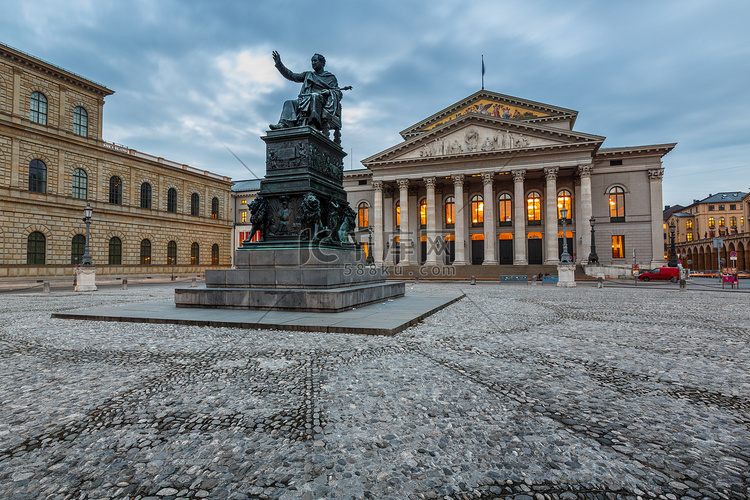
Lasso’s death marked the end of an era. He was the last and the most comprehensive master of music of the late Renaissance. He left behind more than 2,000 works, covering all the known Latin, French, Italian, and German vocal genres of the time, including about 530 motets, 175 Italian madrigals and villanellas, 150 French chansons, and 90 German Lieder. He was one of the very few Renaissance composers who could move with ease among five languages (including Latin) while maintaining the highest quality throughout.
He is regarded as the representative figure of the “reserved music” style. This style emphasized the most profound, most intimate emotional expression of the text, often achieved through bold harmony and word painting, making music a perfect vehicle for conveying the full range of human emotion. On the one hand, Lasso’s output summed up the highest achievements of Franco-Flemish polyphonic art; on the other, the strong emotional expressiveness of his works and their dramatic treatment of the text pointed the way for the Baroque era to come.
Orlando di Lasso — the master once praised by the poet Ronsard as “the divine Orlando” and honored by his contemporaries as the “Prince of Music” — wrote an encyclopedia of European Renaissance music with his life. From the choirboy prodigy of Mons, to the young maestro of Rome, to the court laureate of Munich, and finally to the soul’s final confession in the Lagrime di San Pietro — he was not only “the Lasso of Europe,” but, through the universal human radiance in his music, “the Lasso of the world.” His works still speak to us today of that great age in which faith and reason, tradition and innovation, clashed fiercely.
Afterword
When writing the summary of the Lagrime di San Pietro, the BLOG owner listened to this monument inscribed in time while holding back tears of emotion — it is the most beautiful writing the BLOG owner has produced this year. Looking back over this year, the BLOG owner began writing the Classical Diary series with the original intention of leaving something for oneself in this world through words. Ten years, a hundred years from now, will the BLOG owner’s words have enough power to pierce through time, to serve as a stone cast into the water, a path-finder for later generations to understand the sounds of a thousand years ago? May you who have been able to read this far also enjoy the beauty of music, just as the BLOG owner does at this moment. (Full text: 20,716 characters)
Digital Image Archive of Medieval Music (main reference database)
Digital Bodleian (main reference database)
ChoralWiki (main reference database)
Wikipedia (a great many articles consulted in Chinese, English, Italian, French, etc. / already cited in the original text)
OldMapsOnline (map screenshots in this article)
QQ Music (some audio cited in this article)
Tudor Printed Music at the New York Public Library | The New York Public Library
IMSLP (International Music Score Library Project)
Orlande de Lassus: Orlando di Lasso-Gesamtausgabe
Orlando di Lasso | Research Starters | EBSCO Research
Counterpoint | Music Theory, Composition & Polyphony | Britannica
Munich Residenz | A Tour of the Banquet Hall, Court Chapel, Ancestors’ Gallery and the Treasury


You May Also Like

HIFI Diary: Sennheiser MOMENTUM 4 Headphones Review

HIFI Diary: A Quick Sound Quality Review of the FiiO Wind