Classical Diary: A Beacon on the Eve of Change — Johannes Ockeghem (Part 5)
Classical Diary Series
[Expand / Collapse]
-
How to Appreciate Classical Music — Written at the Very Beginning (Part 1)
Follow the BLOG owner’s footsteps and explore the thousand-year story of classical music.
-
The Pope’s Dove and the Millennial Chant — Gregory I (Part 2)
Listen to the development of church chant and grasp the character of religious music.
-
Budding Music, Hidden Epic — Guillaume Dufay (Part 3)
Hear the story of the founding figure in whom technique and sensibility fused in the early Renaissance.
-
Moonlight Knight and Court Poet — Gilles Binchois (Part 4)
Listen to the refined lyricism of the Burgundian School, resonating across a thousand years.
-
A Beacon on the Eve of Change — Johannes Ockeghem (Part 5)
The last master of the Burgundian School, and the founder of the Franco-Flemish School.
-
The King of French Music — Josquin des Prez (Part 6)
The mid-Renaissance turns its most glorious page in both sacred and secular music.
-
The Last Glory of Roman Orthodoxy — Giovanni Pierluigi da Palestrina (Part 7)
Together we open the storm-tossed, blood-soaked gate of the late Renaissance.
-
Orlando di Lasso of Europe, Orlando di Lasso of the World (Part 8)
The Renaissance welcomes its last master of music.
-
Echoes of an Island — William Byrd (Part 9)
England rends apart the Renaissance era’s final master of music.
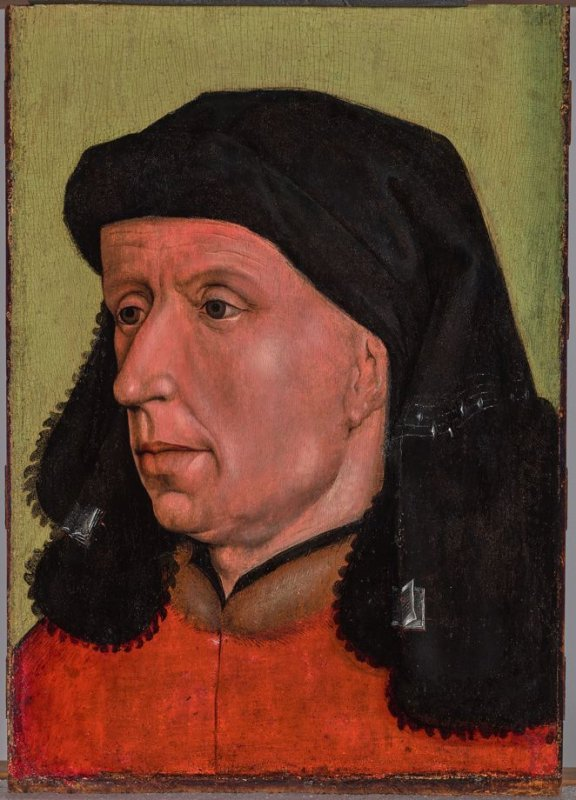
After the baptism of the two early-Renaissance masters Guillaume Dufay and Gilles Binchois, at the end of both their stories we saw the same figure who was about to stir up the world of music: Johannes Ockeghem. Ockeghem’s dates are roughly 1410 to 1497. Looking at the timeline, his creative career chiefly spans the middle and late 15th century. Although his earliest works overlap with the later years of Dufay and Binchois, his artistic maturity and most influential compositions all date from the second half of the 15th century — a period usually regarded as the transition from the early to the middle Renaissance. Ockeghem is therefore also considered a pioneering figure of the middle Renaissance. And yes, what the BLOG owner brings you today is precisely the story of this transformer of an era: Johannes Ockeghem.
Overture: The Eve of Change
In Parts 3 and 4 of the Classical Diary, we learned about the enormous changes Europe underwent in the 15th century — a transition from the medieval era to the Renaissance that posterity has never tired of discussing. Now let us go a step further and survey the continent once again from every angle: politics, religion, daily life, and more.
In the 15th century, Europe stood at the historic threshold between the Middle Ages and the Renaissance. The smoke of the Hundred Years’ War between France and England (1337-1453) gradually cleared. This conflict, which had lasted over a century, not only reshaped the political map of Western Europe but also awakened national consciousness. The Kingdom of France emerged victorious from the war, thoroughly eliminating the great power of English lords on its soil, completed its national unification, and gradually recovered its strength under Charles VII, with royal authority strengthened.
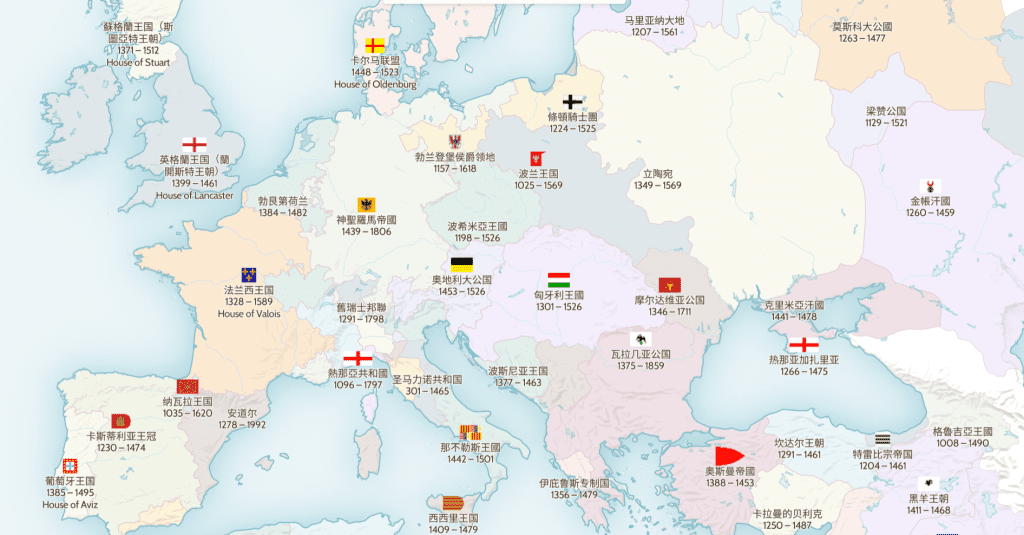
At the same time, the fate of the Eastern Roman Empire (the Byzantine Empire) weighed on the entire Christian world. The fall of Constantinople in 1453 meant the end of this thousand-year empire. It drove large numbers of Greek scholars, carrying ancient manuscripts, to migrate westward and scatter the seeds of classical culture across Italy and Western Europe. This event not only accelerated the spread of the Renaissance movement but also stirred among intellectuals a rediscovery of, and passion for, classical culture.
Knowledge Point: What does the “rediscovery” of classical culture mean?
[Expand / Collapse]
-
Classical culture refers tothe splendid culture created and accumulated during the eras of ancient Greece and ancient Rome (roughly from the 8th century BC to the 5th century AD)。
1. Ancient Greek culture
This is the wellspring and essence of “classical culture,” especially on the level of thought and scholarship.- Philosophy: The philosophical systems of Socrates, Plato, and Aristotle. Their thinking on reason, ethics, politics, and metaphysics laid the cornerstone of Western philosophy.
- Literature and drama: Homer’s epics the Iliad and the Odyssey; the tragedies of Aeschylus, Sophocles, and Euripides; the comedies of Aristophanes.
- History and oratory: The historical works of Herodotus and Thucydides; the eloquence of Demosthenes and others.
- Science and mathematics: Euclid’s geometry, Archimedes’ physics and mathematics, Pythagoras’ mathematical theories, and more.
- Art and aesthetics: A sculptural and architectural style that pursued harmony, proportion, and the idealized human form (as seen in the Parthenon).
2. Ancient Roman culture
The Romans largely inherited and advanced Greek culture, endowing it with a practical bent in law and engineering.- Latin literature: Virgil’s epic the Aeneid, Cicero’s speeches and philosophical treatises, the poetry of Horace, Ovid’s Metamorphoses, and more.
- History and politics: The historical works of Livy and Tacitus; Rome’s republican institutions, legal system (Roman law), and political thought.
- Architecture and engineering: The arch technique, the use of concrete, and the magnificent temples, forums, aqueducts, baths, and roads reflect the Romans’ engineering genius and pragmatic spirit.
- Jurisprudence: The Roman law system is the cornerstone of the later civil-law tradition, emphasizing reason, fairness, and written law.
Why were these cultures only “rediscovered” after the fall of Byzantium?
- The “loss” in Western Europe: After the fall of the Western Roman Empire in the 5th century, Western Europe entered the Middle Ages. Endless warfare, the fragmentation of society, and the Church’s absolute dominance over thought caused most Greco-Roman texts and knowledge to be lost or forgotten on Western European soil; only some Latin works filtered and interpreted by the Church (such as parts of Aristotle’s logic) survived.
- The “preservation” in Byzantium: The Eastern Roman Empire (the Byzantine Empire), meanwhile, had always used Greek as its official language, and its scholars and libraries systematically preserved a great many manuscripts from ancient Greece. This body of literature never died out; it remained the foundation of Byzantine scholarship and education all along.
- The “return” of the flame: When Constantinople fell in 1453, these Greek scholars and manuscripts, treasured for a millennium, were forced to migrate westward, directly providing scholars in Italy and elsewhere withpristine classical texts unencumbered by excessive medieval Church interpretation. It was like suddenly throwing dry kindling onto a pile of nearly spent coals, instantly bursting into roaring flames.
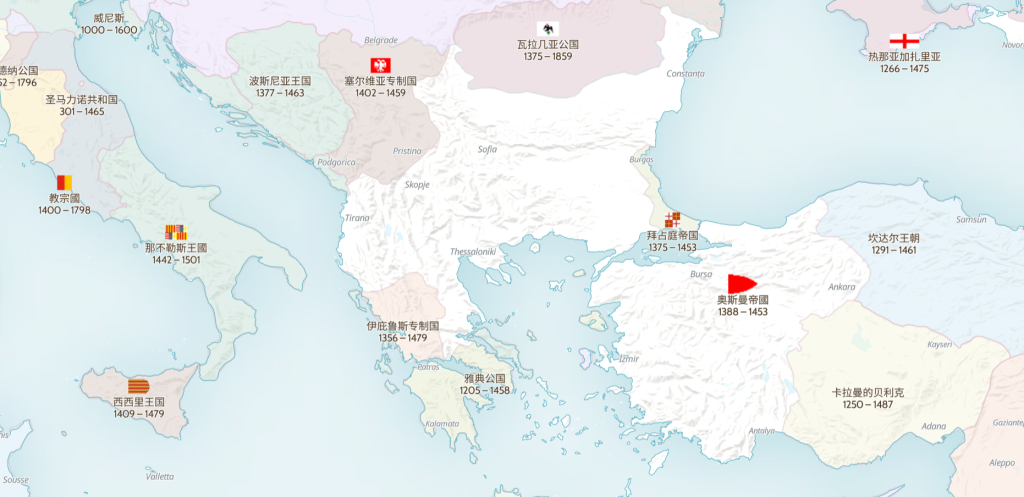
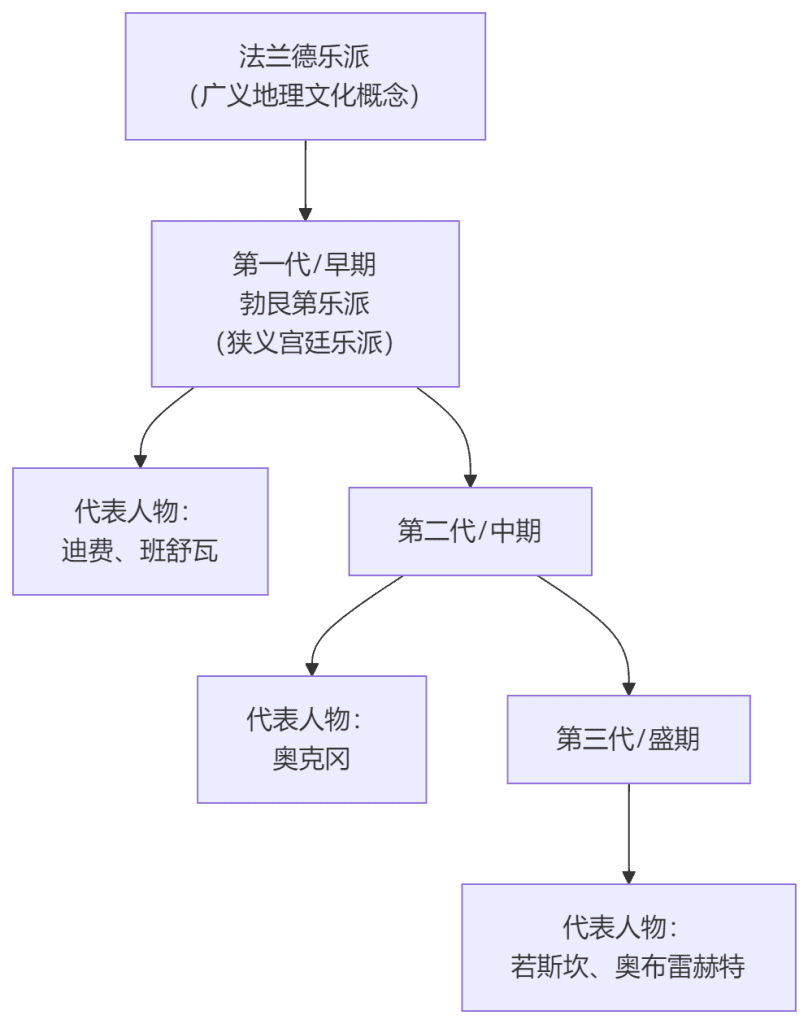
The Duchy of Burgundy, which we have mentioned many times before, reached its zenith under Duke Philip the Good, becoming an important cultural bridge linking northern and southern Europe. In 1435, Philip the Good succeeded in signing the Treaty of Arras together with the King of France, Charles VII, a treaty that ended the civil war between the Armagnac and Burgundian factions. Freed from the fetters of war, both cultures entered the fast lane. The Duchy of Burgundy, famed for its lavish court and generous patronage of the arts, attracted numerous artists and musicians. And the Kingdom of France, having thrown off English rule, likewise began to rebuild its cultural influence, with the crown using lavish artistic patronage to display the legitimacy and glory of its rule. This competitive system of artistic patronage provided musicians with stable employment and creative space, directly fostering the development of music. Meanwhile the Burgundian School, founded by Dufay and Binchois, radiated across the whole of Flanders (today Belgium, the south of the Netherlands, and northern France) and even to composers throughout Europe, eventually evolving into the Franco-Flemish School, the most important musical movement of the entire Renaissance.
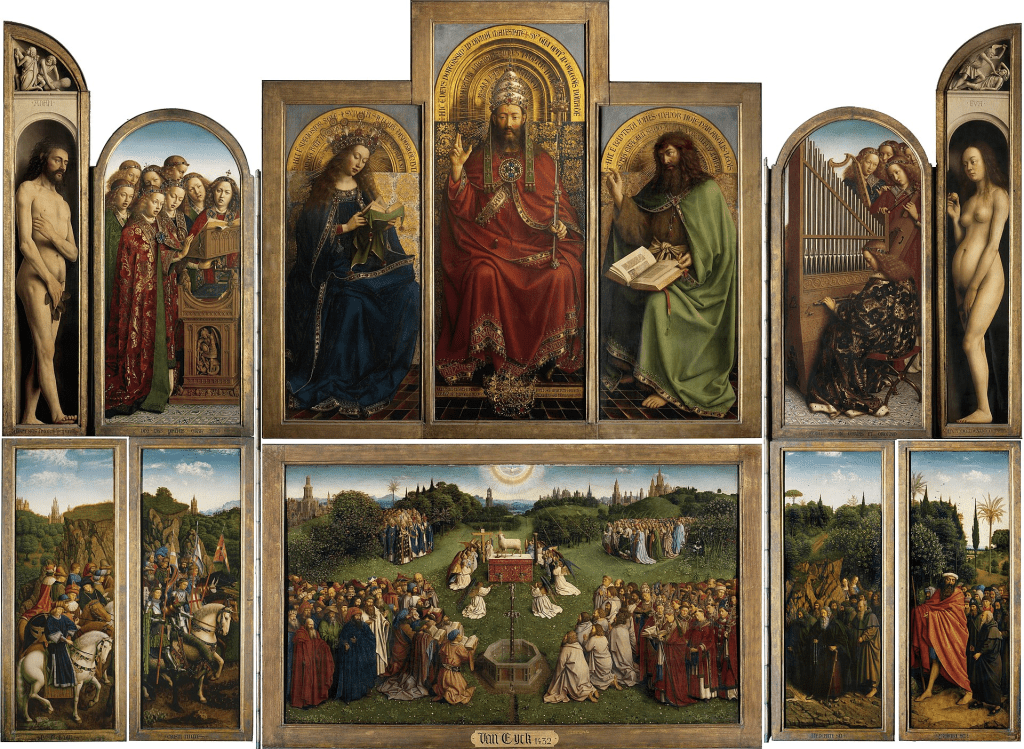
In religion, faith remained the core of social life, but it was already beginning to show signs of change. People’s religious feeling gradually shifted from pure mysticism toward more humanized expression. This transformation is especially evident in art — works on religious subjects began to incorporate more elements of real life (for details, revisit the first two installments of the Classical Diary). Besides traditional liturgical music, secular song (chansons, dance music, court ceremonial music, and the like) grew ever more important. Composers began to pay greater attention to the union of words and music, seeking to express the emotional content of the text through music; faces became more vivid, emotions richer.
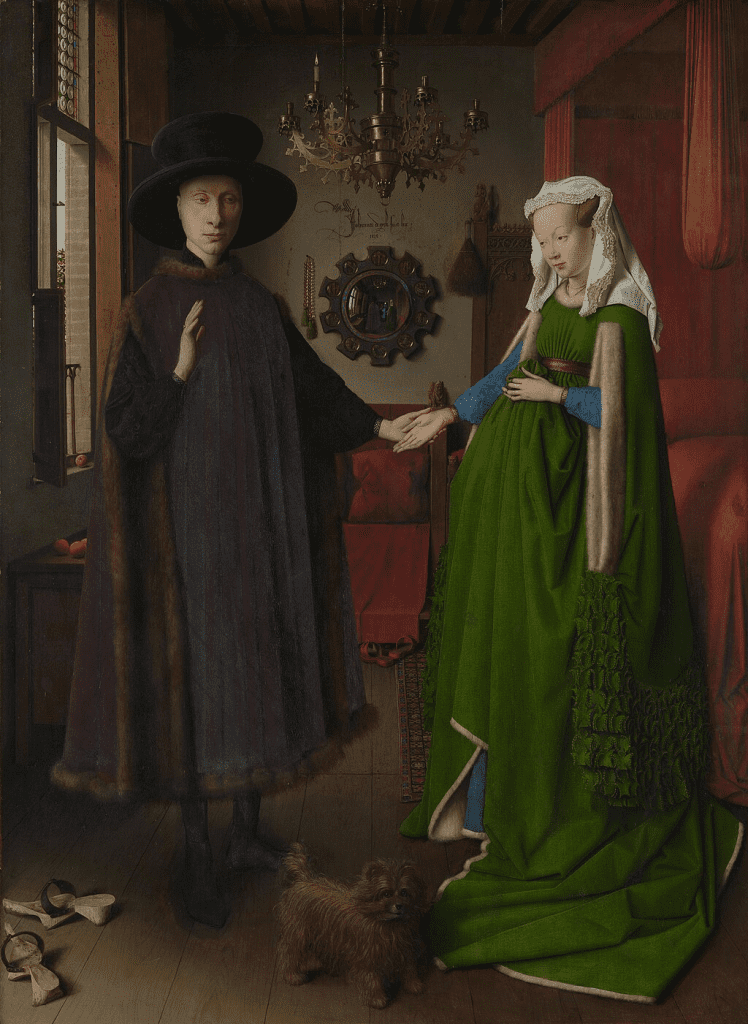
The recovery of Europe’s urban economies and the flourishing of commerce gave rise to a wealthy urban middle class. This new class (including successful merchants, bankers, and guild masters) actively displayed its social status and taste by patronizing culture and the arts, thereby providing artists with an important source of patronage and an art market beyond the Church and the court.
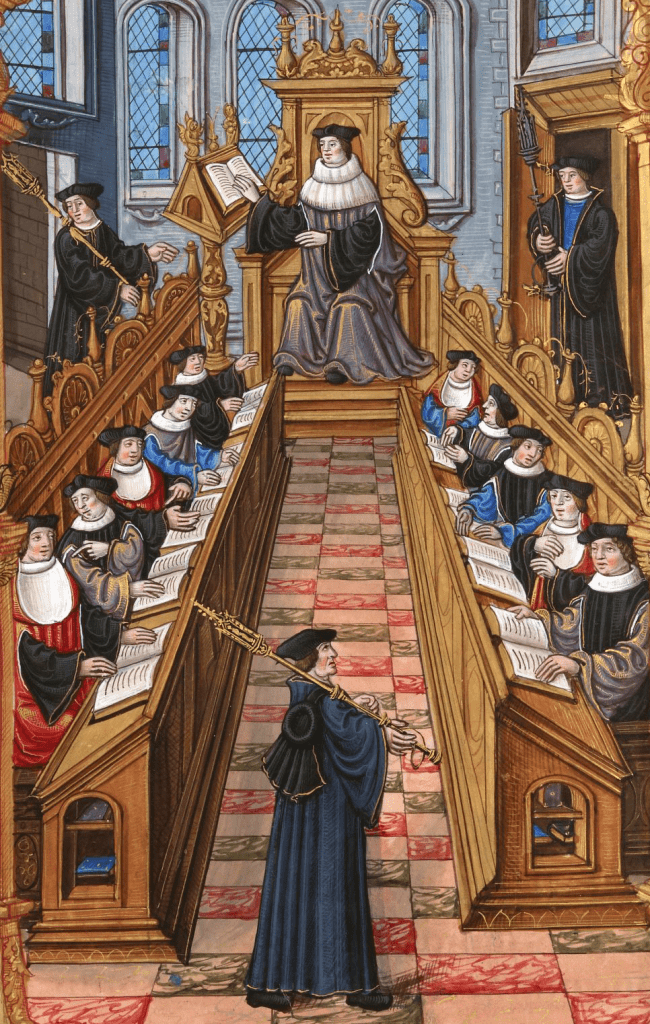
In the past, a musician’s career path depended mainly on the Church and the court. The choir schools of cathedrals were the core institutions for training musical talent; young choristers received rigorous instruction there in singing, composition, and instrumental performance. At the same time, the spread of university education and the diffusion of printing meant that knowledge was no longer confined within monastery walls. Although the traditional system still dominated the training of professional musicians, this opening of the intellectual environment and the vitality of intellectual exchange unquestionably nurtured fertile soil for the cultural innovation of the Renaissance.
First Movement: Growing Up Amid Change
It was in just such a European climate that our protagonist this time, Johannes Ockeghem, was born around 1410 in the town of Saint-Ghislain in the Flanders region of the Burgundian Netherlands (in present-day Belgium), a hub of Europe’s “cutting-edge culture.” This area was one of the most active cultural crossroads in Europe at the time, a stone’s throw from the important commercial and cultural centers of Ghent and Bruges. The young Ockeghem grew up hearing the clatter of looms, smelling the briny tang of cargo being unloaded from oceangoing merchant ships, and listening to merchants of every nation haggling. This upbringing, full of the bustle of everyday life, would later give his music both the rigor of the scholarly tradition and the vividness of the marketplace.
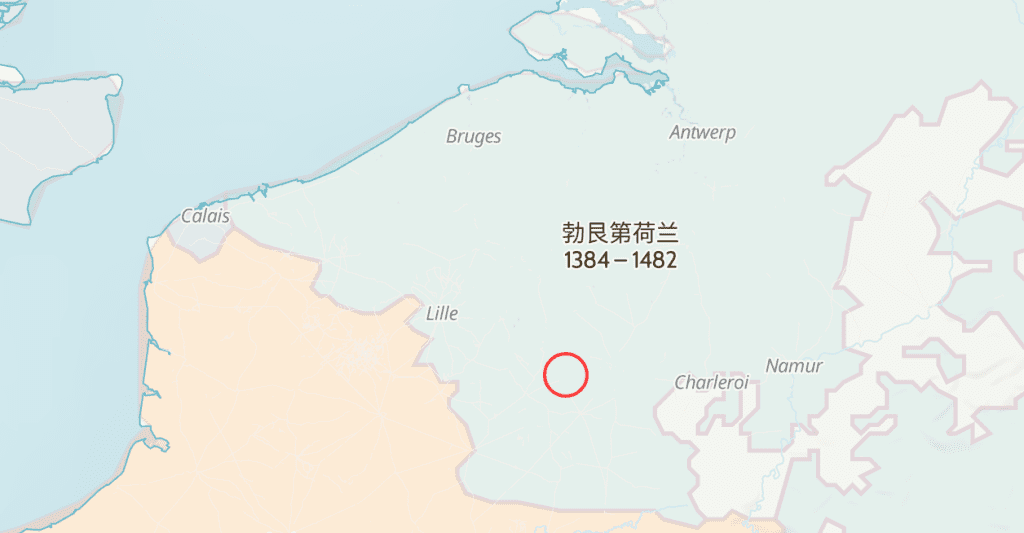
In the 1430s, Ockeghem most likely received his early musical education in a cathedral choir school. The renowned musical centers of Antwerp, Tournai, or Cambrai are all possible places of study for him. The education at these schools covered not only musical skills but also subjects such as Latin, rhetoric, and mathematics, giving the young musician a well-rounded cultural grounding.
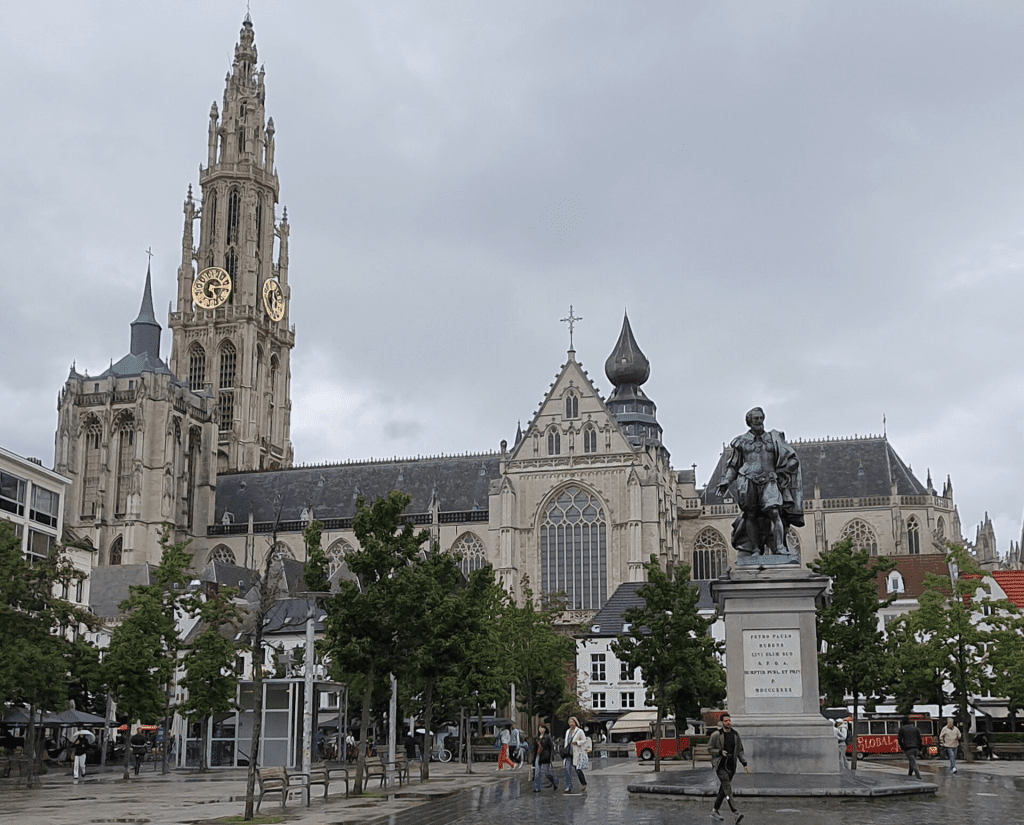
Surviving records show that Ockeghem’s trail first appears in June 1443 in the registers of the then-celebrated musical institution, the Cathedral of Our Lady in Antwerp. There, in addition to serving as a singer of the left voice (responsible for performing composed works), Ockeghem received a full, systematic education in the seven liberal arts (including courses in logic, arithmetic, geometry, astronomy, music, and more). During this period he had the chance to come into contact with the most cutting-edge music of the day. As one of the churches with the finest library holdings at the time, the Cathedral of Our Lady in Antwerp often required students to copy musical works by hand from all over — naturally including Dufay’s manuscripts. These unique experiences unquestionably left a deep mark on his later artistic development.
In the 1440s, the aging Binchois was enjoying his last years in the nearby region of Mons (see Part 4 of the Classical Diary). For a young musician already making his mark in Antwerp, it would have been entirely natural to go and pay his respects to this master of the Burgundian School, famous throughout the world. Thus, although there is no solid documentary evidence that Ockeghem studied formally under Binchois, there may well have been a master-pupil bond between them. And as Ockeghem’s musicianship matured day by day, he began to try his hand at composition. Although the exact works of this period are hard to ascertain, one can imagine him absorbing the essence of the Burgundian School while developing a musical language of his own. Ockeghem’s early years coincided with a turning point in European culture; he was a product of his age, and would in time become a major force driving the age forward.
Second Movement: Master Beneath the Throne
Johannes Ockeghem’s career began at the court of a regional nobleman. From 1446 to 1448 he served Charles I, Duke of Bourbon at Moulins, working alongside the composer Jean Cousin. This period at an important aristocratic court in central France was a crucial step in his artistic résumé. Notably, he is recorded during this time under the title “singing priest” — the first time he is known to have held this title in the surviving documents, marking the formal union of his clerical and musical careers.
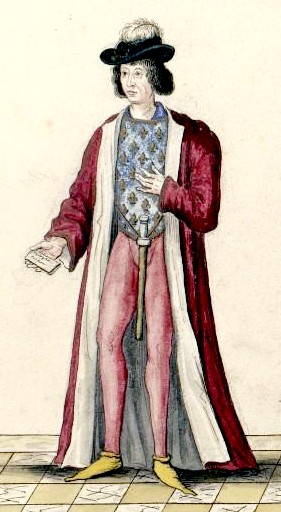
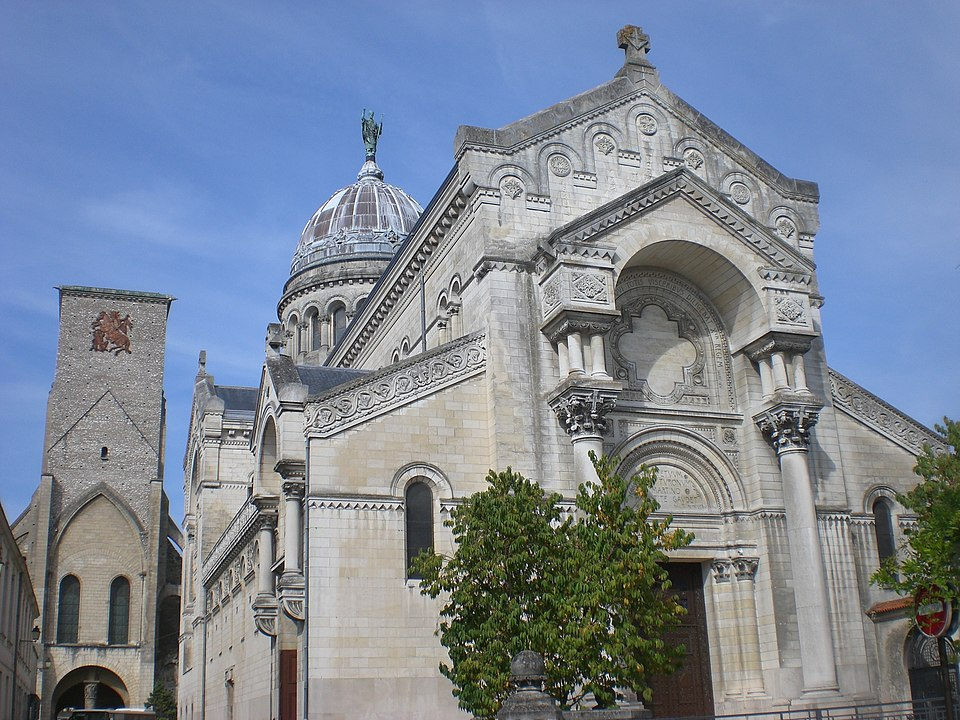
These early experiences laid a solid practical foundation for him. Then, around 1452, his talent caught the eye of the French royal court, and he moved to Paris to take up the post of chapel master of the royal chapel of King Charles VII of France, while also holding the prestigious and well-paid office of treasurer of the Tours Collegiate Church of Saint Martin. This appointment not only gave him a steady income but also proved that he already enjoyed the highest renown. Thereafter he served under two reigns, Charles VII and Louis XI, becoming the central figure in the musical affairs of the House of Valois (the dynasty that ruled the Kingdom of France from 1328 to 1589) during this period.
Although Ockeghem enjoyed a long career and a lofty reputation, the number of his works that survive today is relatively small, and dating them is extremely difficult. This makes every single one of his works all the more precious. Scholars generally believe that his early work Caput Mass clearly continues the style of the English Mass of the same name from the 1440s, and was most likely written in the period when he first entered the French court, still absorbing and transforming a variety of cutting-edge musical influences.
Knowledge Point: What is the “Missa” (Mass)?
[Expand / Collapse]
-
In music, the “Missa” (Mass) is a large-scale sacred vocal cycle in which the composer sets to music several fixed, most important texts of the Catholic Mass liturgy. A complete Mass ordinarily consists of the following five core sections (movements):
Kyrie (Lord, have mercy): begging God for mercy.
Gloria (Glory to God): praising God’s glory.
Credo (I believe): proclaiming the faith.
Sanctus / Benedictus (Holy / Blessed): hailing the holiness of God.
Agnus Dei (Lamb of God): beseeching the Lamb of God to take away the sins of the world.
On CDs or streaming playlists, each movement is usually made a separate track so that listeners can select them easily.
During the decades he served Charles VII and Louis XI, Ockeghem’s creative powers reached their peak, and his works display astonishing technical depth and artistic inventiveness. About half of his Masses employ the “cantus firmus” technique, but his handling of it is varied and inventive. For instance, the “Armed Man” Mass (Missa L’homme armé) is based on a popular secular tune and shows his ability to create freely within a traditional framework.
Knowledge Point: What is the “cantus firmus”?
[Expand / Collapse]
-
During the Renaissance, when composers wrote Masses, a technique called the “cantus firmus” (fixed melody) was all the rage. They would borrow an existing melody (possibly from plainchant, possibly from a secular song), and then, just as a house is laid on its foundations, take that melody as the base and weave other new, complex voices above and below it.This somewhat resembles the way modern doujin (fan-arrangement) music reworks its source material. The classic example is Touhou doujin music, where the same melody is rearranged by different circles and individuals. In the age when the cantus firmus flourished, several composers each used the same melody as the basis for their own version of a Mass, showing off and competing in compositional skill — a uniquely romantic kind of artistic act.
His bolder explorations, meanwhile, are embodied in the Mass in Any Mode (Missa cuiusvis toni) and the Mass of Prolations (Missa prolationum). The former deliberately blurs the modal center, creating a ceaselessly flowing tonal color; the latter is built entirely from “proportional canons,” with the voices interweaving in precise mathematical proportions — a summit of 15th-century polyphonic counterpoint. Although these works lack secure dates, their mature technique and confident style convincingly place them among the products of his stable period at the French court.
Knowledge Point: What is “polyphony”?
[Expand / Collapse]
-
Imagine the simplest music: one person singing “Twinkle, Twinkle, Little Star” unaccompanied. This is calledmonophonic music — a single melodic line, very simple.
Now let’s try something more complicated:You sing “Twinkle, Twinkle, Little Star.”At the same time I sing “Two Tigers.”A third person hums a completely different melody at the same time.If we just sang carelessly like that, it would certainly be nothing but noise, impossible to listen to.
But if a genius composer carefully designed these three melodies so that, although they areeach independent and completely different, when sounded together their pitches and rhythms fit together perfectly, and the result sounds extraordinarily rich, splendid, and harmonious.That is what is called “polyphonic music.”
Knowledge Point: What is “counterpoint” / “contrapuntal technique”?
[Expand / Collapse]
-
Once we understand what “polyphony” is, we can grasp what “counterpoint” means: put simply, it is the specific technique for realizing polyphonic music.
“Counterpoint” is like a highly precise “martial-arts manual” or “instruction manual”: it specifies how the different melodic lines should interact:
1.How to avoid “fighting”:It specifies which notes sound good together (consonant) and which sound harsh (dissonant), and how to use dissonance deftly before resolving it into consonance.
2.Imitation:Just as, when you finish a sentence, I repeat your core meaning in a different tone. In music, one voice sings a melody and another voice imitates it a moment later.
3. Response: one voice sings up high, and another answers down low.
4.Pleasing variety:One voice’s melody moves upward while another’s moves downward, forming a graceful crossing. One voice moves quickly while another slows down, creating contrast.
So counterpoint is the “art of composition” — the whole body of methods and wisdom that keeps a multi-voice conversation from turning into a quarrel and makes it a brilliant debate or a recitation of poetry.
Beyond his Masses, Ockeghem also left immortal pages in other genres. The motet-chanson Mort, tu as navré de ton dart (Death, you have wounded him with your dart), composed to mourn the death of the older master Binchois in 1460, is one of the few works with a firm date. It is not only a deeply felt lament but also a symbol of the transmission of musical tradition.
Knowledge Point: What is the “motet-chanson”?
[Expand / Collapse]
-
The Chanson element: the upper voices (the high and middle voices) of the piece sing a secular French elegy. The text is filled with a denunciation of death and mourning for the departed master Binchois, with genuine feeling — this is the typical character of the chanson genre.The Motet element: at the same time, the lowest voice (the tenor) sings not French words at all, but a Latin chant text — namely, the opening line of the Requiem Mass: “Requiem aeternam dona ei, Domine” (“Lord, grant him eternal rest”). This is the typical element of the motet.Thus the hybrid name “motet-chanson” perfectly describes this piece’s unique structure, and also reveals the consummate skill of Renaissance composers.
Third Movement: Legacy and Masterpieces
Entering the 1470s, Johannes Ockeghem was no longer the young musician shuttling between courts. As treasurer of the Abbey of Saint Martin in Tours, he enjoyed a stable and honored position that allowed him to devote more energy to composition and teaching. During this period, although he was far from the political center of the Parisian court, his influence grew by the day; his residence and workshop became a kind of “supreme academy” that the next generation of Franco-Flemish composers yearned to attend. One of Ockeghem’s most important contributions in his later years was cultivating a group of outstanding students, the most brilliant star of whom was, without doubt, Josquin des Prez. Josquin would later be hailed as the “prince of composers,” and his achievements stemmed in large part from Ockeghem’s devoted teaching.
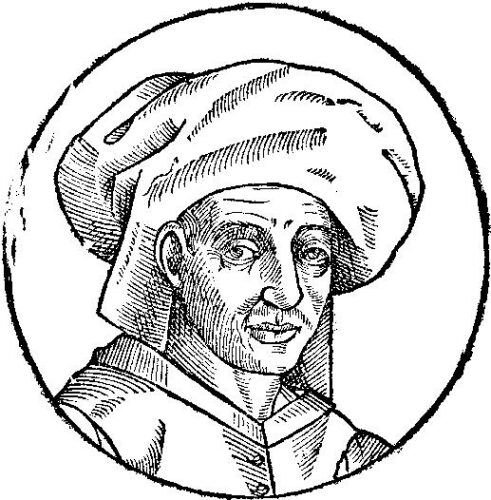
Under Ockeghem’s guidance, what the young composers learned was not merely intricate contrapuntal technique but a musical philosophy. Ockeghem taught them how to combine rigorous mathematical structures (such as canon and proportion) with rich human emotion. For example, in his celebrated Missa Quinti Toni (the Fifth-Mode Mass), also called the Mi-mi Mass, the long, seemingly endless melodic lines and the tenacious low voice built on the note E (solmized as Mi) became a “masterclass” in how to construct a vast sonic edifice from the most economical materials. From it his students understood that supreme technique exists not to show off, but to serve a deeper, more unified expression of feeling.
Knowledge Point: What is a “canon”?
[Expand / Collapse]
-
The classic example is the round singing of the nursery song “Two Tigers”:
- The first voice begins: “Two tigers, two tigers, running fast, running fast”
- When the first voice reaches “running fast,” the second voice begins: “Two tigers, two tigers…”
- What the two voices sing isthe exact same melody, only their starting times are staggered.
This is the most standard, simplest canon. You can think of it as music’s version of an “impression show” or an echo, one voice following hard on the heels of another.
More elaborate canonscan also follow all sorts of rules, for example:
- Inversion canon: it is as if one voice were the reflection of the other in water — if you sing upward, I sing downward.
- Augmentation/diminution canon: you sing the melody once, and I imitate you at half speed (augmentation) or double speed (diminution).
Knowledge Point: What is “proportion”?
[Expand / Collapse]
-
Now, if we take the imitation game of the “canon” and add the mathematical rules of “proportion,” things become exquisitely intricate and complex.
Imagine that, instead of two people, four robots sing “Two Tigers.”
- Robot A: singing atnormal speed.
- Robot B: its rule is that it sings at A’s 2/3speed (a 3:2 ratio). That is, when A has sung three notes, B has finished only two. B’s voice gradually falls behind, interweaving with A’s melody.
- Robot C: its rule is that it sings at A’s 4/5 ……
- Robot D: its rule is different again…
This forms a “proportional canon.” Through precise mathematical calculation, the composer has several voices singthe same melodyat different speeds, so that the sounds they emit simultaneously form a complex yet harmonious counterpoint.
In 1490 Ockeghem composed the Requiem, Missa pro defunctis (the Mass for the Dead). By this time, most of Ockeghem’s peers and close friends had already passed away; death was no longer an abstract idea to him but a deeply personal experience. This Requiem lacks the drama of later works of the same kind; in its place is a grave, introspective, even solemn atmosphere of mourning. He employs a relatively plain texture and long notes, letting the music sink into eternal contemplation — like a sage calmly questioning the ultimate questions at the end of his life. This work is not only a prayer for the dead but also a summing-up of his lifetime of art and faith. The Missa pro defunctis is considered the earliest surviving polyphonic Requiem in the world, and its historical standing is unique. The name “Requiem,” the one we are more familiar with today, is in fact an alternative or popular name for this work (and for all later works of the same kind). The name comes from the first word of the first sentence of the Mass text (namely the Introit):
Requiem aeternam dona eis, Domine…
(Lord, grant them eternal rest…)
Because the word “Requiem” (rest) is the first word of the entire Mass and its core theme, people came to use it habitually to refer to the whole Mass for the Dead.
Ockeghem’s late works should also include pieces like the “My Mistress” Mass (Missa Ma maistresse) and the “More and More” Mass (Missa De plus en plus), which, because of their more integrated treatment of the borrowed material (the cantus firmus, drawing on several voices of the chanson at once) and their tendency toward a homogenized texture, very likely belong to his late period. These works mark a further evolution of his artistic thinking. They display Ockeghem’s final thoughts on the “cantus firmus” technique. Here he no longer borrows just a single melody; instead he weaves the multiple voices of an entire secular chanson into the fabric of the Mass, pioneering the “parody mass.” This reflects his late-life exploration of making the polyphonic voices more homogeneous and unified, paving the way for later composers such as Josquin to develop the ideal of placing emotional expression above technique (the hallmark of polyphonic texture / the Renaissance).
Knowledge Point: What is “homogeneous texture”?
[Expand / Collapse]
-
Heterogeneous texture (a clear master-and-servant hierarchy): in this group, there is oneclear main speaker (the protagonist), who holds forth at length telling the main story. The other few people (the supporting cast) only occasionally chime in to agree (“That’s right!” “Mm-hm!”), or make background sounds to set the mood. Your attention is naturally drawn to that main speaker.
- In musical terms: this is how some early-Renaissance works go.The highest voice (soprano) has a highly ornate, prominent, and beautiful melody and is the absolute “protagonist.” The other voices (alto, tenor, bass), by contrast, are relatively steady and slow-moving; their chief role is to provide harmonic support, like the “supporting cast” and the “backdrop.”
Homogeneous texture (everyone equal): now imagine another discussion group. Here there arefour people, all of them experts, engaged in a brilliant round-table discussion. They take turns speaking, their topics interlock, and each person’s contribution is equally important and equally interesting. Though the pace and content of their speech differ, no one person dominates the whole conversation. Your ears need to attend to all four at once to keep up with the essence of the discussion.
- In musical terms: this is the trait shown by Ockeghem’s late works (and, after him, the music of Josquin and others).All four voices (soprano, alto, tenor, bass) possess independent and beautiful melodic lines; they are equally active and equally important. No single voice is the absolute “protagonist.” They are like four threads of different colors but equal strength, deftly woven together into a thick, even, inseparable brocade.
Finale: An Immortal Legacy
On February 6, 1497, Ockeghem passed away. The shock his death sent through the European musical world was expressed in a distinctive way: a spontaneous “movement of mourning poems” joined by the finest intellectuals and musicians across Europe. The most famous of these is the Nymphes des bois (Woodland Nymphs) set to music by his student Josquin des Prez. This elegy is not merely an outpouring of grief but an inheritance and celebration of the master’s artistic spirit. Other participants, including the great humanist Erasmus, affirmed in writing Ockeghem’s standing as a cultural giant reaching beyond the realm of music.
Ockeghem’s legacy is twofold. In technique, he honed the polyphonic contrapuntal craft handed down from the Middle Ages to its very summit; the proportional canons of his Missa prolationum are without precedent. In art, he infused music with an unprecedented depth and expressiveness, opening the gate to the High Renaissance. He played the role of a bridge between eras to perfection: on one hand he was the last master of the elegant Burgundian tradition; on the other, he was the founder of the great polyphonic edifice of the Franco-Flemish School. His music, like his long-breathed melodic lines, never truly ended; it flowed into the current of history and echoes on in the hands of generation after generation of later composers. (Full text: 8,872 characters)
References
Digital Image Archive of Medieval Music (primary reference database)
Digital Bodleian (primary reference database)
Wikipedia (numerous articles in Chinese, English, Italian, French, etc. consulted / already cited in the text)
World Historical Atlas (map screenshots in this article)
QQ Music (some audio cited in this article)


You May Also Like
HIFI Diary: How to Write a Good Review? How Are Hi-Fi Reviews Actually Done?

HIFI Diary: A Detailed Primer on HIFI Cables – The Power Cord Edition