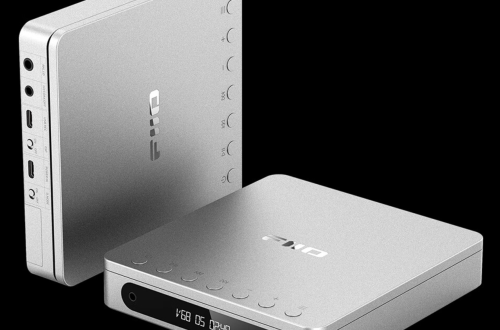
HIFI Diary: Sony NW-WM1ZM2 Sound Quality Comparison Review
I. Introduction
Thanks to a friend for sending over the Sony NW-WM1ZM2 for review. As a product released 4 years ago, reviewing it now might seem somewhat dated. Although Sony hasn’t released a successor yet, its competitors have generally updated their flagship lineup by an entire generation, so the Golden Brick 2 can basically be viewed as a previous-gen flagship. However, as a device originally priced at ¥24,999 (~$3,500), even today second-hand prices on Xianyu remain firmly around ¥12,000 (~$1,700). Truly worthy of the “Sony Faith” — its resale value is rock solid. Therefore, whether a high-end DAP still valued at over ¥10,000 is worth picking up second-hand is likely a question many audiophiles eager to experience flagship performance are pondering. Coincidentally, the BLOG owner owns a Lotoo PAW Gold Touch (PGT / MoJu) from the same flagship generation, so let’s put them head-to-head in this comparison.
II. Preparation for Review
The player under test is the Sony NW-WM1ZM2 (running the latest China mainland firmware). Since it runs on Android, it can stream from various music apps. However, for testing accuracy, the BLOG owner opted for the built-in Walkman player, playing lossless audio stored directly on the internal storage. The test earphones used are the BLOG owner’s flagship custom IEM XY0 (4.4mm balanced) and Sony’s true last-generation flagship IEM EX1000 (3.5mm single-ended). System settings: updated to latest firmware, High Gain, DIRECT mode enabled.
III. Test Tracks / Scoring Methodology
The track selection consists of music the BLOG owner regularly listens to, roughly weighted as 50% Japanese ACG music, 30% Pop, and 20% Classical. The scoring standard is simplified from Audio Art’s “20 Elements of Sound.” The evaluation methodology and test system are continuously and dynamically updated. The brand-new crowdsourced testing platform is also live, where you can look up various scores from DDC interfaces to DACs, earphones to speakers, and everyone is welcome to upload their own ratings or use it for quick note-taking during audio auditions.
IV. Testing Begins
| Brand | Model | Release Date | Review Date | Launch Price (¥) | Balance | Instrumental SQ | Vocal SQ | Resolution | Density / Soundstage | Imaging | Dynamics | Score (out of 100) |
|---|---|---|---|---|---|---|---|---|---|---|---|---|
| Sony | NW-WM1ZM2 | 2022-02 | 2026-06 | ¥24999 | 7 | 8 | 7 | 8 | 7 | 7 | 7 | 78.6 |
| Lotoo | PAW Gold Touch | 2018-03 | 2026-01 | ¥17999 | 7 | 7 | 8 | 7 | 6 | 7 | 7 | 75.0 |
| iBasso | DC-Elite | 2023-11 | 2026-01 | ¥2999 | 6 | 6 | 7 | 6 | 5 | 5 | 6 | 60.7 |
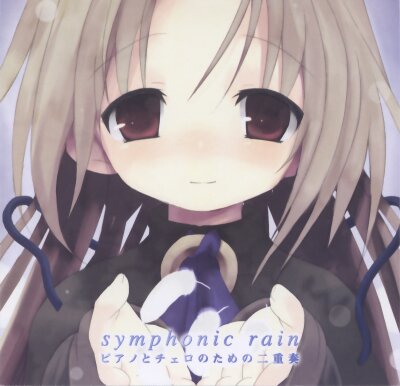
1. Track: Kokoro no Ame, Artist: Ritsuko Okazaki (おかざき りつこ), Album: Symphonic Rain ~A Duet for Piano And Cello~
Song Appreciation
[Expand / Collapse]
- “Kokoro no Ame” (Rain of the Heart) is included in the special bonus soundtrack CD Symphonic Rain ~A Duet for Piano And Cello~ from the visual novel Symphonic Rain: Aizouban (Collector’s Edition). As the final game project for which Ritsuko Okazaki composed the entire soundtrack during her lifetime, it was created in collaboration with arranger Tomoki Hasegawa.As a renowned musical prodigy in Japan, Ritsuko Okazaki composed the entirety of this game’s score while enduring a prolonged struggle with a terminal illness, channeling the gentleness and resilience that defined her life into these final melodies. Heartbreakingly, just over a month before the official release of Symphonic Rain, Okazaki passed away suddenly from sepsis at the age of only 44. It is precisely because of this that the five piano and cello duets included on this album are all the more precious.Unlike the warm tone of the main game soundtrack, this cello and piano duet is steeped in profound weight and sorrow, as though the dual sides of life were distilled here, leaving only two pure voices in dialogue. It opens with several sparse, cool piano notes; in this fictional world known as the “City of Rain,” those notes resemble raindrops sliding from the eaves, tapping rhythmically against the listener’s heartstrings.When the piano drops its first note, that is everything — the beginning of the rain. One drop, two drops, tapping sparsely on the eaves, knocking upon the unguarded outer walls of the listener’s heart. Rising alongside it is the rich, dense cello, emerging from deep within the curtain of rain, descending into the night of the City of Rain. The slow tempo and intertwined melodies seem to foretell that certain longings, certain desires, and certain tragedies have quietly hidden behind the scenes. And the sorrowful emotion has long since diffused into the rain.As the melody progresses, the accented piano notes gradually multiply, and the cello’s bowed strings grow increasingly solemn. The two do not engage in literal dialogue, yet they echo one another, each serving as the background against which the other falls. You can hear that while the piano continues its gentle patter in the higher registers, the cello slowly rolls out a long, meandering melodic line in the low registers — that is not merely an answer to the rain, but the rain falling upon the story, falling upon someone’s memories, falling amongst the wet streets and alleys of this city where the sky never clears.From beginning to end, the piano and cello never truly merge into one. Each possesses its own primary motif, influencing and intertwining with the other, yet never converging. The piano chords layer upon layer, while the cello melody remains long and winding, like two rivers rising in flood simultaneously, creating a vast expanse together when full, yet the paths of their riverbeds were already predestined before the very first raindrop fell. Herein lies the deepest tragedy of “Kokoro no Ame” — not that they cannot blend, but that knowing of each other’s existence and needing one another, they ultimately head toward their separate destinations.Listening to “Kokoro no Ame” each time feels like reading through a will written twenty years ago. Among the eleven songs in the main game, although painted against a tragic backdrop, most still hold a faint glimmer of hope. But this “Kokoro no Ame” carries sorrow through to the very end. Perhaps Ritsuko Okazaki already dimly understood at the time that she would not have another chance to write a new song. Thus, she left her truest inner voice here: without embellishment, without retreat, only those unyielding regrets, vulnerabilities, and unspoken words, weighed down heavily into every single note.The rarity of this bonus CD was never her deliberate choice, but merely an accidental quirk of distribution. Yet because of this, fate played a cruel joke — allowing this most intimate confession to hide precisely in a corner beyond the reach of most listeners. Yearning to be heard, yet sealed in silence; yearning to be understood, yet buried deep due to scarcity. This dislocation lends an indescribable sense of predestination to her departure when looking back.Thus, “Kokoro no Ame” is no longer merely a musical piece. It has become the final and most personal letter she left to this world — not necessarily intended for everyone to read, but anyone who reads it will never be able to forget.
It has been a long time since I used “Kokoro no Ame” as a benchmark track. As a piano and cello duet, this piece is actually far more demanding than the cello tracks the BLOG owner previously used for testing. Capturing the organic charm of the cello and the dynamic forte of the piano simultaneously is extraordinarily difficult, let alone blending them seamlessly. The NW-WM1ZM2’s (hereafter referred to as Golden Brick 2) rendition is nothing short of splendid: conveying the piano’s agility is not hard, but delivering its powerful forte requires seasoned maturity; likewise, delivering the cello’s warmth is not hard, but perfectly exhibiting the rich resonance brought by the wooden body requires true mastery. The Golden Brick 2 blends timbre, dynamics, resolution, and musicality just right. In comparison, the Lotoo PGT is somewhat overly defined in its lines, causing excessive separation between piano and cello so that they fail to coalesce, losing that intricate emotional undercurrent. The Golden Brick 2, on the other hand, hits the sweet spot — especially the piano’s sense of power and subtle fragility, providing just the right amount of emotional resonance. Compared to higher-tier desktop setups, the Golden Brick 2’s shortcoming lies in the mid-bass density and sub-bass extension of the cello, where weightiness is slightly lacking. However, as a portable DAP, even current new flagships like the PGT2 and DX340 still fall somewhat short in this regard, so one shouldn’t ask for the impossible.
2. Track: Hotel California (Live), Artist: Eagles, Album: The Very Best of Eagles
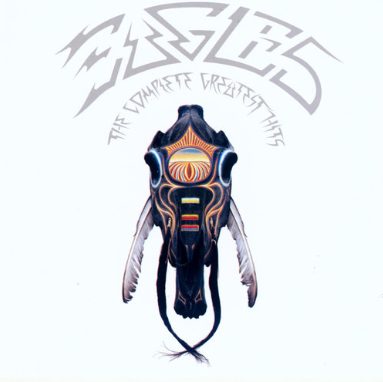
I didn’t expect the test track to be quite so old-school, but “Hotel California” genuinely offers unique benchmarking advantages. Right from the start, the Golden Brick 2 demonstrates its resolving power: applause and guitar strumming clarity are noticeably sharper than on the Lotoo PGT, and the overall soundstage is more three-dimensional. However, when the drums kick in, the sub-bass depth and elasticity are a fraction behind the PGT, while the micro-dynamics of the shaker are superior on the Golden Brick 2. Around the 1:30 mark during the audience cheer, the PGT offers greater atmospheric warmth (which one could also view as slightly muddier), whereas the Golden Brick 2 has markedly stronger resolution, making it much easier to discern the ebb, flow, and density of the crowd’s cheers. From an overall listening standpoint, the intro section is a clear step ahead on the Golden Brick 2. If compared against higher-end desktop DACs, the most prominent drawback is that the forward (depth/longitudinal) soundstage is noticeably smaller than the lateral width — this is not just a player limitation, but a physical acoustic trait shared by in-ear monitors, which even a flagship DAP cannot fully overcome. Nonetheless, depth of soundstage remains a major hurdle for portable audio; the Golden Brick 2 has done well, though regrettably, still not perfect.
Moving to the vocal section, the Golden Brick 2’s male vocals feel on the drier side. The distance is moderate, but the vocal texture leans thin and lacks throat lubrication, sounding somewhat parched. Regarding the vocal presentation, the BLOG owner tried turning off DIRECT mode and enabling DSD Remastering; the vocals indeed became thicker and fuller, but the accompanying drop in resolution was noticeable, feeling like a net loss. Overall, for a live track like “Hotel California”, this tuning isn’t a dealbreaker given the live recording environment. However, this vocal tuning approach might spell trouble for the upcoming female vocal test.
3. Track: Koibumi, Artist: VISUAL ARTS, Album: Rewrite Original SoundTrack

Song Appreciation
[Expand / Collapse]
For a long time, the song “Koibumi” (Love Letter) has served as a touchstone for many listeners to test whether an audio setup possesses sufficient “emotion.” Yanaginagi’s performance within it is like a meticulously crafted emotional depth charge; the intricate feelings it harbors can hardly be summarized by simple words like “clear” or “ethereal.”
The moment the singing begins, what first touches the ears is a feather-light, gentle touch. Yet the lyrics that immediately follow plunge this fairy-tale beginning into the deep sea of reality in an instant. Thus, within the vocals simultaneously waver the helplessness of isolation, sighs over fate, the sorrow of parting, and at the very core, the steadfastness of love. Yanaginagi’s voice consistently maintains a subtle tremor and a delicate breathiness; that extreme restraint on the verge of sobbing makes the sorrow soaking through it all the more deeply resonant.
Spanning over six minutes, this song is a luxury in pop music. And it is precisely this ample duration that accommodates the complete trajectory of emotional transformation. As the melody advances, the texture of the vocals undergoes a subtle yet unmistakable shift. By the concluding line, “What I have always wanted to convey is, carrying this single thought, to say ‘I love you’,” the previously suppressed sobbing sensation has dissolved; the voice takes on a warmer hue, transforming into a clear and resolute vow. This expressive vocal prowess — almost narrating a complete story within a single track — builds the song’s immense emotional tension.
The root of this tension is deeply anchored in the story of Rewrite. As the character image song for heroine Shizuru Nakatsu, this piece is intimately bound to her destiny. The visual novel explores planet-scale “rewriting” and “rebirth,” yet Shizuru’s story contracts inward into a lonely chapter of guardianship and forgetting. Possessing the ability to erase memories upon physical touch, the lyric “The irreversible flow of time makes me feel everything is about to end like this” is precisely her realization of her own fate. The protagonist’s continuous self-rewriting and rush toward tragedy to protect her mirror the song’s vow that “Even if the world ends and the two are parted, we will surely meet again,” cruel yet breathtakingly poignant.
Therefore, every line in the song feels like Shizuru’s silent whisper against the grand backdrop of the world’s end, directed at that boy who would rather be forgotten countless times just to reach her side. This “Love Letter” is her lonely effort to fight against her own ability and permanently fix fleeting memories and longings. The reason Yanaginagi’s singing can carry such immense despair and hope is precisely because she stepped deeply into this small individual’s heart, using the purest lyrics to reflect that eternal radiance sparked when a “tiny vow” collides with a “colossal ending.”
As usual, “Koibumi” was chosen to represent sweet Japanese female vocals. As the BLOG owner anticipated, the Golden Brick 2’s rendition of sweet female vocals is largely unremarkable. Compared to the Lotoo PGT, vocal texture details on the Golden Brick 2 are noticeably less rich, and emotional delivery falls short of class-leading standards — even slightly lagging behind iBasso’s flagship dongLE DAC DC-Elite. Overall, the Golden Brick 2’s midrange vocals, particularly female voices, suffer from multiple factors: first, it is overly straightforward and lacks warmth; second, a shortage of micro-detail leads to imprecise emotional nuance. This reminded the BLOG owner of comparing his desktop Jingyin Accurate D1000 DAC against the original Rockna 26bit DAC: subtle vocal detail forms the moat between original hardware and replica. In summary, on vocals — especially female vocals — the Golden Brick 2 is curiously underwhelming. Perhaps with Western pop music this gap would narrow, but for an expensive flagship DAP, this leaves something to be desired.
V. Conclusion
Unlike a brief audition at a Sony store, being able to listen to the Golden Brick 2 thoroughly and leisurely at home is truly a pleasant and comfortable experience — provided one doesn’t focus heavily on vocals. As a flagship DAP whose second-hand price still exceeds ¥10,000, the Golden Brick 2 still possesses distinct strengths; four years have not been enough for competitors’ flagships to comprehensively outclass it. As a China-market version, the BLOG owner’s unit is an early batch without output power throttling, but for later units with capped output, driving multi-driver flagship IEMs might indeed encounter power constraints. The BLOG owner’s own XY0 is an extremely demanding multi-driver IEM, requiring near-maximum volume to achieve sufficient dynamics. What is most regrettable and perplexing is that, as a Japanese flagship DAP, its synergy with Japan’s proud J-POP is surprisingly lackluster — as Cantonese audiophiles would put it, the midrange lacks sweetness, failing to highlight that smooth, enchanting vocal charm typical of J-POP. Truthfully, for listeners who aren’t fixated on rich vocal texture, this may not be a critical flaw, especially given how stellar its instrumental performance is. A touch of imperfection is perhaps the norm.
As for whether it’s worth buying: honestly, considering the Lotoo PGT has dropped to around the ¥5,000 ($700) price bracket, as long as you can tolerate the quirks of a 2018 model, the BLOG owner has yet to find a DAP offering higher value for money (even among recent releases). Then again, if price-to-performance is the sole metric, dongle DACs like the iBasso DC-Elite offer unbeatable value, so ultimately it comes down to your budget. Audiophiles considering a flagship DAP likely already possess their own listening philosophies and distinct preferences. This review primarily highlights “what music these devices suit best” to provide purchasing reference. In the end, the joy of music is difficult to convey to those outside the hobby — the same goes for Hi-Fi reviews: to the uninitiated, what difference does slightly warmer vocals or richer instrumentals make? True understanding is rare, which is why the BLOG owner treasures every opportunity to connect with fellow audiophiles through these reviews. I hope this review was helpful to you, and see you in the next one.


You May Also Like
Classical Diary: The First Voice of Cathay — An Echo Across Ten Thousand Rivers and Mountains (Extra 1)

Music Diary: Music Appreciation – Issue 4