Music Diary: Music Appreciation – Issue 4
Music Diary Series
[Expand / Collapse]
[Collapse]
-
2025 Q1 Music Appreciation
The irregularly-scheduled music appreciation column opens! Let’s listen together!
-
2025 Q2 Music Appreciation
Writing these music appreciations is genuinely tiring, but I hope you enjoy them
-
2025 Q3 Music Appreciation
A few more good songs to recommend in Q3 =W=
-
2025 Q4 Music Appreciation
The last article and the last appreciation of the year — I hope you enjoy it, and Happy New Year!
2025 is drawing to a close, and thank you all for your support through the year! The Music Diary series has kept updating comfortably on a quarterly basis — this year I wrote appreciations for 28 songs in total, and the word count climbed to around 25,000. Consider it a step up. The BLOG owner can clearly feel the writing getting smoother and easier as the year went on — right up to year-end’s 空、風、波、夢, which took on a brand-new writing approach and became the single most satisfying piece of appreciation the BLOG owner wrote all year. However that may be, thanks again to everyone for the support! See you next year!
1. Song: My Dearest (最爱是谁 My Dearest), Artist: Leslie Cheung (张国荣), Album: My Dearest (最爱是谁 My Dearest)
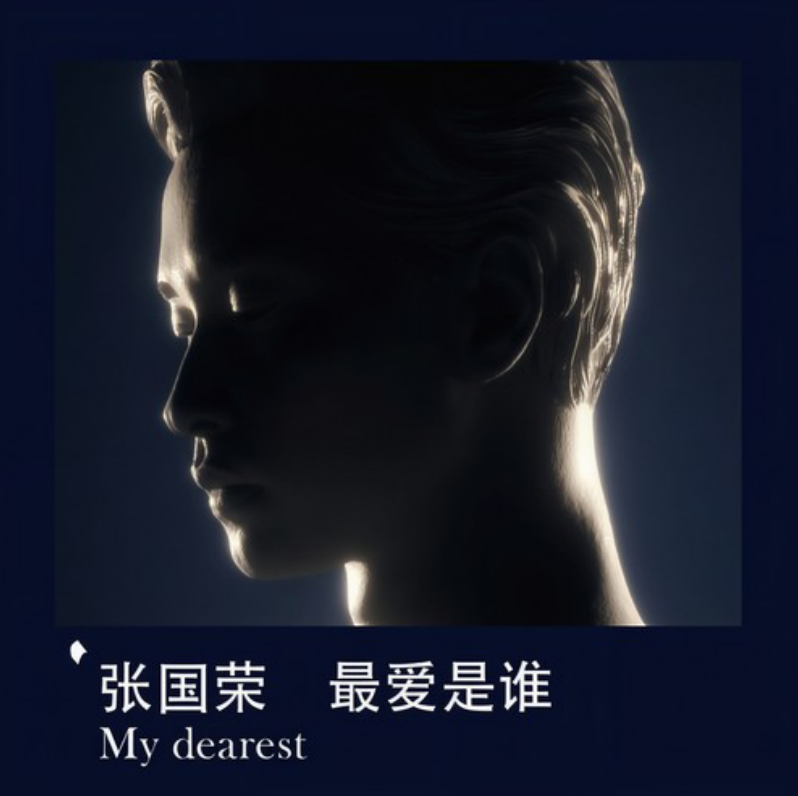
“My Dearest” was originally sung by George Lam (林子祥) in 1986, and later covered by Hong Kong legendary singer Leslie Cheung (fans nickname: Gor Gor) as “My Dearest.” This song was recorded in 1989, initially included in the master tape of the album “Salute,” but for various reasons, it was never officially released until recent years when it resurfaced through master tape restoration technology. It was finally rearranged and released by Universal Music in the “REMEMBRANCE Leslie” commemorative project. Its creative team can be called the golden combination of the Hong Kong music scene: lyricist by Pan Yuanliang (潘源良), composer by Lowell Lo (卢冠廷), arrangement by jazz master Ted Lo (罗尚正), and producer by Alvin Leong (梁荣骏).
Listening carefully to this song, it’s easy to find that Leslie Cheung performed this work with a lyrical foundation. Lowell Lo’s melody lines are beautiful and full of narrative, with continuously flowing piano and violin accompaniment creating a deep emotional space. Ted Lo’s rearrangement injected some modern jazz elements into the original version, such as incorporating drums, maracas, saxophone, and bass tones interspersed, creating a style that is both nostalgic and modern.
As undoubtedly the top star in the Hong Kong music scene, Leslie Cheung’s voice in this song shows strong appeal: his signature rich baritone accurately conveys the contradictory emotions of “love and questioning” in the lyrics. Pan Yuanliang’s lyrics take “who is the dearest” as the core proposition, exploring choices, regrets, and self-questioning in love. Through a series of inner monologue-style questions (such as “who is the love of my life”), the lyrics outline the protagonist’s struggle in the emotional maze. This questioning is not angry or desperate, but carries a poetic sense of ambiguity, highly consistent with Leslie Cheung’s elegant style.
2. Song: Jianghu Ruhuai (江湖入怀), Artist: Bracket Jun (括号君), Album: Fengling Yuxiu Animation Original Soundtrack (风灵玉秀 动画原声带)
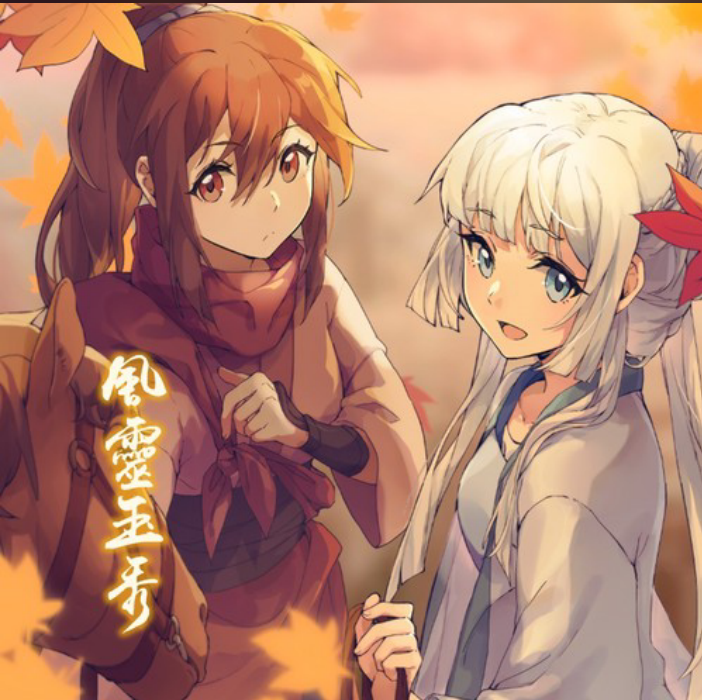
“Jianghu Ruhuai” is the ending theme of the homegrown original animation Fengling Yuxiu, sung by Bracket Jun, a member of New Language Alliance (新语联盟). With its distinctive Chinese-electronic fusion and poetic lyrics, the song builds a jianghu world brimming with wuxia imagery and a feminine perspective, becoming an important extension of the animation’s emotional tone.
The song takes Chinese-style electronic music as its core, deftly fusing traditional folk instruments with modern electronic elements. The intro draws in with a bright guzheng pluck, laid over a hollow, ethereal xiao to sketch the jianghu atmosphere, while the verse adds pipa accents for rhythm and classical flavor. The arrangement sits on an electronic drum kit and synths, producing a light, flowing groove. It pays special attention to sustained, drawn-out notes, fitting an animation that departs from the traditionally male-led wuxia canon and foregrounds the enduring, nimble image of the female knight-errant.
Bracket Jun’s voice is cool and clear with a touch of husk, favoring breathy tones and vibrato — conveying the uninhibited ease and tenderness of the jianghu. Subtle reverb and layered harmonies give it a faint “one-voice, two-parts” shimmer, so the song always seems to hold a choral air that quietly matches the work’s own dual-heroine setup.
3. Song: β受体阻滞剂与星辰 (Beta-Blockers and the Stars), Artist: Qian Nian (芊年), Album: β受体阻滞剂与星辰
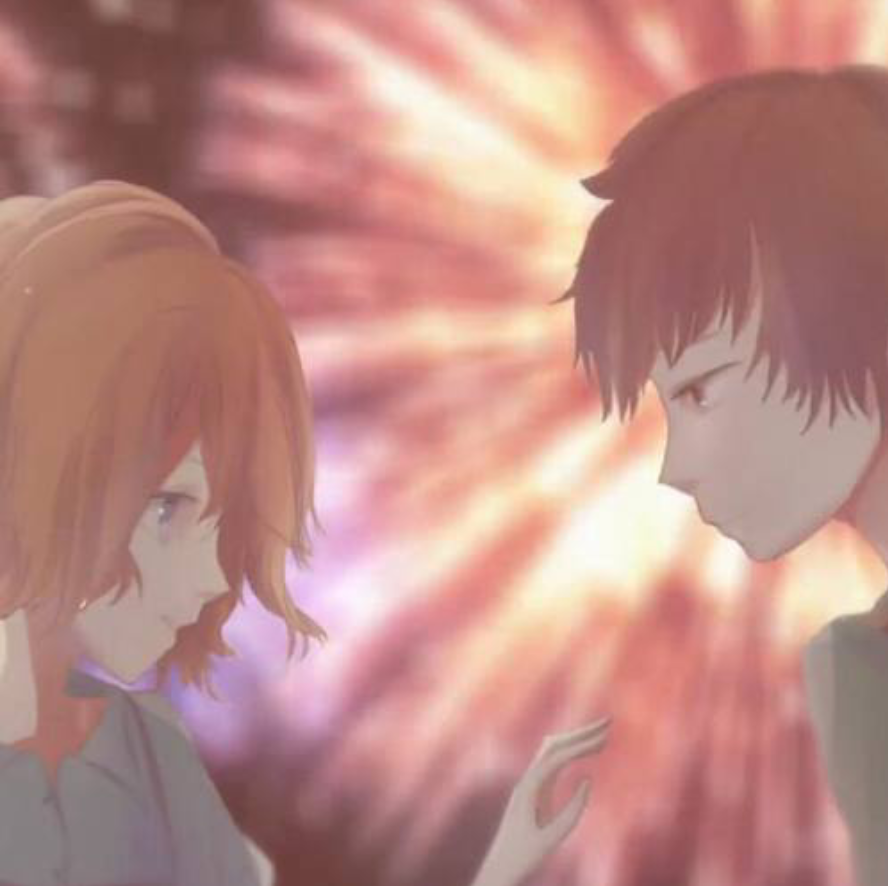
“Beta-Blockers and the Stars” is a fan song inspired by To the Moon, winner of GameSpot’s 2011 Best Story award, and its core themes revolve around memory, forgetting, love, and redemption. The game tells the story of two doctors who, by rewriting the memories of the dying old man Johnny, help him fulfill his childhood dream of going to the moon. In the plot, “beta-blockers” are the drug used to erase Johnny’s painful memories — yet they also cause him to forget his beloved wife River and their precious bond.
The song uses this as its point of entry, reconstructing the game’s emotional tension in musical language. Every line maps onto a key plot beat in the game — the opening lyric “一转眼逃过多少年我还嵌在这空房间” (in the blink of an eye how many years did I escape, still lodged in this empty room) points straight at Johnny’s loneliness and confusion amid the gaps in his memory. The tune carries a pervasive, faint sadness and melancholy, perfectly matched to the sorrowful atmosphere that threads through To the Moon, and it is widely regarded as a classic among fan songs.
The piece was created and arranged by music producer Kevinz, first posted to Bilibili on February 23, 2017 as an original Chinese VOCALOID song, with virtual singer Luo Tianyi on vocals and Yan He providing harmony. On July 14, 2017, Kevinz and singer Qian Nian collaborated to re-record it with a human voice. Qian Nian’s rendition gives the song a more real, more everyday-human emotional weight, standing in sharp contrast to the VOCALOID version and offering listeners a different kind of aesthetic experience.
As a fan work, the song’s melody borrows heavily from the game’s soundtrack, and its distinctive artistic value is concentrated even more in the literary and philosophical exploration of the lyrics. The lyrics not only probe the modern question of “memory and existence,” but also hide a layer of profound theological metaphor within the story framework: humanity, through technology (beta-blockers), plays the role of “God,” attempting to achieve a secular kind of “redemption” by erasing memory.
Yet this human interference precisely throws the tension between the sacred and the secular into sharp relief. The blurring of memory depicted in the lyrics’ “解离的视线” (dissociating gaze) and “逶迤的感知” (winding perception) is itself an indictment of the failed “miracle” — technology can tamper with the tracks of memory, but it cannot sever the invisible mark that emotion has carved into the depths of the soul, as eternal as the stars. It is as if the song asks: when humanity usurps divine power to amend the past, do we obtain release, or just another form of exile?
The song ultimately offers no answer, leaving the listener suspended in this paradox of sorrow and hope. It thereby transcends a simple tribute and rises into a meditation on human finitude and transcendence: on those things that cannot be
4. Song: 四风判词 (The Verdict of the Four Winds, cover of ilem), Artist: Sanwu Marblue (三无Marblue), Album: 四风判词 (The Verdict of the Four Winds, cover of ilem)
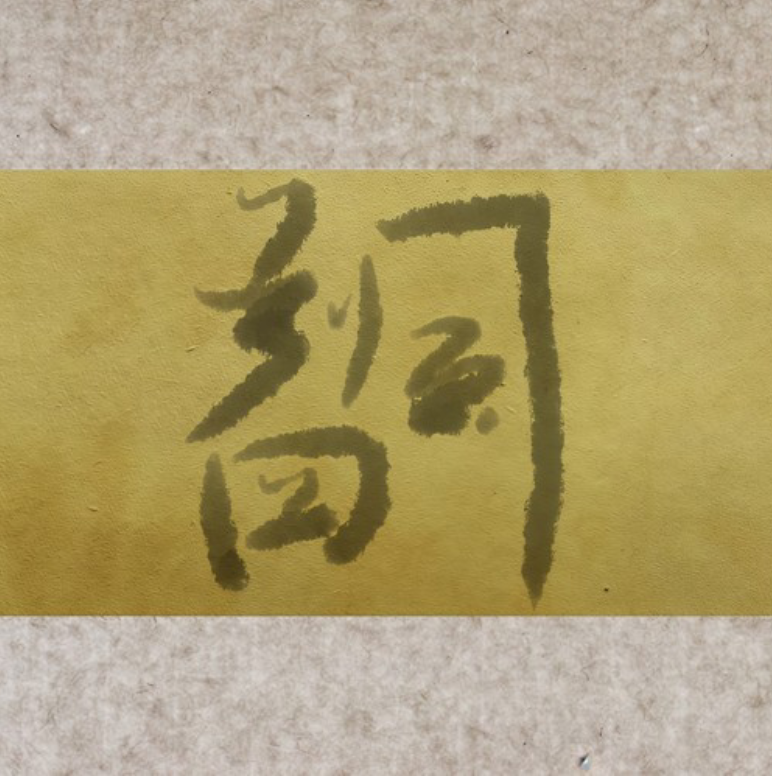
“The Verdict of the Four Winds” is originally one of the most iconic works of VOCALOID creator ilem, whose synthesized vocal tones build a detached, solemn narrative space. Sanwu Marblue’s cover, meanwhile, injects a warmer, more human vocal expression onto the original’s spiritual core. She doesn’t fully replicate ilem’s blend of mechanical texture and ritualistic delivery; instead she turns to a more traditional, more modern-audience-friendly vocal treatment — easier to resonate with on the ear, without losing the original’s fatalistic bleakness.
The song takes the “four winds” as its imagery, hinting at the cycling fates of the world and the tangles of human nature. The lyrics are terse and sharp like a judge’s verdict, carrying the metaphorical coloring of classical literature while folding in the cold, driving rhythm of modern electronic music. Sanwu Marblue’s voice is cool and taut, switching precisely between ethereal airiness and explosive force — stressing the bleakness of the original, then, through vocal detail like vibrato and clipped diction, reinforcing the judgmental, sentencing mood of the words.
The lyrics are the part most worth analyzing. All four choruses close on “天地枯荣” (the withering and flourishing of heaven and earth), forming a circular lament. The sky-colors green, cinnabar, gray, and black combine with the four directions, secretly echoing the traditional Chinese cosmology of the “Four Symbols and Five Elements” (四象五行), grounding the lyrics in a weighty cultural anchor.
- East Wind (green sky, restless) symbolizes scheming hearts and hasty utilitarianism. “今天种叫它明天结果” (plant today and demand fruit tomorrow) points straight at modern society’s shortcut anxiety, while the utilitarian prayer of “夜拜佛” (worshipping Buddha by night) exposes the absurdity of turning faith into a tool.
- South Wind (cinnabar sky, vexed) points to verbal gossip and the limits of perception. “口无遮拦” (a loose mouth) and “执白执黑” (holding fast to white or black) hint at the binary opposition of the opinion arena, while “百样苦自有百样人受” (every kind of suffering has its own bearer) reflects a calm, self-owning detachment.
- West Wind (gray sky, empty) depicts material pursuit and its essential emptiness. “三两银买了大梦一场” (a few taels of silver buys one great dream) deconstructs fame and profit through the image of coin, and the final “带也不走” (you can’t carry it with you) echoes the Buddhist awakening that “form is emptiness.”
- North Wind (black sky, ancient) conceals the gathering and parting of life and the riddle of existence. “妨胃酒,穿肠削骨” (gut-harming wine that cuts through to the bone) maps bodily pain onto spiritual struggle, while “黄粱饭醒了我又是谁” (I awake from the millet-dream — and who am I again?) is the ultimate interrogation of identity.
Each stanza is like a sheet of verdict — from scheming hearts to chasing fame and profit — coldly dissecting the manifold faces of the world. But unlike the original’s neutral judgment, like the Daoist “heaven and earth are not kind, treating all things as straw dogs,” Sanwu Marblue’s rendition leans closer to the role of a witness, her voice carrying a touch of tangible warmth. The core four characters, “天地枯荣,” are both a law of nature and a rule of human affairs. The changing faces of all beings within the four winds are, in the end, a miniature allegory of the rise and fall of civilization: the East Wind represents wild growth, the South Wind the eruption of contradiction, the West Wind the collapse of value, and the North Wind the final settling of life — forming a complete civilizational cycle. The lyrics also pack contemporary issues — involution, cyber-violence, consumerism, existential crisis — into traditional imagery like the “millet dream” and “gut-piercing wine.” This collision of ancient and modern atmospheres, much like the blend of electronic and folk timbres in the arrangement, produces a displaced beauty across time — and a mirror held to reality, endlessly refracting the listener’s own shadow and choices in the circling melody.
What makes this work so compelling is that it both precisely pierces the ills of society and, through its poetic language, transcends mere moralizing. With the final “天地枯荣啊” dissolving into the wind, it leaves behind not an answer but a mirror that reflects everyone’s desires and struggles. And yet, conversely — as a song whose title itself carries the word “verdict” — should it really insist on this high-minded mode of “transcending moralizing,” which tilts the lyrics toward “adjudicating” rather than “judging”? That much remains open to debate.
5. Song: たいせつなきみのために、ぼくにできるいちばんのこと (Live), Artist: Duca, Album: Duca LiveAlive ever after

“たいせつなきみのために、ぼくにできるいちばんのこと” (the most I can do for you, who matter so much) is one of Japanese singer Duca’s representative works, and the theme song of the 2011 galgame of the same name. This time I chose not the studio version but the live performance included on the album Duca LiveAlive ever after. The live version’s greatest value lies in preserving the breaths, the subtle vibrato, and the audience reactions — these “imperfect” elements actually heighten the song’s realism and emotional impact.
This live take is clear and pure, melodious and deep — a true pillar of the genre. Duca’s voice is clear with a hint of huskiness, ideally suited to this tender melancholy. The main vocal section runs for over three and a half minutes of open-mic a cappella whose heavenly tone profoundly interprets the eternal theme of “love.” Even after the piano enters in the chorus, her voice keeps a measured restraint, never overselling the sorrow — letting the emotion flow naturally through calm narration. The lyrics unfold in the first person, depicting the protagonist’s silent care and firm promise toward his “someone precious.” The core question recurring in the lyrics — “たいせつなきみのために、ぼくにできるいちばんのことは何だろう” (for you, who matter so much, what is the most I can do?) — is like a cycle forever seeking an answer. Every self-interrogation deepens the song’s theme step by step, like a prayer, a memory, a journey.
The lyrics build a lyrical world of memory and loss through a series of vividly scenic images: “泣きたいほどの夕焼け空、朱く染まった君の笑顔” (a sunset sky that makes you want to cry, your smile dyed crimson), “雨上がりのブランコ、アジサイの小径” (the swing after the rain, the path of hydrangeas) — together conjuring memory fragments both beautiful and fleeting. They echo powerfully with the line that appears twice: “だけどそれは泡のようにはじけて消えた” (but that too burst like a bubble and vanished). Whether a smile reached for or a melody dissolving on the wind, all symbolizes the fragility of beauty and its refusal to be kept — like that happiness one could never grasp. “未来なんていらないよ、君が側にいる過去のままで” (I don’t need the future — just stay in the past where you are beside me) pushes the narrator’s inner conflict to its peak. That resolve to forsake the future and keep the past underscores a profound attachment to what has passed.
This song embodies the Japanese aesthetic of “mono no aware” (物哀) — a deep awareness and cherishing of fleeting, transient beauty. Whether a smile shattering like foam or a melody fading on the wind, it speaks of beauty’s brevity and preciousness. At the same time, the song reveals a particular Japanese cultural trait: the narrator ceaselessly ponders “what I can do for you who matter,” a way of thinking that sets the other’s happiness above its own — the traditional spirit of self-sacrifice lurking within Japanese culture. Artistically, the song’s success lies in expressing the deepest emotion in the plainest words. No ornate diction, no over
6. Song: THE IDOLM@STER (M@STER VERSION -REMIX-), Artist: THE IDOLM@STER / 中村繪里子 / 今井麻美 / 仁後真耶子 / 落合祐里香 / 平田宏美 / 下田麻美 / 钉宫理惠 / たかはし智秋 / 若林直美, Album: THE IDOLM@STER 765PRO ALLSTARS+ GRE@TEST BEST! -THE IDOLM@STER HISTORY-

“THE IDOLM@STER,” as the founding and eternal landmark work of Japan’s multimedia idol franchise, is more than a song — its namesake title track is, truly, a symbol of an era and a microcosm of a culture. The game first appeared in arcades in 2005, then expanded across consoles, animation, manga, music, and nearly every field touching ACG, inaugurating the “nurturing idol” genre. Unlike the “perfect” idols prevalent at the time, it emphasized immersive co-growth of player and idol; through decades of shaping, thirteen young idols from 765PRO grew up together with a generation of young people. That model profoundly influenced later idol franchises (Love Live!, Uma Musume, and so on), laying the golden formula of “character + voice actress + music + fans” and the foundation of its cross-media business. The same-titled theme song you are listening to is the theme of the main 765PRO line — and can be regarded as the theme of the entire franchise.
“THE IDOLM@STER (M@STER VERSION -REMIX-)” is collected in the franchise’s landmark best-of album GRE@TEST BEST! -THE IDOLM@STER HISTORY-. It is a re-arrangement of the original version performed by the original ten idols (nine voice actresses), built on a new skeleton of stronger electronic beats and distorted electric guitar. It opens with a light, almost virtuosic electronic flourish, then weaves synth textures and a dramatic electric-guitar riff — granting the song a stronger modernity and rock drive. In the mix, the voices are placed squarely at center stage; the production team meticulously balances accompaniment against vocals to dramatically boost clarity. The back-and-forth exchange of featured phrases shines especially in this version — each voice’s unique tone is showcased through the hand-off singing, foregrounding the “individual” while erupting into an incomparable listening impact when all voices converge in the ensemble.
The BLOG owner struggles to sum up, in one paragraph, music that carries twenty years of feeling. THE IDOLM@STER has witnessed the journey from being ignored in a corner of the arcade floor to the glory of Saitama Super Arena and even the Tokyo Dome. For the industry, it defined what “idol songs of the 2D world” are; for fans, it is a melody scored into their DNA. By the time this REMIX was made, the franchise had already passed its earliest, most tender, most open-ended era — and this version’s appearance bears witness to everything from youth and dreams to splendor. If there’s a greatest regret about this version, it’s surely the absence of Miki Hoshii (Akiko Hasegawa), one of the three elders who only debuted on the Xbox 360 version, along with Hibiki Ganaha (Aimi Tokunaga) and Takane Shijou (Minori Chihara) who joined in Idolmaster SP. That regret would not be mended until the “THE IDOLM@STER NEW YEAR LIVE!! Hatsuhoshi Enbu” on January 8, 2018. In the end, the BLOG owner chose this version mostly to start from the “origin” and tell the long road this series has walked.
7. Song: 空、風、波、夢 (Sora, Kaze, Nami, Yume), Artist: Kawashima Ai (川岛爱 / 川嶋あい), Album: Piano Songs~路上集2号~

In February 1986, on a rainy night in Fukuoka, a baby girl came stumbling into the world. It was a birth unblessed by fate: her father had vanished before she was born, and her mother, her body broken by childbirth, could no longer hold her in her arms. The first footnote of her life was the cold word “abandoned.”
Later, she was adopted from the orphanage by the Kawashima couple. Faced with this small, timid child who always hid in corners, her foster parents gave her the simplest — and heaviest — of names: “Ai” (love). It was a silent prayer, an attempt to fill the vast void in her life with that one warm character.
But a child’s heart is acutely sensitive. The shadow of her childhood made “Ai” dreadfully shy; she couldn’t meet anyone’s eyes, let alone blend into a crowd like an ordinary child. To help her open her sealed heart, her foster parents sent her to music. No one imagined that those black-and-white keys and the melodies that flowed from them would become her only language with the world.
At ten, miraculously, she took the stage at New York’s Carnegie Hall. That clear, transparent voice once conjured a beautiful illusion: as if, whenever she opened her mouth to sing, the world would answer with gentleness.
But reality quickly doused the dream with cold water. At thirteen, carrying a would-be enka singer’s ambition, she released her first record, 十六恋ごころ. The result was cruel — ignored, a total failure. It was the first lesson the world taught her: talent and a naive dream alone aren’t enough to stop a busy passerby, and the world won’t make an exception just because you’re a wounded child.
Fate’s taking didn’t stop there. Two years later, the foster mother who had loved her as her own died of illness. That “home” she could always return to no matter how wronged she felt outside — collapsed in that moment. She was cast back onto the lonely plain, an orphan in the truest sense. There was nowhere left to retreat, no one left to lean on.
It was then, at sixteen, that Kawashima Ai made her decision. She packed a bag, took a guitar and a keyboard — the only possessions, and the only weapons, left in her life — and went alone to Tokyo.
That was the first time she so resolutely pushed back against the fate imposed on her. Since the one who loved her most had given her the name “Ai,” no one could take that warmth from her life.
Through countless bone-cold Tokyo nights and the clamorous, indifferent streets of Shibuya, her small figure held its ground. With no grand stage, she stubbornly resolved to sing back, note by note, the “love” this world lacked.
She wrote note after note, filled in word after word. Strangely, in the hands of this scarred girl, almost every song was about love: loving this imperfect world, loving the passersby who brush past, loving ordinary life, and loving the scenery of every blade of grass and tree along the road.
Through wind and scorching heat, she became a quiet, tenacious landmark on the Shibuya streets. Gradually people came to know that a girl with a superb voice always stood there, selling CDs she had recorded herself. Many hurried travelers were held in place by that clear voice, and in her melodies, they learned again how to embrace life.
Every persistence finally echoes. A year later, she made good on her promise to personally sell 5,000 CDs. That same year, she finally stood on the stage of Shibuya Kokaido — the place she had once agreed with her foster mother to reach together. On March 30, 2005, in front of the familiar Hachiko statue in Shibuya, Kawashima Ai performed her 1,000th street concert. That day, the crowd surged — more than a thousand people gathered on the “road” to hear this girl’s voice emerge from its cocoon.
That was the end of her street career, yet for countless memories, it remains an eternal beginning — of love, and of dreams.
Back to the song chosen for this appreciation, 空、風、波、夢. It comes from her early street-performing days and was later included in the 路上集 album series.
For an ordinary singer, the “road” may be just a metaphor for life, an abstract journey. But for Kawashima Ai, then not yet eighteen, the “road” was cold, gritty reality. It took concrete form as the asphalt of Shibuya in 2002 — no warmth of spotlights, no shelter of a stage, only her alone, back against the city’s noise.
“もしも空なら 星たち全部連れて / この道を照らしていたいね ずっと” (If I were the sky, I would carry all the stars / and want to keep lighting this road, forever)
If she hadn’t been mired in a long night, why would a girl in her teens need to send up such a faint prayer to the starry sky? She hoped those countless stars would light not only the hurried paths of passersby, but also the direction this orphan walked.
“傷つくたび強くなるものだって / 最もらしい程の言いわけだよね”
(“They say you grow stronger each time you’re hurt / — such a plausible-sounding excuse”)
“すき間をぬうよう / 近よってくるそれは / むなしさ、孤独と 変わらない想い”
(Slipping through the cracks / creeping closer / is emptiness, loneliness, and a feeling unchanged)
This passage is the most piercing in the whole song. Here she cries out to the world, and to herself: I don’t want this strength bought with wounds — it’s only an excuse people use to comfort victims. That candor is a hallmark of street music, and it lets you glimpse, under the hard shell, the same shy thirteen-year-old girl who yearned to be spoiled in her mother’s arms.
“空、空、空 希望を浮かべてみよう” (Sky, sky, sky — let’s set hope afloat)
“風、風、風 舞いあがれ勇気のせて” (Wind, wind, wind — rise and dance, bearing courage)
“波、波、波 弱さを流してほしい” (Wave, wave, wave — please wash the weakness away)
“夢、夢、夢 いつの日か降りそそげ” (Dream, dream, dream — one day pour down on me)
At the chorus’s peak, whether it’s teeth-clenched endurance or a hard-won truce with the world, Kawashima Ai stubbornly writes her own four-character oath with “love.” She sings to the sky because as long as the sky remains, hope remains; she sings into the wind because the wings it lifts give her the courage to face forward; she sings to the waves because the surf will eventually carry the weakness away; and she sings into dreams because that is the place closest to the other shore.
With nearly endless tenderness and love, Kawashima Ai performs this song that belongs only to her. Her trademark transparent voice wraps a unique “fragility” — the faint sob that escapes in her transitions between chest and head voice that renders, to the full, the indictment of “feigning strength” and the hunger for hope. In arrangement, she continues the minimalist aesthetic of early-2000s street folk: only a cold piano bed beneath, letting the voice’s grain and storytelling speak. This is not only a distillation of the 路上集 style — in that era of flourishing J-pop, it records, with utter sincerity, how a girl refined four characters into faith through the long night, and gave the world its most resilient rebuttal.


You May Also Like
HIFI Diary: Xiaozhu Super Low Noise 10M Master Clock Sound Quality Review

HIFI Diary: FiiO JF11 Earbuds Review
