Music Diary: Music Appreciation – Issue 5
In 2026, the BLOG owner’s work situation changed a bit, and the resulting slacking-off time shrank dramatically, so the Music Diary has gone from a quarterly update to a semi-annual one. Music has always been the BLOG owner’s bond with the world, so this series at least won’t be ending that easily.
1. Song: you are my love, Artist: Yuki Kajiura (梶浦由记), Album: 「ツバサ・クロニクル」オリジナル・サウンドトラック Future Soundscape I
Japanese version
English version
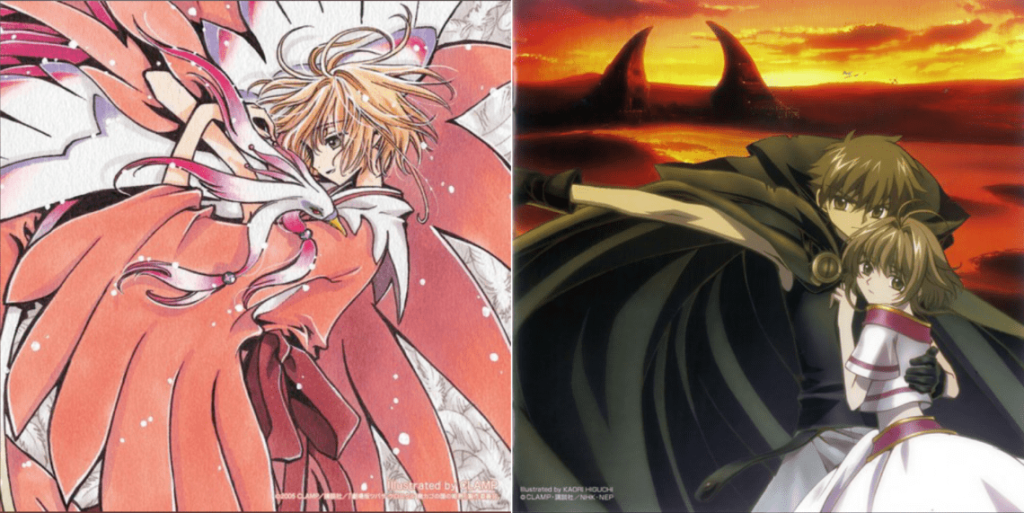
“You Are My Love” is the core theme song Yuki Kajiura wrote for the anime Tsubasa Chronicle, and it exists in both English and Japanese versions. The two songs are fairly close in core meaning, but the arrangements and moods differ considerably. The BLOG owner personally prefers the English version — compared with the Japanese one, its vocal is more ethereal and restrained, the tempo slower, and the core emotional color it conveys more solemn and sorrowful.
Carefully comparing the English and Japanese lyrics, we find that although both are built on grief and sorrow, the English version leans more toward expressing the emotion of “grief” — its word choices are typical, emotionally charged terms like “Silence” and “Lost in vain,” and the emotion the songstress conveys is relatively more complex. The Japanese version, by contrast, leans toward the tangible sensation of “hurt” — for example, “雨に濡れた頬は” (the cheeks wet with rain) and “遠い海を空を越えて” (crossing the distant seas and skies).
Although both versions depict the heroine of the anime Tsubasa Chronicle, what they convey to different cultural groups is clearly distinct. On one hand, the Euro-American cultural sphere represented by English pays more attention to, and better understands, abstract, philosophical propositions, and is more tolerant of content like “journeys for love” and “fantasy epics.” The Asian cultural sphere, by contrast, identifies with an aesthetic of “feeling things keenly” (物伤其类), so it can empathize more readily with the expression of concrete imagery — rain, tears, voices, light.
Through these two languages, Kajiura ingeniously builds the two faces of the Tsubasa Chronicle story, letting one melody carry a richer, more three-dimensional, and more complete emotional world and narrative dimension. This is not only the art of translation, but an outstanding example of musical storytelling and character shaping. It’s essentially the same kind of difference between cultures/civilizations as seen in the classic bilingual theme of NieR: Automata, “Weight of the World” / “壊レタ世界ノ歌.”
One detail worth mentioning: this song comes from the Tsubasa Chronicle film Princess of the Birdcage Kingdom, whose heroine Sakura happens to go through an arc from confusion to resolve, and from resolve to sorrowful parting. The difference between the two Sakuras in the film neatly maps onto the English and Japanese versions respectively. So whether you look at plot progression, character arcs, or real cultural spheres, the two versions map one-to-one — consumed alongside the story, they make for a remarkably coherent audio-visual experience.
2. Song: Koibumi (恋文), Artist: VISUAL ARTS, Album: Rewrite Original SoundTrack
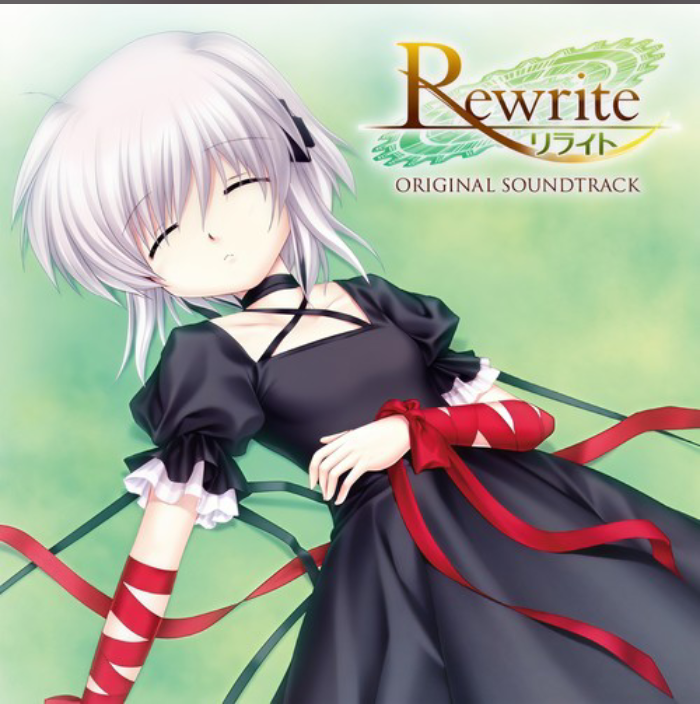
“Koibumi” has, for a long time, been the touchstone many listeners use to test whether audio gear has enough “emotion.” Yanagi Nagi’s performance here is like a meticulously crafted tear-bomb; the complexity it holds far exceeds what simple words like “clear” or “ethereal” can capture.
The moment the voice begins, what first reaches the ear is a lightness as gentle as a feather brushing past. Unlike the sweetness of a traditional Japanese “yasashii” female voice, Yanagi Nagi’s has a naturally husky, airy quality — which plunges Koibumi’s fairytale opening into the deep sea of reality. And so within the song sway together: sighs at fate, the sorrow of parting, and at the core, an unwavering devotion to love. Technically, Yanagi Nagi’s voice maintains a faint tremor and a wisp of breathiness throughout — that extreme restraint, hovering at the edge of a sob, only lets the grief soak deeper, down to the bone.
Unlike the standard four-minute “golden length,” “Koibumi” runs over six minutes. The four-minute length isn’t mere convention — it’s a number validated against listener fatigue. But Koibumi’s rule-breaking carries its own logic: the generous running time leaves ample room for emotion to build and for an emotional trajectory to unfold. As the melody advances, the texture of the voice shifts subtly yet unmistakably. By the closing line — “What I’ve always wanted to convey is, carrying a single, solitary longing, the words ‘I love you’” — the stifled sobbing of before has dissolved, and the voice warms into a clear, resolute vow. This vocal expressiveness, telling almost a complete story within a single song, builds a powerful emotional tension and a narrative completeness a four-minute song could never achieve.
The root of that tension lies deep within Rewrite’s story. As the character song of heroine Nakatsu Shizuru, it is bound tightly to her fate. The game explores planet-scale “rewriting” and “rebirth,” yet Shizuru’s story folds inward into a lonely chapter about protection and forgetting. She holds the power to erase memories simply by touching others, and the lyric “time that can never turn back, feeling everything will end this way” is her own recognition of that curse. The protagonist’s path of rewriting himself again and again to protect her and racing toward tragedy mirrors the song’s vow that “even if the world ends and we are parted, we will surely meet again” — cruel, and yet achingly beautiful.
And so every line of the song feels like Shizuru’s silent whisper, against the vast backdrop of the world’s end, to the boy who would rather be forgotten countless times than stop coming to her side. This “love letter” is her lonely struggle against her own power, her attempt to fix fleeting memories and longing permanently in place. If Yanagi Nagi’s voice can bear such enormous despair and hope, it is because she has truly walked deep into the heart of this small, solitary individual, using the purest lyricism to reflect the eternal light that flares where a “tiny vow” collides with a “vast ending.”
3. Song: Kokoro no Ame, Artist: Ritsuko Okazaki (岡崎律子), Album: Symphonic Rain ~A Duet for Piano And Cello~
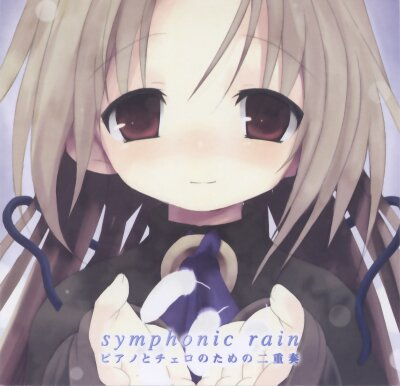
“Kokoro no Ame” (Rain of the Heart) is included in the special soundtrack CD Symphonic Rain ~A Duet for Piano And Cello~ bundled with the love edition of the game Symphonic Rain. It was the last game project for which Ritsuko Okazaki wrote the complete soundtrack before her death, composed in collaboration with arranger Tomoki Hasegawa.
In her long struggle with an incurable illness, Okazaki wrote all of the game’s music, pouring the gentleness and fortitude she had carried her whole life into these final melodies. Heartbreakingly, a little over a month after Symphonic Rain was released, she died suddenly of sepsis, at just 44. It is precisely for this reason that the five piano-and-cello duets on this album feel all the more precious.
Unlike the warm-baseline tone of the game’s own album, this set of cello-and-piano duets runs through heavy, sorrowful emotions, as if condensing the light and shadow of a whole life until only two pure voices are left in dialogue. It opens with a few cold piano notes, like raindrops falling from the eaves of this “Rain City” — sparse and clear. As the first note falls, the rain begins. One drop, two drops, straggling, already landing on the heart before one can brace. At the same time, the thick, dense cello rises from deep within the rain, spreading across the night of the Rain City. The slow tempo, the melodies that weave into each other, seem to hide some longing, desire, or tragedy within — and the sorrow disperses with the rain.
As the melody advances, the piano’s stronger notes multiply and the cello’s strings grow lower. They never address each other directly, yet they echo and shadow one another. The piano drizzles through the upper register like rain, while the cello lays a long melodic line across the bass — not a response to the rain, but rain falling into some story, seeping into some memory, soaking the wet streets of this city that never clears. From start to finish, the piano and cello hold their own independent melodies, intertwining yet never truly merging. The piano’s chords pile layer upon layer; the cello’s melody winds long and sinuous — like two rivers rising at the same tide, converging into one ocean while their own channels had already been set before the first drop of rain fell. This may be the most moving thing about “Kokoro no Ame”: they depend on each other, yet each ultimately has its own destination.
Every time I listen to “Kokoro no Ame,” it feels like reading her last words. The songs in the game itself, though mostly tragic in tone, mostly still let a sliver of light through. But “Kokoro no Ame” carries the sorrow through to the end, with no varnish. Perhaps while composing it, Okazaki already sensed this might be her final work, and so left her truest feelings here — her unyieldingness, her fragility, her unspoken words, all settling into every single note.
This special CD had a small print run to begin with, and whether or not that was deliberate, it has left these private words in a corner beyond the reach of many listeners. It yearns to be heard, yet is sealed in silence; yearns to be understood, yet is hidden away by rarity. This dislocation lends her passing an extra, hard-to-articulate weight. And so “Kokoro no Ame” is no longer just a piece of music. It is more like the last private letter she left to the world — not necessarily expecting everyone to read it, yet no one who reads it will ever forget it.
4. Song: Chui Meng Dao Xi Zhou (吹梦到西洲), Artist: Huang Shifu (黄诗扶) & Wang Jingxuan (王敬轩)
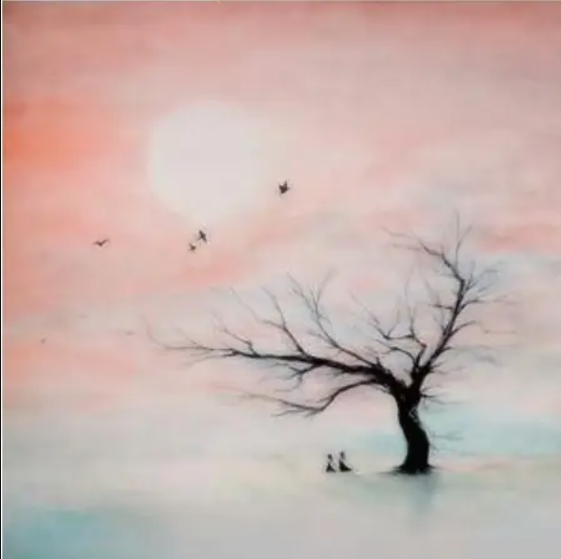
To talk about “Chui Meng Dao Xi Zhou,” we need to start with the current state of guofeng (Chinese-style) lyrics. One extreme in today’s guofeng lyrics is tossing words like “jianghu drifting,” “cloudy wine,” and “prosperity” into one pot and stewing up a classical-medley stew — piled-up rhetoric with no logic. Or, to force a rhyme, rewriting Li Qingzhao’s “人比黄花瘦” (slimmer than the yellow chrysanthemums) into “人比瘦花黄” — looking clever on the surface, but really just nonsense. The other extreme of guofeng songs is, in effect, today’s domestic pop: it has completely abandoned classical diction in favor of plainer, more direct writing — lucid and fluent, yet often lacking depth and turning bland, losing the unique literary power of millennia of Chinese civilization and the rich connotations of its allusions.
“Chui Meng Dao Xi Zhou” happens to sit between these two extremes. Its lyrics are dense with imagery — 无何化有, 秋毫濡沫, 搦管相留, 留骨攒峰 — which at first glance unrolls like a scroll densely packed with allusions. But look closely and you find that although dense, these phrases thankfully avoid that strained, patchwork desperation. The lyricist chose allusions with due deliberation: “无何化有” grows out of the “Land of Nothing-at-all” (无何有之乡) in the Zhuangzi, and “秋毫” and “濡沫” each point to precise classical sources. The main flaw of the lyrics is the leaps between passages — one line still saying “waiting for you at the ferry, waiting at the bridgehead,” the next falling into splashing ink or the dark Dipper of the north — which, read as a narrative text, makes the whole thing feel fragmented and unable to hold up under scrutiny. But if you set aside the expectation of a complete story and approach it by soaking in its atmosphere instead, an invisible thread does run through the fragments — a wholeness condensed from similar tones and a shared temperament. This works precisely because the lyricist didn’t push too hard on every allusion; he knew when to stop, leaving space for the voice and the listener’s imagination to breathe together.
Seen this way, “Chui Meng Dao Xi Zhou” is a work worth discussing precisely because it sits at a turning point in an era. It proves that even heavy use of classical vocabulary doesn’t have to turn a lyric into an unreadable cipher; but it also reminds us that piling up imagery can never replace the inner logic of narrative. Still, the fragmented lyrics don’t stop the song from achieving a complete aesthetic experience on another dimension — the immersive atmosphere built by the melody and the voices.
Let’s focus on the two singers who give this song its soul. Huang Shifu and Wang Jingxuan’s voices form a natural contrast and complement in the song. Huang’s high female voice is ethereal and mellifluous, carrying a classical, dust-free clarity that suits the phantom feeling of the “beauty of the west isle” in the lyrics. Wang’s male voice sits in a lower register — deep and laden with feeling, singing out the melancholy of love unrequited. The two voices interweave — one high, one low; one bright, one dark — deftly creating a dialogue across space: as if one person calls from outside the painting and the other answers from within it, each able to hear the other’s voice but never touch the other’s figure. Close your eyes and the distance is exactly what you feel — the melody flows like water, the flute passes like wind, and the two voices meet and diverge in some void, like a dream from which one can never wake.
So the ultimate landing point of “Chui Meng Dao Xi Zhou” is not whether its lyrics tell a clear story. Its lyrics are indeed fragmented, leaping, unable to survive line-by-line scrutiny. But when you close your eyes and let the instruments and voices surge up together, those words recede into the background, leaving a complete, lingering emotion — melancholy, longing, love unattained — yet beautiful enough that one can hardly bear to wake. Perhaps that is exactly why it stands out in guofeng music.
5. Song: Ta Ge Xing (踏歌行), Artist: Qu Xiaobing (曲肖冰)

Next up is another wuxia song — “Ta Ge Xing” from the TV drama Young Blood (少年歌行). As one of the rare genuinely wuxia works of recent years in China, “Ta Ge Xing” and “Chui Meng Dao Xi Zhou” represent two completely different creative directions. “Chui Meng Dao Xi Zhou” takes the route of piling up allusions: dense phrasing, layered imagery, but with no thread running through them, eventually dissolving into a mist. Those words have provenance and sources, yet no concrete person stands inside them. By contrast, “Ta Ge Xing”’s classical feel comes from the use of words and the condensation of scenes.
Above all, a wuxia song must have a wuxia flavor. The opening four lines not only set the tone for the whole song; the scenes they conjure are also especially admirable.
“寒寺静悄悄,转身江湖路迢迢” — the lyrics begin with a brushstroke: to trade a monk’s robe for a jianghu cloak, the cassock used to buy wine. As the starting point of every wuxia tale, there is always a parting in heavy snow, a drunken dream of life and death.
“天外雪飘飘,冷月的滚烫云知道” — a “scalding” heat hidden inside an image of extreme cold; it captures a young person’s heart completely. Frost sky and bitter wind veil the cold moon, heartfire burns bright as day and the clouds alone know — this contrast between inside and out is precisely the norm for wuxia characters.
“人间风萧萧,尘世隐不却思缈缈” — these lines speak of being unable to do as one pleases in the jianghu. The wind is worldly business: you can’t dodge it. Longing is a debt of the heart: you can’t sever it. The young long for the bustling world, craving bold ambition to the world’s end, while chrysanthemum hedges cannot confine a sorrow among the flowers.
“宿命聊一聊,凭心而动开怀言表” — this line is direct. What’s most enchanting about wuxia isn’t the level of one’s martial arts, but the spirit of defying a predetermined fate: trading jokes over fate with cups held high, heart following the sword wherever it points. That knight-errant verve writes both the free spirit and the backbone — and it is the most captivating of all.
These first four lines actually describe the four protagonists of the story, condensing each character’s position precisely while carrying a full measure of jianghu air in the lyrics themselves. When the chorus arrives, the line “侠义同逍遥,有至交不寂寥” (chivalry and freedom go together; with bosom friends, no loneliness) reveals the song’s meditation on the jianghu — not fame, not martial arts, but worthy company. This likewise fits the core ethos of Young Blood perfectly.
In the end, what the lyrics of “Ta Ge Xing” write is not the shell of the jianghu, but the people living inside it. Pronunciation, rhythm, rhyme — these are all technique. What truly holds the song up is the wuxia disposition running through it. With a few strokes, it sketches out a vivid, free-spirited wuxia world.


You May Also Like

HIFI Diary: NICEHCK Rockies 1DD+2BA+2EST Earphone Sound Quality Review

HIFI Diary: A Detailed Primer on HIFI Cables – The Power Cord Edition