HIFI Diary: iBasso DC-Tonfa Portable DAC Sound Quality Review
I. Preface
A friend told me that iBasso had just released a new flagship dongle DAC, the DC-Tonfa (DCT), and I couldn’t resist picking one up to try. Before buying, the BLOG owner asked JD.com’s customer service whether the DCT and the DCE sit in the same tier. The representative was a master of dodging the question and never gave a straight answer, insisting only that both were worth owning. Since that was the case, there was nothing for it but to test them myself. Before even listening, the BLOG owner had already boldly predicted that an R2R device this small could almost certainly not deliver good sound from a purely technical standpoint. But seeing just how stacked the DCT’s spec sheet was, he started to waver. In the end, actual performance will settle the debate.
II. Preparation for the Review
The device reviewed this time is the iBasso DC-Tonfa, compared against the BLOG owner’s current daily-driver dongle, the DC-Elite. Digital filter set to D1, high gain, and the test earphones are the same Nestsound Technology XY0 (4.4mm) and Sony EXK (3.5mm) — if you’re unfamiliar with them, check out those reviews. The connection uses the official USB-C cable into the BLOG owner’s Xiaomi 13 Ultra — all old friends here.
III. Assessment Tracks / Scoring Method
The track selection follows the BLOG owner’s usual listening habits: roughly 50% Japanese ACG music, 30% pop, and 20% classical. The scoring criteria derive from a simplified version of Liu Hansheng’s “Twenty Essentials for Audio,” and the methodology and evaluation system are being constantly updated. A brand-new community testing platform has also launched, where you can look up scores for everything from interfaces to DACs, earphones to speakers — and you’re welcome to submit your own ratings. Feel free to browse and use it.
IV. Testing Begins
| Brand | Model | First Released | Review Date | Launch Price (US$) | Balance | Instrumental Quality | Vocal Quality | Resolution | Density / Soundstage | Imaging | Dynamics | Score (/100) |
|---|---|---|---|---|---|---|---|---|---|---|---|---|
| iBasso | DC-Elite | 2023-11 | 2026-01 | $444 | 6 | 6 | 7 | 6 | 5 | 5 | 6 | 60.7 |
| Luxury & Precision | W4 | 2023-04 | 2026-01 | $444 | 5 | 6 | 6 | 7 | 6 | 5 | 6 | 60.7 |
| iBasso | DC04Ultra | 2025-12 | 2026-01 | $96 | 5 | 5 | 5 | 5 | 6 | 5 | 5 | 51.8 |
| iBasso | DC-Tonfa | 2026-08 | 2026-08 | $296 | 4 | 4 | 5 | 4 | 4 | 4 | 5 | 41.1 |
1. Song: Bu You Ji (不由己), Singer: Chen Peter (陈彼得) / Game Science (游戏科学) / 8082Audio, Album: Black Myth: Wukong (《黑神话:悟空》) — Game Music Collection
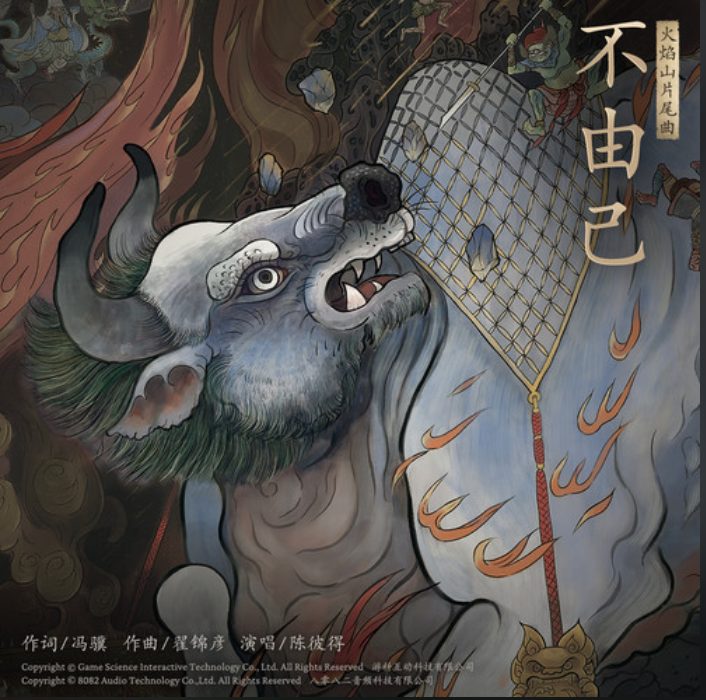
From the moment it produced sound, it was clear that the DCT and the DCE are not in the same class — density and dynamics simply aren’t on the same plane. But setting raw capability aside, the DCT does carry an unmistakable R2R flavor right out of the gate. If on the DCE, Chen Peter is a weathered, world-weary man quietly wallowing in sorrow on a still night — someone who might grumble at the world’s injustice yet always keeps that stubborn will to never give in — you can feel it. The DCT takes a different route: Chen Peter has indeed weathered his share of hardship, but at this moment he is as if drained of all strength, collapsing to sit on the ground. To be frank, the DCT doesn’t sound bad. But anyone who knows this song well understands that the man truly singing “Bu You Ji” on stage should carry a fire in his heart and a suppressed fury — which suits the DCE’s rendition far better. Of course, from an artistic-sculpting standpoint, it’s hard to call the DCT’s take a serious problem; it’s just that vocals in the R2R style, unless the scale is big enough, mostly end up sounding like this. Whether you enjoy this stylized treatment comes down to your own taste.
2. Song: Koibumi (恋文), Singer: VISUAL ARTS, Album: Rewrite Original SoundTrack

Song Appreciation
[Expand / Collapse]
For a long time, “Koibumi” has been the touchstone many listeners use to test whether audio gear has enough “emotion.” Yanagi Nagi’s performance here is like a meticulously crafted emotional bomb — the depth of feeling it carries is far more than simple words like “clear” or “ethereal” can capture.
The moment the voice begins, what first touches the ear is a lightness as gentle as a feather brushing past. But the lyrics that follow immediately plunge that fairy-tale opening into the deep sea of reality. And so, within the song there sway together: the powerlessness of being shut out, sighs at fate, the sorrow of parting, and at the core, an unwavering devotion to love. Yanagi Nagi’s voice holds a faint tremor and a whisper of breathiness throughout — the extreme restraint of hovering at the edge of a sob only makes the grief it carries cut deeper.
At over six minutes, the song is a luxury by pop-music standards. And it is precisely this generous length that holds the complete arc of the emotion. As the melody advances, the texture of the voice shifts subtly yet unmistakably. By the closing line — “What I’ve always wanted to convey is, carrying a single, solitary longing, the words ‘I love you’” — the stifled sobbing of before has dissolved, and the voice warms into a clear, resolute vow. This vocal expressiveness, telling almost a complete story within a single song, builds the track’s powerful emotional tension.
The root of that tension lies deep within the story of Rewrite. As the character song of the heroine Nakatsu Shizuru, it is bound tightly to her fate. The game explores planet-scale “rewriting” and “rebirth,” yet Shizuru’s story folds inward into a lonely chapter about protection and forgetting. She holds the power to erase memories simply by touching others, and the lyric “time that can never turn back, feeling that everything is about to end this way” is her own recognition of that curse. The protagonist’s path of rewriting himself again and again to protect her and racing toward tragedy mirrors the song’s vow that “even if the world ends and we are parted, we will surely meet again” — cruel, and yet achingly beautiful.
And so every line of the song feels like Shizuru’s silent confession, against the vast backdrop of the world’s end, to the boy who would rather be forgotten countless times than stop coming to her side. This “love letter” is her lonely struggle against her own power, her attempt to fix fleeting memories and longing permanently in place. If Yanagi Nagi’s voice is able to carry such enormous despair and hope, it is because she has truly stepped into the heart of this small, solitary individual, using the purest lyrics to reflect the eternal light that flares where a “tiny vow” collides with a “vast ending.”
As usual, “Koibumi” stands in for sweet Japanese female vocals in the test. Before it started, the BLOG owner actually expected the DCT to be the better fit — after all, it’s practically received wisdom that R2R suits gentle female voices. But in practice, the DCE still holds an overwhelming advantage. The biggest problem is that the DCT’s vocals carry the same enervated quality as the male vocal above, which directly leads to diffuse imaging, recessed vocals, and a shortage of detail. Taken individually, none of these is especially glaring — but once there’s a comparison and the DCE beats the DCT on every single count, it becomes hard to wave everything away as mere “stylistic choice.” The BLOG owner also sampled the other filters on the side: D2 is slightly thicker but doesn’t change the vocal texture; D3 cleans the vocals up a bit and is the best match for this song; D4 sounds comparatively darker; and D5 has an obviously dirtier background. In the end, even D3 can’t fully correct the DCT’s problems — and different tracks suit different filters, so are you supposed to switch every time the song changes? Overall, it simply isn’t satisfactory.
3. Song: The Heroic Weather-Conditions of the Universe, Part 7: After The Storm, Singer: Alexandre Desplat, Album: Moonrise Kingdom (Original Soundtrack)

Finally, we test instruments. Honestly, if you’re a seasoned audiophile you can probably skip the rest of this section, because after the vocals above, anyone with experience already knows the DCT will only do something pleasing on line-demanding instruments — maybe a harp at most — and everything else is bound to fail. That is the real-world problem this class of compact R2R faces. You can mask problems in the vocal department through stylistic interpretation, but once you move to complex, multi-instrument passages, deficiencies in dynamics, density, and timbre become far easier to perceive and amplify. And so it proved: only a handful of instruments on the DCT managed a passing grade (barely a pass at that); the rest either lacked dynamics and lost their power (especially obvious in vocals and ensemble passages), or suffered severe timbre distortion (metal instruments worst of all).
V. Summary
This one nearly did me in. The BLOG owner has been going to bed at 3 a.m. and waking at 8 a.m. lately, tortured by Agents to the brink of meeting his maker. With the draft folder full of entries clamoring to be written — the Classical Diary, the HIFI Diary, and the Agent weekly reports — I can’t summon the faintest interest in writing up this “leek harvester” priced at $296 (launch price). Compared with the brand’s own value-focused DC04U, the DCT only beats the stiff-sounding DC04U on the smoothness of its output and its sense of line; everywhere else it ties or loses. Not to mention that, at its current secondhand price, the DCE has already sunk to the same level as a brand-new DCT. Judging from the marketing copy, the DCT is undeniably luxurious — but it only proves once again that R2R simply cannot achieve good sound at this scale, and even iBasso can’t overturn that. This somewhat perfunctory review ends here; we’ll meet again in other articles soon.


You May Also Like
HIFI Diary: How to Choose the Right Desktop Speakers for Your Setup

HIFI Diary: TANCHJIM 4U 4-Level Sound Adjustment In-Ear Sound Quality Review