HIFI Diary: Nestsound ZERO (XY0) Listening Review
I had never even heard of YinChao Technology before I got my hands on this earphone. When a friend said he’d send over an earphone that hadn’t even been officially released yet, I wasn’t really expecting much. Over the past few years at expos I’d seen plenty of brand-new earphone makers with dazzling wares, including a few products that did catch the eye — but I’d never once heard one that was free of glaring flaws. In time, my impression of domestic (Chinese) in-ears hardened into: parts-stacked DIY products with no tuning to speak of.
This time, though, it was a massive correction to that preconception. YinChao Technology is a prime example of an unsung hero. The Nestsound ZERO isn’t just technically capable; crucially, it also shows excellent taste in tuning. Below, the BLOG owner will walk you through the audition process for this earphone, step by step.
I. Preparation for the Review
Since I didn’t have a particularly good portable player on hand, I simulated one with a desktop setup — a DAC + preamp + tube-amp chain. I skipped a CD transport as the source because, in most cases, earphones are paired with portable devices. The amplifier was a Sustain84 tube amp with a modded power supply, which lowers the noise floor while delivering a mellower tone. Altogether, the rig ended up roughly on par with the top-tier portable players of the day.
| Source | DAC | Preamp | Headphone Amp |
| Xiaomi Mi Mix 2S | Singin D1000 | Custom Passive | Sustain84/ |
II. Assessment Tracks / Scoring Method
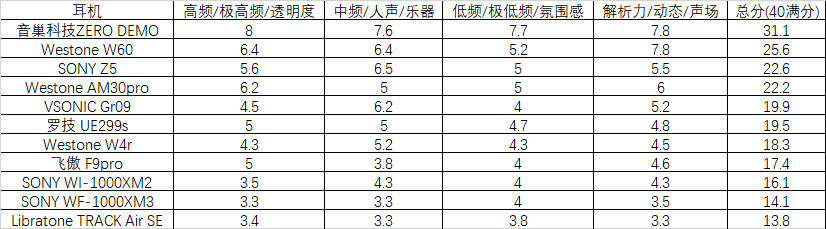
Because the Nestsound ZERO’s level is so high, the test tracks differ considerably from what I usually use, and I’ll also bring in some better-known HIFI demo tracks. I’ll keep the fluff to a minimum so it’s easy to read. Scoring uses a 10-point scale, though in practice the highest is usually 9. An 8 means a clear advantage in that category, 7 means excellent, 6 means it can be properly appreciated, 5 means it can be properly listened to, and anything below 5 gets no comment.
III. Testing Begins
1. Song: Hotel California (Live), Artist: Eagles, Album: The Very Best of Eagles

There’s a very good soundstage right from the opening, and along the way you can clearly hear cheers rising and falling, with whistles and applause easy to localize. The slightly weaker aspect is distance control, but that’s mostly down to the physical constraints of earphones — I still haven’t heard an in-ear that handles applause distance really well. The strummed guitar is clear and close to the ear without being harsh, and the transitions are smooth and natural. The synchronized cheers after the strumming are controlled superbly, with zero muddle and clear layering. Male vocals are good, with a moderate midrange thickness; the Nestsound ZERO isn’t one of those heavily magnetic, thick-and-smooth signatures. To be clear, this comparatively plain, direct presentation isn’t a flaw — it’s simply one choice of sound among many.
2. Song: 天空の悲恋歌, Artist: TAMUSIC, Album: 東方バイオリン1

This is one of my retained test tracks, mainly for telling apart violin and piano timbre. The electrostatic drivers give this earphone outstanding treble and upper-treble tone. It has to be said: the Nestsound ZERO is exceptionally suited to violin — precise and delicate — and its built-in electrostatics deliver a violin tone that is arguably the best among in-ears. That said, it’s generally very hard for one earphone to do both violin and piano well, and the ZERO is no exception: the piano sounds stiff and wooden, clearly lacking agility and flow. To be fair, compared with the vast majority of in-ears, the ZERO’s piano isn’t bad at all — it’s just that next to its own outstanding violin tone, it does fall a little short here.
3. Song: 天空 (Sky), Artist: Faye Wong (王菲), Album: 天空 (Sky)

A classic test track. The Nestsound ZERO shows astonishing vocal detail — it can even clearly discern the tiniest breaths and the moments when the mouth opens and closes. What’s even more commendable is that all this detail doesn’t interfere with the song’s expression; it never steals the spotlight or pulls too much attention away from Faye Wong’s enchanting voice. Transparency is also worth mentioning: the ZERO’s foundation is clean and natural. There’s no particularly obvious “black”, dead-silent background, but overall this isn’t a weakness for the earphone, and it stays at a fairly high level.
4. Song: Symphony No. 9 in E Minor, B. 178, Op. 95 “From the New World” – IV. Allegro con fuoco, Artist: Libor Pešek, Album: Dvorák: Symphonies 1-9 & Orchestral Works

First, a note: the mere fact that an in-ear can join a full-scale classical-orchestra test is itself a qualitative leap. Large-scale music is a natural barrier for any headphone. The most basic requirement for a big-orchestra track to be listenable is layering and resolution, especially in the tutti passages — if the instruments don’t separate into layers, it all turns to mush. Most in-ears can’t handle this well. Under the soaring “New World” symphony, the Nestsound ZERO shows very good layering and detail. The soundstage isn’t large and the seating feels close-up, but the tuttis are tidy and restrained. The only mild disappointments are that the stage could be bigger and the low end rolls off a little quickly — but these are essentially limited by the earphone’s physical size, and the BLOG owner believes this is close to the limit of what’s achievable in an in-ear.
5. Song: Má Vlast (My Fatherland), symphonic poems (6), JB. 1: 112 – No. 2. Vltava, Artist: Rafael Kubelik, Album: SMETANA, B.: Má Vlast

If “From the New World” represents the solemn, soaring side of classical music, then “Vltava” unquestionably stands for beauty and flow. Listening through a full Vltava, I found the ZERO still has room to grow in pure musical beauty — the earphone’s style leans plain and direct. This had already made itself felt in the earlier tracks, but thanks to its high density and layering, the actual listening experience is still highly respectable. Imaging deserves special mention: it’s exceptionally strong among in-ears. There’s very little in-head effect — not to the point of a true “speaker-like” detachment, but it clearly conveys the position and distance of the instruments.
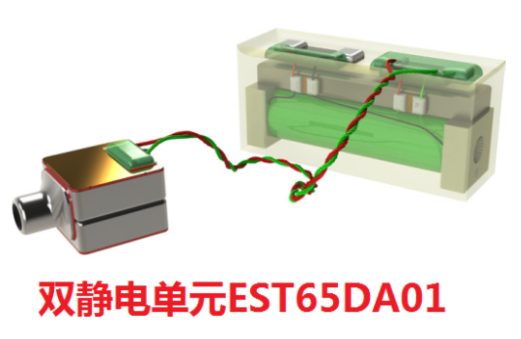
Now that we’ve listened, let’s tear into the Nestsound ZERO’s internals. Out of confidentiality, YinChao Technology didn’t provide very detailed crossover data, but the overall structure is fairly clear: a Sonion EST65DA01 dual-electrostatic unit handles the treble, a Sonion 37a015 unit handles the mids, and a Knowles ED-29689 (switched to a Sonion 23-series unit in production) handles the bass. If you’re interested, click here to look it up yourself.
Summary: I actually listened to many more tracks — I could hardly stop — but a review shouldn’t be a wall of text; it just needs to convey this earphone’s unique charm. To be fair, the Nestsound ZERO isn’t an in-ear with a strong personality or a clearly defined signature. But entry-level products lean on personality to mask shortcomings in raw capability; mid-range ones talk up specs because their tuning can’t keep up; and flagship-tier earphones can resolve the vast majority of issues through solid capability, density, and layering. The Nestsound ZERO is unambiguously a flagship-tier earphone. Pulling together the review above and a few points left unsaid, here is my summary. First, the cello: moderate thickness, good density; steady sound, though a little lacking in attack; solo pieces miss a bit of emotion, but in tuttis it’s fine. The violin has accurate tone with a touch of high-frequency coloration — gorgeous without being flashy. Piano is middling, somewhat stiff in tone. Brass and horns decay a little slowly; overall tone is acceptable. Imaging is excellent, and the soundstage is on the small side but complete. Among vocals, female voices are superb — the highs in particular are intoxicating — while male voices are competent but lack a little something to draw you in. Finally, the BLOG owner has learned that this earphone is in pre-sale at around 6,000–7,000 yuan (roughly $890–$1,040). I’ve always felt portable-audio prices are through the roof, but at this price it does seem to give fair value for what it offers. Whether to jump in, I’ll leave to you.
Oh, one more thing — by way of a reminder, the BLOG owner also tried plugging straight into a desktop computer’s headphone jack. The sound was weakened across the board, but there were no weird artifacts.

You May Also Like

HIFI Diary: A Primer on Digital Audio Formats and Technologies
Classical Diary: The Pope’s Dove and the Millennial Chant — Gregory I (Part 2)