HIFI Diary: The Peak Showdown Between the Luxury & Precision W4 and the iBasso DC-Elite Dongle DACs
I. Preface
Thanks to a netizen for sending in the Luxury & Precision W4 and the iBasso DC-Elite dongle DACs for review. Both are currently the highest-priced and best-reviewed dongle DAC products on the market. To a certain extent, they represent the pinnacle of sound quality achievable within this form factor and showcase the best technical capabilities of two of the most highly regarded portable HIFI player brands today. Using a comparison of these two as a major review to kick off 2026 couldn’t be more fitting. Admittedly, the LP5108 DAC chip in the Luxury & Precision W4 has sparked some controversy, but this blogger has always judged by results, not intentions. On the HIFI track, it’s always the one that sounds better that wins the argument. Below is a detailed comparison of their comparable specifications.
| Item | W4 | DC-Elite |
|---|---|---|
| DAC Chip | LP5108 | ROHM BD34301EKV |
| Screen | 0.91-inch Monochrome OLED Screen | No screen |
| Input interface | Type-C USB female port | Type-C USB female port |
| Output interface | 4.4mm balanced (gold-plated) 3.5mm single-ended (gold-plated) | 4.4mm balanced (brass) 3.5mm single-ended (gold-plated) |
| Dimensions | 63x24x12.5mm | 64x35x14.5mm |
| Weight | 24g | 60.5g |
| Audio Format (PCM) | Supports up to 32bit/384kHz | Supports up to 32bit/768kHz |
| Audio Format (DSD) | Maximum Native DSD256 Support | Maximum Native DSD512 Support |
| Maximum Output Power | 420mW @32Ω (Balanced) 110mW @32Ω (Single-ended) | 280mW @32Ω (Balanced) 162mW @32Ω (Single-ended) |
| THD+N @300Ω | 0.0001% | 0.000222% |
| THD+N @32Ω | 0.00013% | 0.00031% |
| SNR | 134dB | 121dB |
| Dynamic Range | 134dB | 118dB |
II. Preparation for the Evaluation
The devices evaluated this time are the Luxury & Precision W4 and the iBasso DC-Elite dongles, with the Lotoo PAW Gold Touch (owned by the blog author) used as a reference for comparison. The headphones used for testing are the Yin Chao Technology XY0 (4.4mm port) and the Sony EX1000 (3.5mm port). Friends unfamiliar with these headphones can skip to the evaluation section. The source device used is the Lotoo PAW Gold Touch, and the USB OTG cable employed is the WAGNUS Omni Sheep. In terms of settings, following the official recommendations for the W4, vocal tracks use TUNE01, while instrumental tracks use TUNE02. Other settings for the W4 are: EQ-Normal, UAC-2.0, DISP-ON, HIDKEY-ON, Gain-High, FLT-fast. As for the DC-Elite, it requires connecting to an app for parameter adjustments, though there are actually few adjustable options. The final settings used are: Digital Filter-D1, PCM Fine Tuning-0dB, PCM DSD Volume Alignment-On.
Using the PAW Gold Touch as a digital preamp helps avoid most issues associated with digital sources, such as power supply and potential sound quality impacts from the Android system. The WAGNUS Omni Sheep OTG cable used by the blog author is also a high-quality cable valued in the four-digit range. Therefore, it must be stated that this evaluation environment aims to test the ultimate sound quality levels of the two dongles, which may not fully match the usage scenarios of most people who directly plug dongles into their phones. Dongles are playback devices highly dependent on the quality of the digital source and power supply. Therefore, if the sound you ultimately hear differs from the blog author’s evaluation, it is very likely due to variables in the preceding chain. Thus, the conclusions of this evaluation are for reference only. After all, auditory perception is ultimately subjective, as you all understand.
III. Evaluation Tracks/Scoring Method
The tracks selected are those the blog author frequently listens to, consisting of roughly 50% Japanese ACG music, 30% pop music, and 20% classical music. The scoring criteria are simplified from Liu Hansheng’s “Twenty Essentials of Audio,” with a full score of 10 points, and scores below 5 points will not be included. The evaluation method and system have been updated since 2026. Newly evaluated devices/headphones can be compared horizontally at any time, and the scoring tool is also open for everyone to use.
IV. Testing Begins
| Brand | Model | Launch Date | Review Date | Launch Price | Used Price | Annual Depreciation | Character | Tonality | Frequency Balance | Resolution | Density | Soundstage | Dynamics | Total Score | Average Score |
|---|---|---|---|---|---|---|---|---|---|---|---|---|---|---|---|
| iBasso | DC-Elite | 2023-11-16 | 2026-01-11 | $419.86 | $252.00 | Annual Depreciation: 18.6% | 8 | 8 | 7 | 8 | 8.5 | 8.5 | 8 | 56.0 | 8.00 |
| Lotoo | PAW Gold Touch | 2018-03-01 | 2026-01-11 | $2,519.86 | $770.00 | Annual Depreciation: 8.8% | 9 | 9 | 7 | 8.5 | 9.5 | 9 | 9 | 61.0 | 8.71 |
| Luxury & Precision | W4 | 2023-04-27 | 2026-01-11 | $419.86 | $259.00 | Annual Depreciation: 14.1% | 8.5 | 8.5 | 7 | 8.5 | 8.5 | 8 | 8.5 | 57.5 | 8.21 |
Generated by www.rainlain.com
1、Song:Kanon D-Dur (Quintet, No Harpsichord) Kanon D-Dur Quartet,Singer:鹭巣诗郎,Album:Neon Genesis Evangelion S² Works

The classic Canon quartet adaptation truly showcases the flagship-level quality of the W4 and DC-Elite dongle DACs, with their sound density providing a remarkably comfortable listening experience. When it comes to instrumental performance, the two are almost indistinguishable in terms of timbre reproduction. The main difference lies in the sense of scale. In Tune 02 mode, the W4 delivers a sharper and more defined edge, particularly in the sound of violins, making its tonal character more suited for instrumental playback. However, the W4’s sense of scale and soundstage are slightly smaller than those of the DC-Elite, which results in somewhat inferior positioning and a less relaxed presentation compared to the DC-Elite. Additionally, although the difference is extremely subtle, the blogger confirmed that in the lower register of the cello, the DC-Elite offers slightly clearer articulation than the W4. When compared to the Da Mo Ju, both dongle DACs noticeably lack a sense of ease. Despite their similarly high density, the Da Mo Ju delivers a more relaxed and effortless sound, with significantly less auditory pressure on the listener. In terms of the weight of piano notes, both the Da Mo Ju and the two dongle DACs exhibit considerable intensity. However, only the Da Mo Ju effectively conveys the substantial feel of the keys being pressed down.
2、Song:恋文,Singer:VISUAL ARTS,Album:Rewrite Original SoundTrack

歌曲赏析
[展开/折叠]The blogger first switched the W4’s sound to TUNE 01 mode. This track most clearly highlights the differences in vocal detail between the two dongle DACs. The W4 prioritizes a smooth vocal texture, while the DC-Elite focuses more on the clarity of enunciation. These two presentation styles are distinctly different and likely adapt differently to various songs. As a reference, the Da Mo Ju strikes a balance between the vocal articulation and granularity, positioning itself roughly midway between the W4 and the DC-Elite. If asked to choose among all three, the blogger would undoubtedly select the middle option. However, if forced to choose between the two dongle DACs, the W4’s TUNE 02 mode partially addresses this issue, allowing manual switching between different vocal presentation styles.
3、Song: William Tell Overture, Singer: Guangzhou Symphony Orchestra “Brilliant Brass” Brass Quintet, Album: Golden Brass Quintet
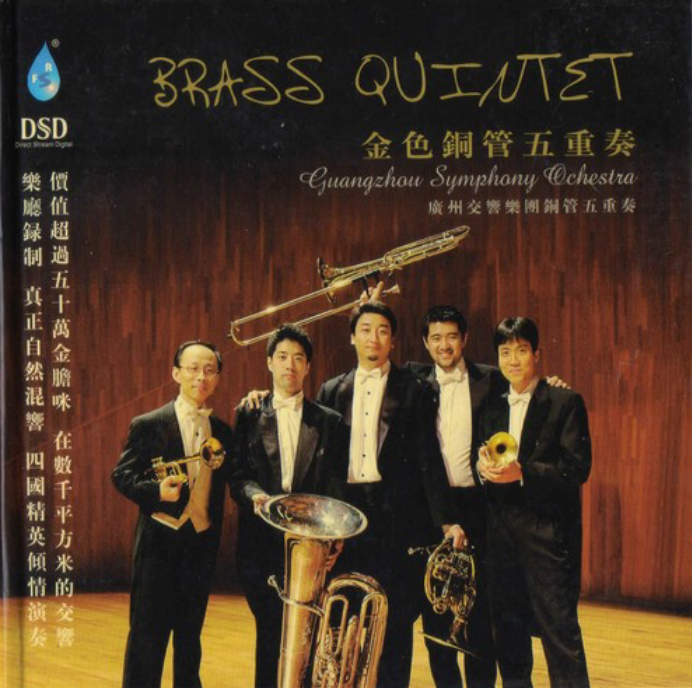
After discussing vocals, let’s talk about the performance of other core timbres. The W4’s performance on brass instruments is quite satisfying, balancing brightness and power with a clean, crisp sound that never feels sluggish. While it might be somewhat overly bright at times, this doesn’t diminish the blogger’s appreciation for how the W4 handles brass instruments. In contrast, the DC-Elite’s metallic brightness is slightly toned down, and its impact feels somewhat weaker compared to the W4. The Da Mo Ju’s performance on brass is similar to the DC-Elite, both falling into the category of lacking strong impact. In this regard, the W4’s sound is undoubtedly more pleasing and engaging.
4、Song:天空の悲恋歌,Singer:TAMUSIC,Album:東方バイオリン1

Moving on to examine the remaining two core timbres, the performance of the W4 on piano is disappointing—not only is it lacking in agility, but it also carries an inexplicable metallic tone. In contrast, the DC-Elite’s piano performance is noticeably better than the W4’s, though it still lacks a sense of weight and the timbre isn’t entirely pure. Both devices perform admirably with string instruments, effectively conveying brightness, speed, and technical nuance, albeit with slight stylistic differences.
Overall, apart from its piano performance, the W4 excels in the other three core timbres, placing it above average in those areas. The DC-Elite stands out primarily in piano reproduction, while its performance in the other three core timbres remains consistently above average. Whether to choose the more exceptional W4 or the more balanced DC-Elite ultimately depends on individual preferences and priorities.
V. Summary
It is no exaggeration to say that, apart from soundstage, the performance of the DC-ELITE and W4 is not far behind that of larger, brick-sized players. As products priced around 3K, if paired with an excellent source, the current crop of Android-based domestic DAPs in the 3K price range simply can’t compete. The blogger has mentioned more than once in the past that when choosing between a high-end dongle and a low-end domestic DAP, it’s better to go with the dongle. Domestic DAPs allocate too much of their cost to hardware like screens and CPUs, leaving little room for investment in sound quality. Moreover, low-end products are most likely to cut corners on power supply, which may not even match the filtering capabilities of a well-designed dongle.
In terms of scoring, the W4 clearly outperforms the DC-Elite. However, from an emotional standpoint, the blogger prefers the DC-Elite. Firstly, the DC-Elite is more versatile and offers a more balanced sound. Secondly, it is better suited for large-scale orchestral music, with a sense of scale that surpasses the relatively compact sound of the W4. Of course, preferences vary, and the gap between the two is actually quite small. Their second-hand prices currently differ by only around 100 RMB, and market response often tells the most honest story.
As for comparing these two dongles to a former flagship player like the Da Mo Ju, although their scores are close, the world of HIFI is one of severe diminishing returns. Beyond a score of 8, every 0.5-point difference represents a significant leap. For the average listener, these subtle distinctions may be imperceptible, but for music enthusiasts, they represent the chasm between “having” and “not having,” or between “good” and “great.” In summary, as the current flagship dongles, the W4 and DC-Elite have undoubtedly raised the ceiling for HIFI entry while lowering the cost. Compared to a decade ago, entering the world of HIFI is now much more affordable and starts from a much higher baseline. This is a victory born from intense competition within the HIFI community and a testament to technological advancement. The blogger sincerely appreciates the respect and beauty accorded to sound in this era.

One Comment
Gosed
我竟然是首评,哭了😭